In the landscape of industrial automation, precise and reliable object detection is a cornerstone of efficiency and safety. Among the diverse array of sensing technologies, retro-reflective laser sensors stand out for their unique operational principle, offering distinct advantages in specific applications. Unlike diffuse or through-beam sensors, retro-reflective models utilize a specialized reflector to achieve long-range, stable detection with a single, compact housing. This article delves into the working principles, key advantages, common applications, and critical selection criteria for these sophisticated devices.
The fundamental operation of a retro-reflective laser sensor is elegantly simple yet highly effective. The sensor unit itself contains both a laser emitter and a receiver. The emitter projects a focused, coherent beam of laser light toward a retro-reflective target, often called a reflector or tape. This target is not a simple mirror; it is constructed with a surface of tiny corner-cube prisms or specialized micro-beads. These structures are engineered to reflect incoming light directly back to its source, regardless of the angle of incidence within a specified range. The receiver in the sensor unit then detects this returned beam. An object passing between the sensor and the reflector interrupts this beam, causing a change in the received signal that triggers the sensor's output.
This principle confers several significant advantages. First, it allows for a much longer sensing range compared to diffuse reflection sensors, often reaching several meters or even tens of meters, while maintaining the convenience of a single device (unlike through-beam sensors which require separate emitter and receiver units). Second, the use of a coherent laser source provides a highly visible, precise beam spot, enabling accurate positioning and detection of small objects. The focused beam also offers excellent resistance to ambient light interference and background object influence, leading to high stability. Furthermore, many advanced models incorporate background suppression or foreground suppression logic, allowing them to ignore the reflector itself and only detect objects within a precise, programmable "window" in front of it.
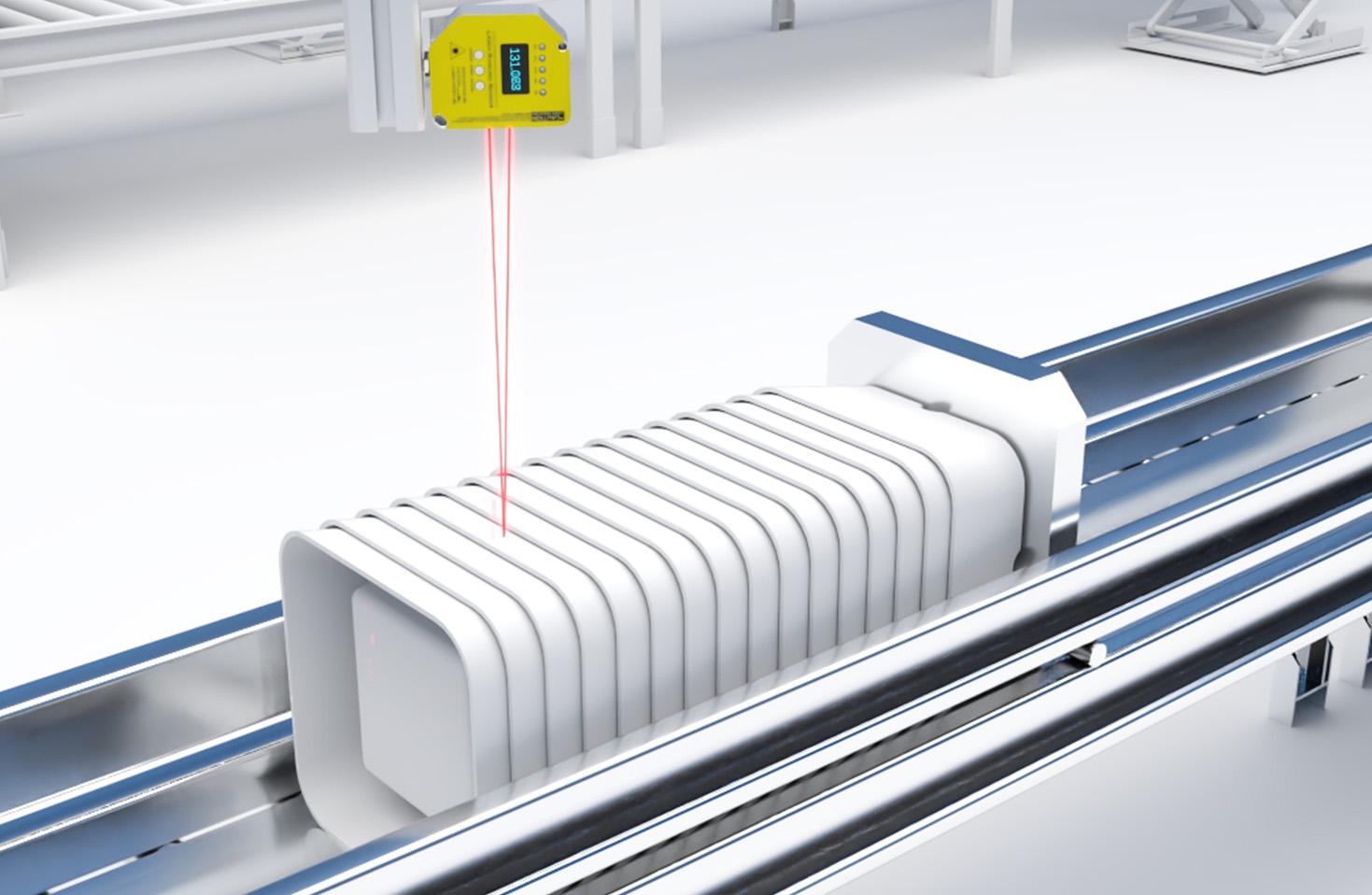
The applications for retro-reflective laser sensors are vast and varied across industrial sectors. In material handling and logistics, they are indispensable for high-speed object counting on conveyor belts, precise package dimensioning, and pallet presence verification in automated storage and retrieval systems (AS/RS). Their long range makes them ideal for position detection of overhead cranes, gantries, and automated guided vehicles (AGVs), ensuring collision avoidance and accurate stopping. In the automotive industry, they are used for robot guidance, part verification in assembly lines, and detecting vehicle presence in automated wash tunnels. They also play a crucial role in packaging machinery for label detection, fill-level control, and ensuring proper carton flap closure.
Selecting the appropriate retro-reflective laser sensor requires careful consideration of several technical parameters. The sensing distance is paramount; it must accommodate the maximum required range while considering potential mechanical tolerances. The beam spot size determines the minimum detectable object; a smaller spot allows for detecting finer details or edges. Response time is critical for high-speed applications to ensure no missed counts or triggers. Output type (e.g., NPN/PNP transistor, analog, IO-Link) must be compatible with the control system. Environmental robustness is also key: the Ingress Protection (IP) rating indicates resistance to dust and water, while housing material and construction must withstand vibration, shock, and temperature extremes present in the operating environment. Finally, features like adjustable sensitivity, teach-in functionality for easy setup, and built-in diagnostics (often via LED indicators) greatly enhance usability and reduce commissioning time.

In conclusion, retro-reflective laser sensors represent a powerful and versatile solution for non-contact detection in industrial settings. Their combination of long range, high precision, and operational stability, derived from the intelligent use of a laser source and a retro-reflective target, makes them suitable for demanding tasks where other sensor types may fall short. By thoroughly understanding their operating principle and meticulously evaluating application requirements against sensor specifications, engineers and system integrators can leverage this technology to build more reliable, efficient, and intelligent automated systems. As Industry 4.0 advances, the integration of these sensors with digital communication protocols like IO-Link will further unlock their potential for predictive maintenance and data-driven process optimization.
