In the rapidly evolving landscape of industrial automation and smart systems, proximity sensors have become ubiquitous components. Their role in enabling non-contact detection of objects is fundamental to countless applications, from assembly lines and robotics to automotive safety and consumer electronics. However, as global emphasis on sustainability and operational cost reduction intensifies, the energy consumption of these devices has moved from a peripheral concern to a central design and selection criterion. This article delves into the current state and importance of energy efficiency standards for proximity sensors, providing a technical overview for industry professionals.
Traditionally, the primary performance metrics for proximity sensors included sensing range, repeat accuracy, response time, and environmental robustness (e.g., IP rating, temperature tolerance). Power consumption was often a secondary consideration, addressed mainly through basic on/off cycling or simple low-power modes. This paradigm is shifting. The proliferation of sensors in IoT networks, battery-operated mobile systems, and large-scale manufacturing plants has made the cumulative energy draw of thousands of sensors a significant operational expense and environmental footprint.
Several key drivers are pushing the development and adoption of formal energy efficiency standards for proximity sensors. First, regulatory pressures are increasing worldwide. While there is not yet a single, globally unified standard akin to ENERGY STAR for appliances, regional directives like the European Union's Ecodesign Directive and various national energy conservation acts are beginning to encompass industrial components. Manufacturers are proactively developing more efficient products to stay ahead of potential mandates. Second, economic incentives are substantial. A sensor that consumes milliwatts instead of watts can drastically reduce electricity costs over its lifespan, especially when deployed at scale. The total cost of ownership (TCO) calculation now heavily weighs energy efficiency alongside purchase price. Third, system design requirements demand it. In wireless and battery-powered applications, such as in automated guided vehicles (AGVs) or remote monitoring stations, sensor power consumption directly dictates battery life and maintenance intervals. Efficient sensors enable more compact batteries, longer operational cycles, and reduced downtime.
From a technical perspective, improving the energy efficiency of a proximity sensor involves optimization at multiple levels. At the core sensing element level, advancements in semiconductor technology have led to more efficient oscillator circuits (common in inductive and capacitive sensors) and lower-power photodiodes and LEDs (in photoelectric sensors). The choice of technology itself influences efficiency; for instance, modern magnetic sensors (Hall-effect, magnetoresistive) often exhibit very low quiescent current. The sensor's electronic design and firmware play a crucial role. Implementing sophisticated power management is paramount. This goes beyond a simple sleep mode. Advanced sensors now feature adaptive sensing cycles, where the sampling rate intelligently adjusts based on object detection patterns. "Wake-on-approach" functionalities keep the core sensor in a deep sleep state until a preliminary, ultra-low-power detection circuit triggers full activation. Furthermore, optimizing the output stage—whether it's a solid-state switch (PNP/NPN) or a relay—for minimal leakage current and switching losses contributes significantly to overall efficiency.
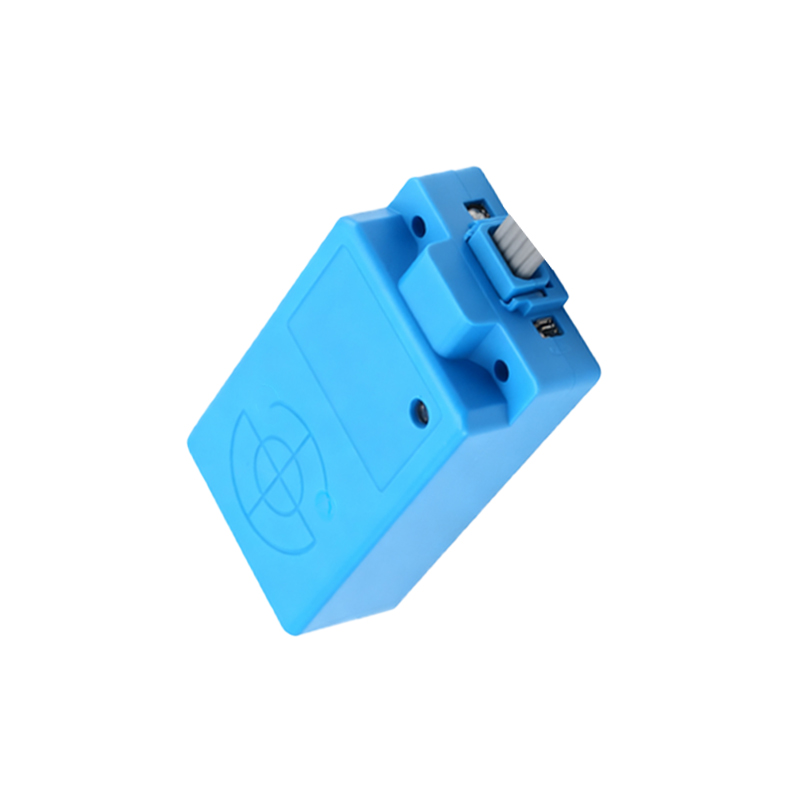
While formal, product-specific ISO or IEC standards dedicated solely to proximity sensor energy consumption are still emerging, engineers can reference several relevant frameworks. The international standard IEC 60947-5-2, which covers proximity switches, specifies performance and testing methods but currently has limited clauses on power consumption. More pertinent are the general principles outlined in the IEC 62053 series for electricity metering and the burgeoning field of IoT device energy efficiency protocols. Many leading manufacturers now publish detailed power consumption data in their datasheets under various operating conditions (e.g., active current, standby current, cyclic duty curves). When specifying sensors, engineers should rigorously compare these figures. Key parameters to evaluate include: average active current (I_avg), sleep/standby current (I_sb), and the ability to configure duty cycles via programmable parameters or external control signals.
Looking forward, the trend is clear: energy efficiency will become a standardized and critical parameter for proximity sensors. We can anticipate the development of industry-wide benchmarking and labeling schemes. Integration with energy-aware industrial networks, like IO-Link, will allow for dynamic, centralized power management of sensor clusters. Furthermore, the use of energy harvesting techniques—where sensors power themselves from ambient light, vibration, or thermal gradients—may become viable for certain low-power proximity sensing applications, pushing the concept of efficiency toward autonomy.
In conclusion, for the modern electrical engineer, evaluating a proximity sensor is no longer just about what it senses and how reliably it does so. It is equally about how much energy it uses to perform its function. Understanding the technologies behind low-power design, the relevant measurement parameters, and the evolving regulatory landscape is essential. By prioritizing energy efficiency in sensor selection and system design, engineers can contribute directly to creating more sustainable, cost-effective, and innovative automated solutions. Specifying and implementing high-efficiency proximity sensors is a concrete step toward optimizing both machine performance and planetary resources.