In the realm of industrial automation and machinery health monitoring, vibration sensors and proximity switches stand as two fundamental pillars of sensing technology. While their primary functions differ, both play critical roles in ensuring operational efficiency, safety, and predictive maintenance. This article delves into their operational principles, key applications, and selection criteria from an engineering perspective.
Vibration sensors, primarily accelerometers and velocity transducers, are designed to measure oscillatory motion. The most common type is the piezoelectric accelerometer. It utilizes a piezoelectric crystal that generates an electrical charge proportional to the mechanical stress induced by vibration. This analog signal is then conditioned and converted, often into velocity or displacement units, for analysis. Vibration monitoring is indispensable for predictive maintenance programs. By tracking parameters like overall vibration levels, frequency spectra, and time-waveform patterns, engineers can detect early signs of imbalance, misalignment, bearing defects, gear wear, and resonance issues in rotating equipment such as motors, pumps, fans, and turbines. Continuous monitoring systems can trigger alarms or automatic shutdowns before catastrophic failure occurs, minimizing downtime and repair costs. Key specifications for selecting a vibration sensor include measurement range (in g's or mm/s), frequency response, sensitivity, and environmental ratings for temperature, humidity, and potential hazardous areas.
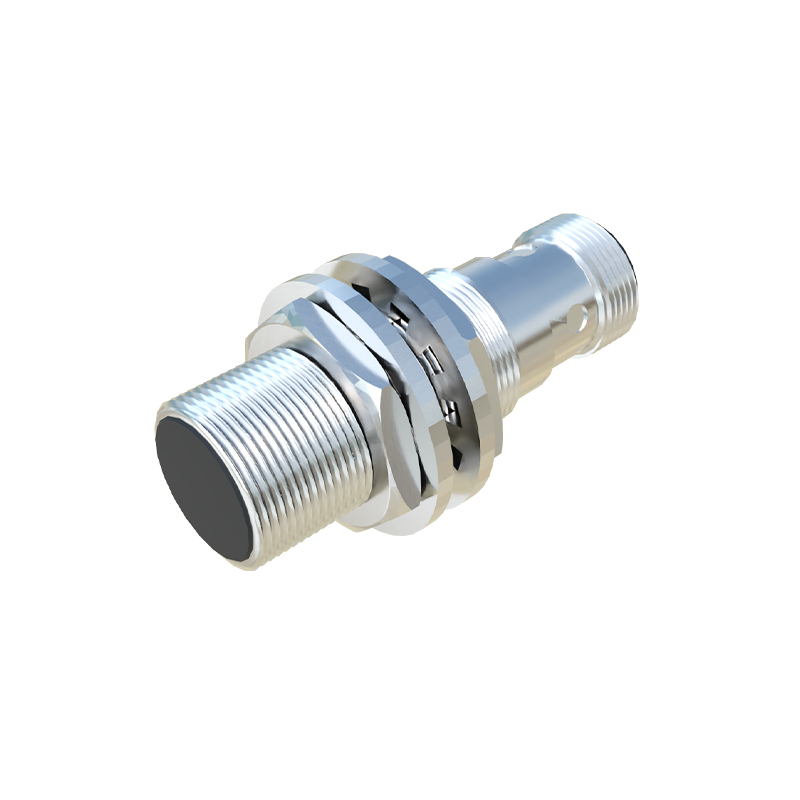
Proximity switches, on the other hand, are non-contact sensors that detect the presence or absence of a target object within a specified range without physical contact. They are broadly categorized by their sensing technology: inductive, capacitive, and photoelectric. Inductive proximity switches are the workhorses of metal detection. They generate an electromagnetic field. When a metallic target enters this field, it induces eddy currents, causing a change in the oscillator's amplitude, which is detected by the sensor's circuitry, triggering a solid-state switch. They are ideal for counting metal parts, detecting piston position in cylinders, or as end-of-travel limit switches. Capacitive proximity switches can detect both metallic and non-metallic materials (plastics, wood, liquids, granules) by sensing changes in capacitance caused by the target object disturbing the electrostatic field. This makes them suitable for level detection in tanks or presence detection of packaging materials. Photoelectric sensors use a light beam (visible, infrared, or laser) and detect interruptions or reflections of that beam. They offer the longest sensing ranges and are perfect for detecting small objects, transparent materials, or over long distances on conveyors.
Despite their different purposes, these technologies often work in concert within a single machine. A conveyor system might use photoelectric proximity switches to detect the position of packages and inductive sensors to verify metal components, while vibration sensors on the drive motor ensure its mechanical health. When integrating these sensors, engineers must consider factors like the sensing environment (presence of dust, oil, coolant, electromagnetic interference), required sensing distance or range, output type (PNP/NPN analog, digital, IO-Link), and mounting constraints.
The evolution towards Industry 4.0 and the Industrial Internet of Things (IIoT) is further enhancing the value of both technologies. Modern vibration sensors often come with integrated electronics for direct FFT analysis and wireless communication capabilities, streaming data directly to cloud-based analytics platforms. Similarly, smart proximity switches with IO-Link communication can provide not just a simple on/off signal but also diagnostic data like operating temperature, signal strength, and device health, enabling advanced condition monitoring of the sensor itself.
In conclusion, a deep understanding of vibration sensors and proximity switches is essential for designing robust and intelligent industrial systems. Vibration sensors are the diagnosticians of machine health, listening to the subtle whispers of mechanical wear. Proximity switches are the precise eyes and touchless fingers of automation, enabling accurate positioning and object detection. Selecting the right sensor for the right application, based on a clear understanding of the physical phenomenon to be detected and the operational environment, remains a core engineering responsibility that directly impacts productivity, safety, and total cost of ownership.