In the rapidly evolving landscape of industrial automation and precision measurement, laser distance sensor modules have emerged as a cornerstone technology. These sophisticated devices, leveraging the principle of time-of-flight (ToF), phase-shift, or triangulation, provide non-contact, high-accuracy distance measurements critical for a myriad of applications. This guide delves into the operational principles, key specifications, and practical implementation considerations for engineers and system integrators.
At its core, a laser distance sensor module operates by emitting a focused beam of coherent light, typically from a laser diode, towards a target. The sensor then detects the reflected light. The method of calculating the distance depends on the underlying technology. Time-of-Flight sensors measure the round-trip time for a laser pulse to travel to the target and back. Given the constant speed of light, distance is calculated with the formula: Distance = (Speed of Light × Time of Flight) / 2. This method is excellent for long-range measurements, often up to several hundred meters, with typical accuracies in the millimeter to centimeter range. Phase-shift sensors, on the other hand, modulate the amplitude of the continuous laser beam. The distance is derived from the phase difference between the emitted and received modulated signal, offering higher accuracy at shorter to medium ranges. Triangulation sensors use a different geometric approach. The laser spot on the target is viewed from an angle by a position-sensitive detector (PSD). The position of the spot on the PSD changes linearly with the target distance, enabling extremely high resolution and accuracy for close-range applications, often in the sub-micron realm.
Selecting the appropriate laser sensor module requires a careful analysis of key performance parameters. Range is the primary consideration, spanning from a few millimeters to over 300 meters. Accuracy and Resolution define the sensor's precision; while accuracy is the closeness to the true value, resolution is the smallest detectable change. Repeatability is crucial for consistent performance in automated processes. The Response Time or measurement rate, often in the kHz range, determines how quickly the sensor can update its reading, which is vital for high-speed production lines. Environmental Robustness is non-negotiable in industrial settings. Key factors include the Ingress Protection (IP) rating for dust and water resistance, operating temperature range, and resistance to ambient light interference. Many modern sensors incorporate algorithms and optical filters to mitigate the effects of stray light. The Output Interface is another critical decision point. Common options include analog voltage/current (e.g., 0-10V, 4-20mA), digital interfaces like RS-232, RS-485, or USB, and industrial fieldbus protocols such as PROFINET, EtherCAT, or EtherNet/IP. The choice depends on the control system architecture.
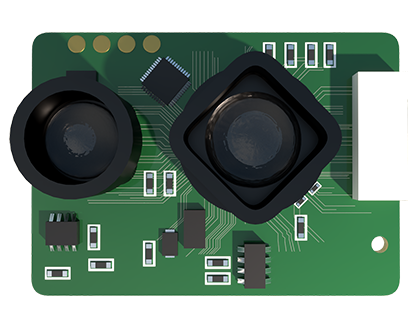
The application spectrum for laser distance sensor modules is vast and growing. In Factory Automation, they are indispensable for precise positioning of robotic arms, conveyor belt monitoring, and dimensional gauging of manufactured parts. The Logistics and Warehousing sector relies on them for palletizing, volume measurement of packages, and automated guided vehicle (AGV) navigation. In Construction and Civil Engineering, these sensors facilitate leveling, deformation monitoring, and crane anti-collision systems. Emerging fields like Autonomous Mobile Robots (AMRs) and Advanced Driver-Assistance Systems (ADAS) also depend on compact, reliable laser sensors for obstacle detection and environment mapping.

Successful integration extends beyond selecting a sensor from a datasheet. Mechanical Mounting must ensure stability and minimize vibrations that could affect readings. Electrical Integration involves proper power supply conditioning and correct wiring to avoid noise on signal lines. Software Configuration, often through dedicated configuration tools or SDKs, allows for setting measurement modes, filtering parameters, and output formatting. A critical, often overlooked, aspect is Target Surface Characteristics. The sensor's performance can vary significantly based on the target's color, material, and surface finish. Highly reflective or transparent surfaces (like glass) can cause erroneous readings or signal loss. Dark, matte, or absorbing surfaces reduce the intensity of the reflected signal. Many sensors feature automatic exposure control or receive signal indicators to help diagnose such issues. For challenging surfaces, applying a retro-reflective target or using a sensor with a higher laser power class (adhering to eye safety regulations like IEC 60825-1) may be necessary.
Looking ahead, the trend is towards smarter, more integrated, and miniaturized laser sensor modules. The integration of edge computing capabilities allows for onboard data processing, such as peak detection or profile analysis. Multi-function sensors that can simultaneously measure distance, position, and even profile height are becoming more common. Furthermore, adherence to industrial communication standards and the development of robust, plug-and-play form factors are simplifying deployment and reducing total system integration time.
In conclusion, laser distance sensor modules are powerful tools that bridge the gap between the physical and digital worlds in industrial systems. A thorough understanding of their operating principles, a methodical approach to selection based on application-specific requirements, and careful attention to integration details are paramount for unlocking their full potential, ensuring reliability, accuracy, and longevity in demanding operational environments.