Gallium arsenide (GaAs), a compound of the elements gallium and arsenic, represents a cornerstone semiconductor material in the realm of modern electronics, particularly within the specialized field of proximity sensing. Its unique physical and electronic properties offer distinct advantages over more common semiconductors like silicon, especially in applications demanding high speed, efficiency, and operation in challenging environments. For electrical engineers designing and integrating proximity sensors, a deep understanding of GaAs is crucial for optimizing system performance.
The fundamental superiority of GaAs lies in its material characteristics. It is a direct bandgap semiconductor with a bandgap of approximately 1.42 eV at room temperature, compared to silicon's 1.12 eV indirect bandgap. This direct bandgap property is pivotal for efficient light emission and absorption, making GaAs an ideal candidate for optoelectronic components. In proximity sensors, this translates directly to the performance of the light source, typically a light-emitting diode (LED) or laser diode, and the photodetector. GaAs-based infrared (IR) LEDs and laser diodes can emit light with high intensity and at wavelengths (commonly around 850-940 nm) that are ideal for sensing, being largely invisible to the human eye yet easily detectable by semiconductor photodetectors. Furthermore, GaAs photodetectors, such as photodiodes, exhibit high responsivity and fast response times in this spectral range, enabling precise and rapid detection of reflected light from a target object.
Another critical advantage is electron mobility. GaAs boasts an electron mobility nearly six times higher than that of silicon. This property is exceptionally beneficial for high-frequency operation. In active proximity sensors that rely on modulated light signals to distinguish against ambient light, the high-speed switching capability of GaAs components allows for higher modulation frequencies. This results in improved noise immunity, greater sensing accuracy, and the ability to detect faster-moving objects. The material's high saturated electron velocity also contributes to low-noise performance in the detector circuitry, enhancing the signal-to-noise ratio (SNR) for weak return signals from distant or low-reflectivity targets.
From a system design perspective, the use of GaAs impacts several key parameters. Firstly, operational range and sensitivity are enhanced. The efficient light generation and detection enable sensors to achieve longer ranges or maintain performance with lower power consumption. Secondly, response time is significantly reduced. The fast switching speeds of GaAs-based emitters and detectors allow for quicker sampling rates, which is vital in dynamic industrial automation, robotics, and safety applications where millisecond-level detection is mandatory. Thirdly, thermal performance is more robust. GaAs devices generally have a wider operating temperature range compared to some silicon-based optoelectronics, maintaining stable characteristics in both high-temperature industrial settings and low-temperature environments.
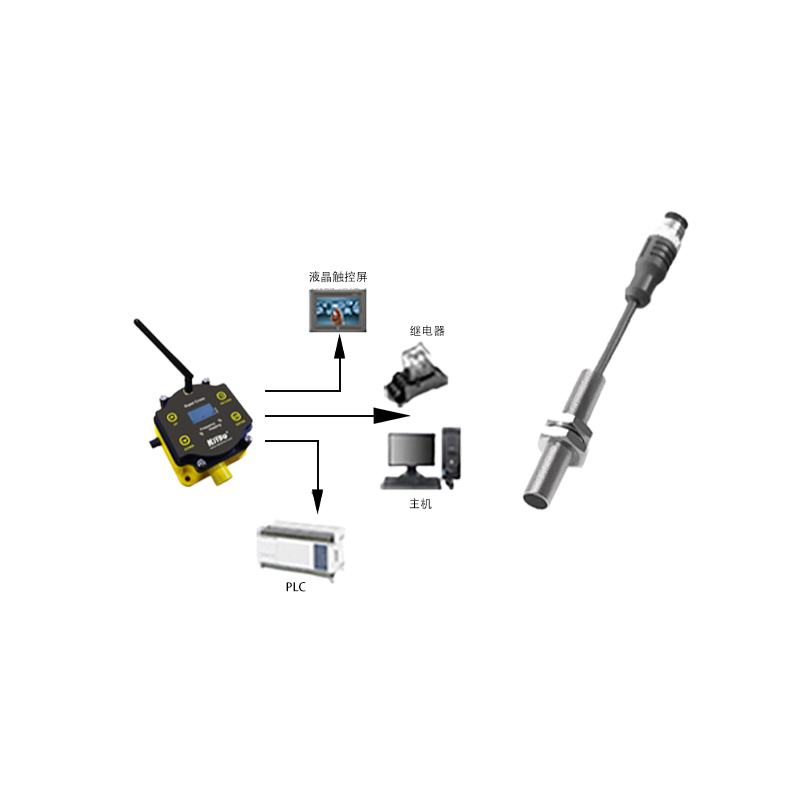
However, engineering with GaAs is not without its considerations. The primary challenge is cost. GaAs wafer production and device fabrication are more expensive than silicon processes, which can increase the unit cost of the sensor. This often relegates GaAs-based sensors to high-performance or specialized applications where its advantages justify the premium. Additionally, while GaAs is excellent for discrete optoelectronic components, the integration of complex digital logic on a GaAs substrate (as in a monolithic System-on-Chip sensor) is less common and more costly than with silicon CMOS technology. Therefore, a typical high-performance proximity sensor module might feature a GaAs IR emitter and a GaAs or InGaAs (indium gallium arsenide, a related ternary compound) photodiode, coupled with a silicon-based microcontroller for signal processing.
In practical applications, GaAs is the material of choice for demanding proximity sensing tasks. In industrial automation, it is found in precision position sensing on assembly lines, object counting at high speeds, and robotic guidance systems. In consumer electronics, it enables the reliable performance of automatic screen dimming and touchless gesture control in smartphones. In automotive systems, GaAs-based sensors contribute to parking assistance, blind-spot detection, and occupant presence detection due to their reliability across a wide temperature range.
Looking forward, the role of GaAs in proximity sensing remains secure, though it coexists with other III-V compounds like Gallium Nitride (GaN) for specific wavelengths and emerging silicon-based technologies. The ongoing research focuses on improving manufacturing yields, integrating hybrid systems more effectively, and pushing the limits of modulation frequency and power efficiency. For the electrical engineer, selecting GaAs components involves a calculated trade-off: assessing the requirements for speed, range, environmental robustness, and sensitivity against the constraints of budget and system integration complexity. When the application calls for uncompromising performance in active optical proximity sensing, gallium arsenide continues to provide a technologically superior foundation.