Photoelectric proximity sensors are indispensable components in modern industrial automation, offering non-contact detection capabilities for a wide range of applications. These sensors operate based on the modulation, emission, and reception of light beams, typically within the infrared or visible spectrum. The fundamental principle involves an emitter that projects a light beam—often modulated at a specific frequency to enhance immunity to ambient light interference—and a receiver that detects changes in the received light intensity. When an object enters the sensing field, it alters the light beam's path or intensity, triggering an output signal from the sensor's circuitry.
There are three primary operating modes: through-beam, retro-reflective, and diffuse reflective. Through-beam sensors consist of separate emitter and receiver units positioned opposite each other. Detection occurs when an object interrupts the direct beam path between them, providing high accuracy and long sensing ranges, often exceeding several meters. Retro-reflective sensors house both emitter and receiver in a single housing, utilizing a reflector to bounce the light beam back. An object is detected when it blocks the reflected beam. This mode offers easier alignment than through-beam systems but may be affected by the reflectivity of the target. Diffuse reflective sensors, also known as proximity-mode sensors, rely on the reflection of light directly from the target object itself. The emitter and receiver are mounted in the same unit, and detection depends on the amount of light reflected back. Sensing distance is influenced by the object's size, color, and surface texture, making this mode suitable for shorter ranges and specific material detection.
Key components include the light source, which is commonly an LED (Light Emitting Diode) due to its longevity and stability, with infrared LEDs being prevalent for reduced ambient light interference. The receiver is typically a phototransistor or photodiode that converts incoming light into an electrical signal. Advanced sensors incorporate microprocessors for signal processing, enabling features like background suppression, which uses triangulation principles to ignore distant objects or reflections, and programmable sensing windows for precise detection zones.
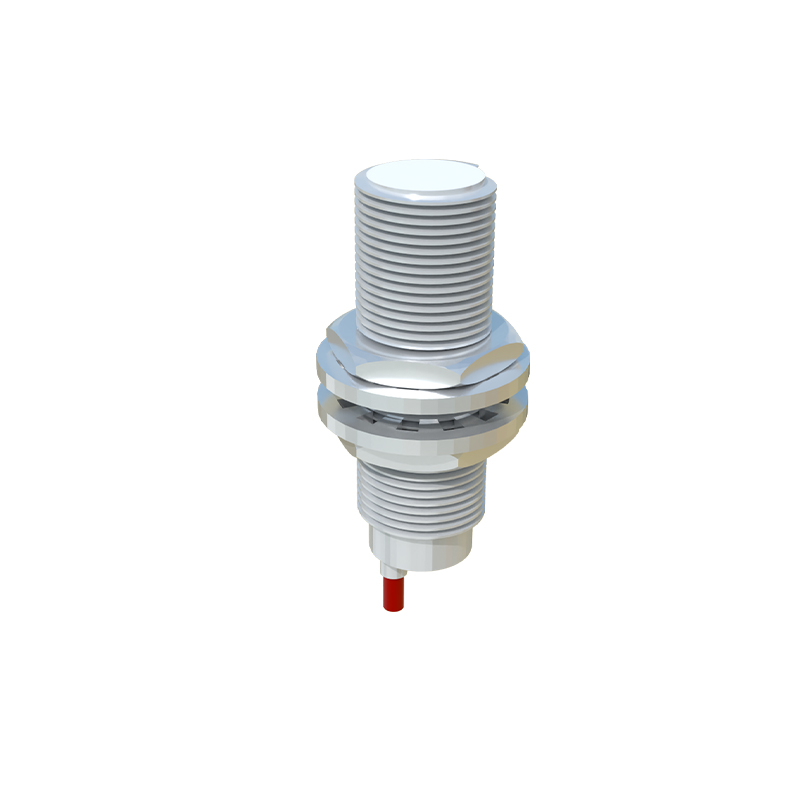
The performance of photoelectric sensors is characterized by parameters such as sensing distance, repeat accuracy, response time, and environmental resistance. Factors like dust, fog, or harsh lighting can affect reliability; thus, many industrial models feature robust housings (e.g., IP67-rated enclosures) and modulated light signals to filter out noise. Applications span across manufacturing lines for object presence detection, counting, positioning, and quality control. For instance, in packaging machinery, they verify label placement or monitor product flow; in automotive assembly, they ensure component alignment.
Recent advancements include the integration of IO-Link communication for digital parameter setting and diagnostics, as well as miniaturized designs for space-constrained installations. When selecting a photoelectric proximity sensor, engineers must consider the target material, required sensing range, environmental conditions, and output compatibility (e.g., NPN/PNP, analog, or digital outputs). Proper installation and alignment are critical to avoid false triggers, with alignment indicators often built into the sensor housing.
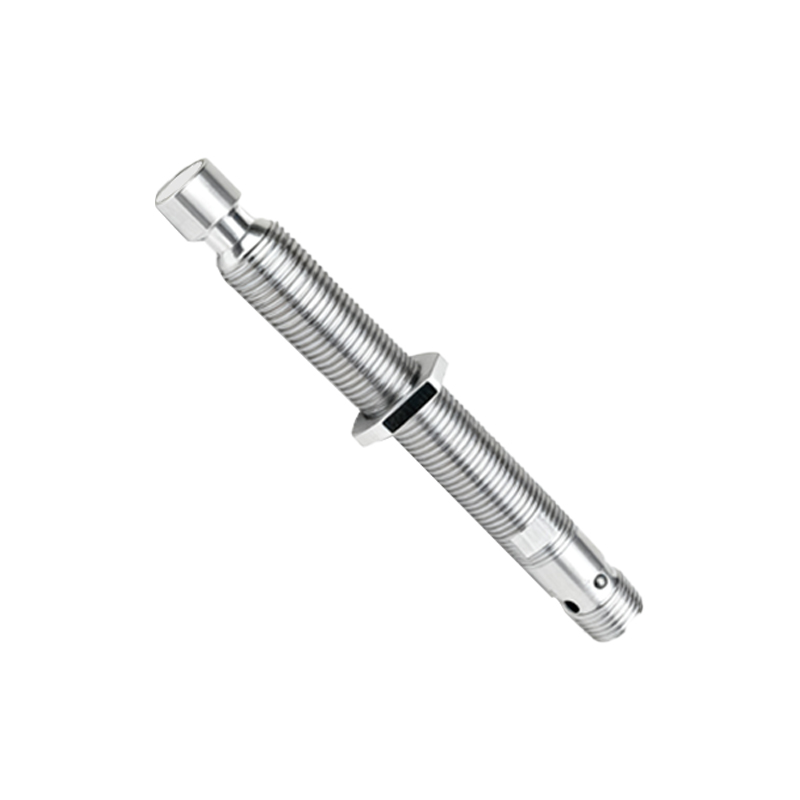
In summary, photoelectric proximity sensors provide versatile, reliable non-contact sensing by leveraging light-based technology. Their adaptability to diverse industrial environments and continuous innovation in signal processing ensure they remain a cornerstone of automated systems, enhancing efficiency and safety in processes ranging from material handling to precision assembly.