In the realm of industrial automation and control systems, proximity sensors are indispensable components for non-contact detection of objects. Their reliability and performance are heavily influenced by one critical factor: proper installation. Selecting the correct installation type is not merely a mechanical consideration; it directly impacts sensing range, accuracy, system stability, and longevity. This guide delves into the primary installation types for proximity sensors, outlining their characteristics, ideal applications, and key considerations for electrical engineers and system integrators.
The first and most fundamental distinction lies between Flush-mount (Embedded) Installation and Non-flush-mount (Non-embedded) Installation. This classification refers to the sensor's physical relationship with its mounting surface.
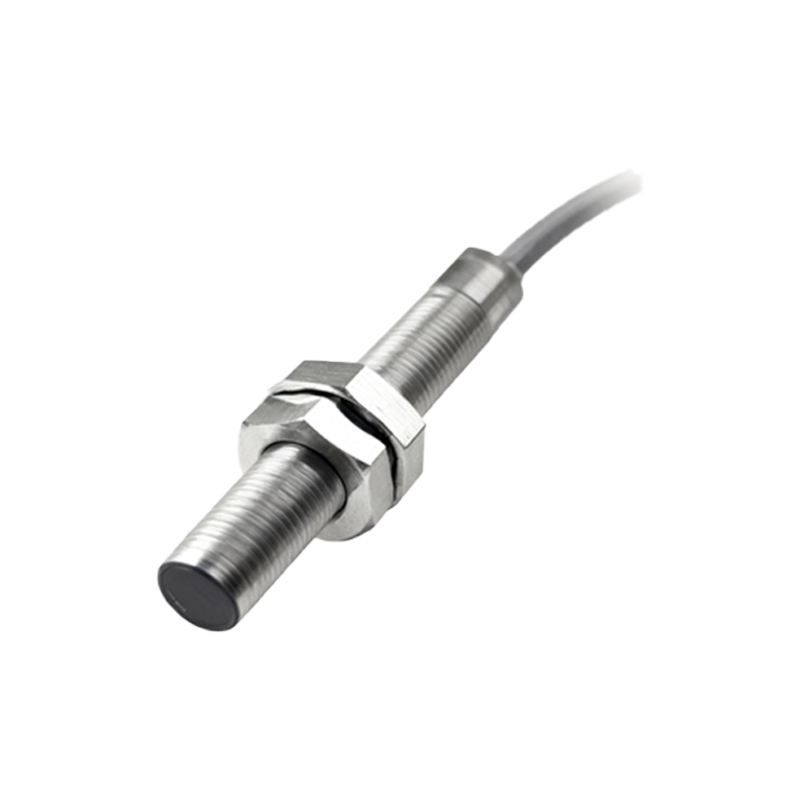
Flush-mount Installation involves installing the sensor so that its sensing face is aligned flush with the surrounding metal mounting surface or bracket. In this configuration, the sensor is typically recessed or shielded. The primary advantage of flush mounting is its inherent immunity to lateral interference from the mounting material itself. The sensing field is concentrated directly in front of the sensor, preventing the metallic surroundings from affecting its operation. This allows for side-by-side installation of multiple sensors without mutual interference, provided the manufacturer's specified minimum separation distances are maintained. Flush-mount sensors generally have a shorter sensing range compared to their non-flush counterparts of the same size. They are the preferred choice in applications with space constraints, in metallic machine structures, or where sensors must be mounted close to each other.
Conversely, Non-flush-mount Installation means the sensor's sensing face protrudes from the mounting surface, and its sensing coil or field is unshielded. This design results in a significantly longer sensing range—often twice that of a similar-sized flush-mount sensor. The sensing field is larger and extends radially around the head. However, this sensitivity makes it susceptible to influences from surrounding conductive materials. The mounting bracket must be non-metallic, or sufficient clearance must be provided around the sensor head to prevent false triggering. Non-flush sensors cannot be installed flush with metal and require careful spacing when multiple units are used. They are ideal for applications requiring longer detection distances or where the target approaches from an angle.
Beyond this basic dichotomy, installation considerations extend to orientation and environmental protection. The sensing direction—axial (front sensing) or lateral (side sensing)—must align with the target's approach path. Axial sensing is most common, while lateral-sensing models are used where space for frontal approach is limited.
Mounting Hardware and Sealing are equally crucial. Most cylindrical sensors feature standard threads (e.g., M8, M12, M18, M30) for easy installation into threaded holes or mounting nuts. Proper torque, as specified in the datasheet, must be applied to avoid damaging the housing or compromising the seal. The Ingress Protection (IP) rating (e.g., IP67, IP69K) dictates the installation environment. Sensors rated IP67 and above can be installed in areas subject to washdowns, coolants, or dust, but the integrity of the cable gland or connector is part of this system.
For specific challenging scenarios, specialized installations are employed. Through-hole Mounting involves installing a cylindrical sensor through a pre-drilled hole in a bracket or wall, secured with nuts on both sides for stability in high-vibration environments. Bracket Mounting using proprietary or universal brackets offers flexibility for adjusting position and angle, especially for rectangular or block-style sensors.
Critical electrical installation practices must never be overlooked. Always adhere to the manufacturer's wiring diagram (NPN vs. PNP, Normally Open vs. Normally Closed). Use shielded cables in electrically noisy environments, grounding the shield appropriately at the controller end. Ensure proper voltage supply regulation and incorporate surge protection devices if the sensor is connected to inductive loads like solenoids or motors. Maintain the recommended bend radius for sensor cables to prevent internal wire breakage.
In summary, the choice between flush and non-flush mounting sets the foundational performance parameters. Engineers must then integrate factors like sensing direction, environmental sealing, mechanical securing, and correct electrical integration. A methodical approach to proximity sensor installation—beginning with a thorough review of the datasheet, considering the target material, size, and approach, and accounting for the ambient conditions—is paramount. This diligence ensures optimal sensor performance, minimizes downtime, and upholds the reliability of the entire automated system. Remember, a sensor is only as good as its installation.