In the realm of industrial automation and high-precision control systems, the evolution of human-machine interfaces (HMIs) has been pivotal. Among the most transformative advancements are laser positioning sensor buttons, which are redefining reliability, durability, and accuracy in demanding environments. Unlike traditional mechanical or capacitive touch buttons, these interfaces utilize a focused laser beam to detect actuation, offering unparalleled performance where it matters most.
The core technology hinges on a low-power laser emitter and a photodetector. When the button surface—often a marked zone on a control panel—is undisturbed, the laser beam reflects along a predetermined path to the detector, maintaining a steady signal. A press or touch interrupts this beam, altering the reflection pattern or intensity. This change is instantly registered by the sensor's microcontroller, triggering the designated command. The absence of physical moving parts is the first major advantage. In settings filled with dust, moisture, oils, or extreme temperatures, mechanical buttons can fail due to jamming, corrosion, or wear. Laser sensor buttons, housed behind a sealed glass or polycarbonate overlay, remain completely isolated from contaminants. This makes them ideal for food processing plants, pharmaceutical cleanrooms, outdoor machinery, and heavy manufacturing.
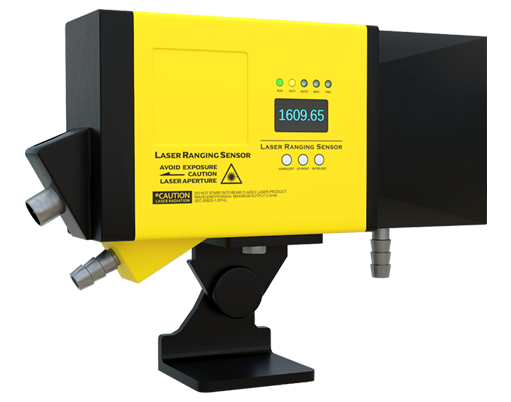
Precision and response time are another leap forward. The laser detection event occurs at the speed of light, resulting in actuation times measured in microseconds. This is critical for high-speed assembly lines, robotic control stations, or safety e-stops where milliseconds count. Furthermore, the activation point is defined optically with extreme accuracy, eliminating the ambiguity or "mushiness" sometimes associated with membrane switches. Operators experience a consistent, crisp response with every interaction, reducing input errors.
From a design and maintenance perspective, these interfaces offer significant benefits. The control panel becomes a seamless, flat surface that is easy to clean and sterilize, a non-negotiable requirement in healthcare or semiconductor fabrication. Vandal resistance is also enhanced, as the robust overlay protects the sensitive components beneath. Maintenance downtime plummets; there are no contacts to clean or switches to replace. System diagnostics are often integrated, allowing the sensor to report its status and health, facilitating predictive maintenance.
Integration with modern industrial networks is seamless. The digital output of a laser positioning sensor button can easily interface with PLCs (Programmable Logic Controllers), IoT gateways, or supervisory control systems. This enables sophisticated functions like multi-level access control (where a sequence of touches acts as a code), pressure-sensitive commands, or even gesture recognition by using an array of sensor points. The programmability of the actuation zone also allows for dynamic button reconfiguration—a single panel can adapt its controls for different machines or processes.

However, implementing this technology requires careful consideration. The initial cost is higher than that of simple mechanical buttons. The design must account for the overlay material's optical properties to ensure clear laser transmission and reflection. Ambient light interference, particularly from powerful industrial lighting or direct sunlight, must be mitigated through optical filtering or modulation of the laser signal. Proper calibration during installation is essential to define the precise actuation threshold.
In conclusion, laser positioning sensor buttons represent more than just an incremental upgrade. They are a foundational shift toward more intelligent, resilient, and hygienic control interfaces. As industries push toward greater automation and data integration, the demand for such reliable and precise input devices will only grow. They solve persistent problems in harsh environments while opening doors to new interactive possibilities, ultimately contributing to higher productivity, improved safety, and lower total cost of ownership for industrial systems. Their adoption marks a clear step into the future of industrial design and control.