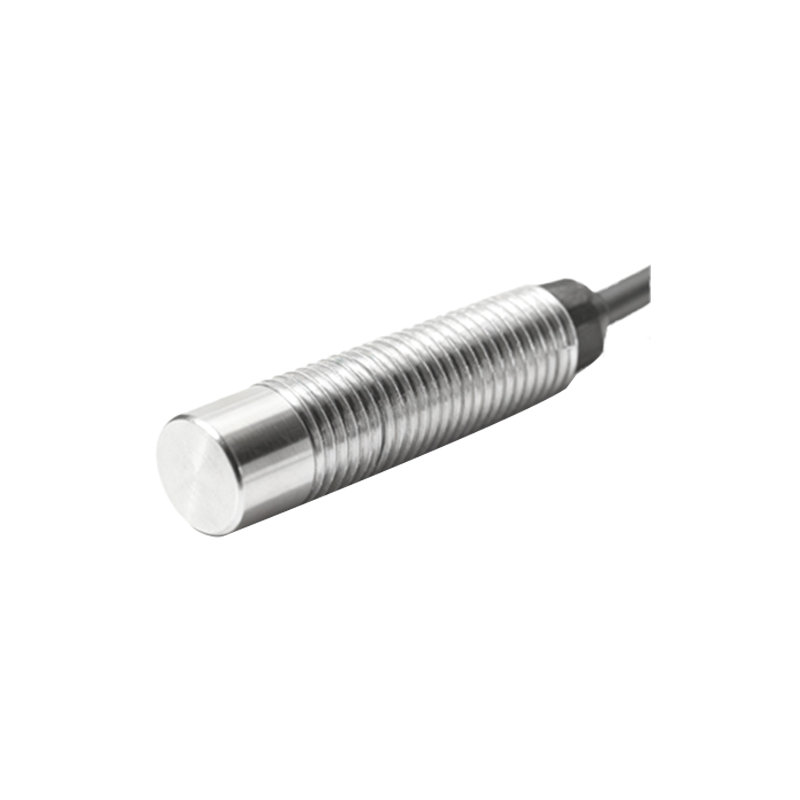
Proximity switch sensors, often simply called proximity sensors, are fundamental components in modern industrial automation and control systems. These non-contact sensing devices detect the presence or absence of an object within a specified range without any physical contact. Their operation relies on the disturbance of an electromagnetic field, acoustic wave, or light beam, making them exceptionally reliable, durable, and suitable for harsh environments where mechanical wear, contamination, or frequent maintenance are significant concerns.
The core principle behind the most common type—the inductive proximity sensor—is electromagnetic induction. The sensor's active face contains a coil that is part of an oscillator circuit, generating a high-frequency alternating electromagnetic field. When a metallic object (the target) enters this field, eddy currents are induced on the surface of the object. These eddy currents draw energy from the oscillator, causing a reduction in its oscillation amplitude. An integrated evaluation circuit monitors this amplitude change. Once the amplitude drops below a predefined threshold—indicating the target is within the specified sensing distance—the circuit triggers a switching action, changing the state of the sensor's output (e.g., from OFF to ON, or vice versa). This sensing distance, or "switching distance," is standardized and depends on the sensor's design and the target material; for instance, steel is detected at the nominal range, while aluminum or copper may reduce the effective range.
Another widely used variant is the capacitive proximity sensor. It operates on a similar principle but can detect both metallic and non-metallic materials, such as plastics, glass, wood, and liquids. The sensor face forms one plate of a capacitor, with the target object acting as the other plate, and the air gap as the dielectric. As the target approaches, the capacitance of this system increases. An internal circuit converts this change in capacitance into a voltage change, which is then evaluated to trigger the output switch. This makes capacitive sensors ideal for level detection, material handling, and presence sensing of non-metals.
Ultrasonic proximity sensors employ a different physical principle. They emit high-frequency sound waves (inaudible to humans) and evaluate the reflected echo. By measuring the time delay between the emitted pulse and the received echo (time-of-flight principle), the sensor can determine the distance to an object. These sensors are excellent for detecting objects of virtually any material, shape, or color, and are less affected by dust, smoke, or light interference, making them suitable for challenging environments.
Photoelectric sensors, another key category, use a beam of light (often infrared, visible red, or laser). The basic types include through-beam (separate emitter and receiver), retro-reflective (with a reflector), and diffuse reflective (where the target itself reflects the beam back to the receiver). An object interrupts or reflects the light beam, causing a change in the received light intensity, which is processed to produce a switching signal. They offer very long sensing ranges and high precision.
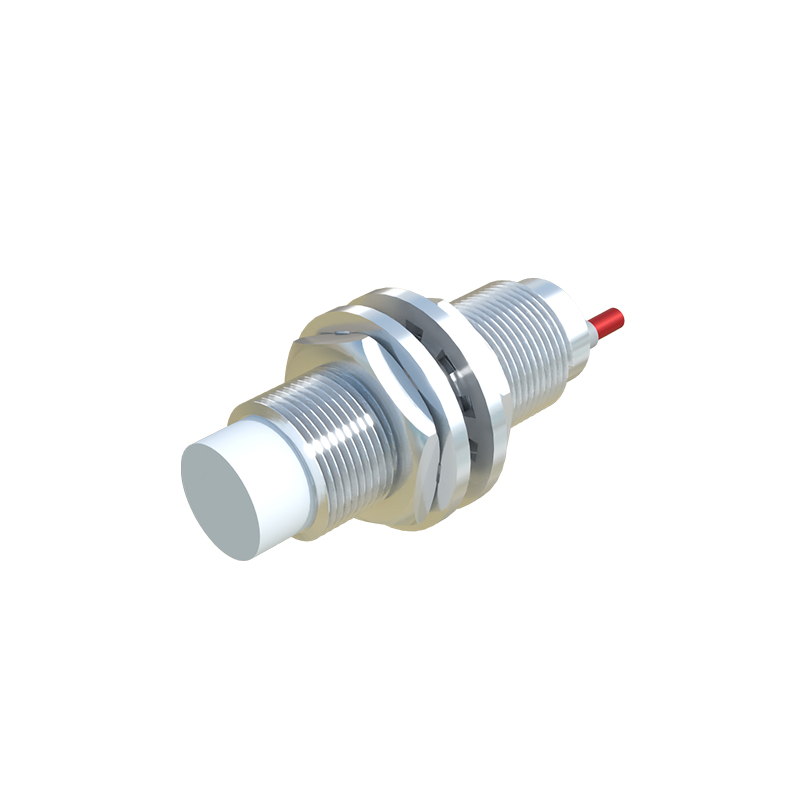
The output of a proximity sensor is typically a solid-state switch, either as a PNP (sourcing) or NPN (sinking) transistor configuration, or a relay contact. This output interfaces directly with programmable logic controllers (PLCs), motor starters, or other control devices. Key selection parameters include sensing distance, target material, output type, supply voltage, housing style (cylindrical or rectangular), and environmental protection rating (IP rating).
The advantages of proximity sensors are numerous. The absence of moving parts and physical contact eliminates mechanical wear, ensuring a long operational life and high reliability. They offer high switching speeds, suitable for fast-paced production lines. Their sealed housings protect against oil, coolants, and dust. Furthermore, they are not influenced by the surface properties of the target, such as color or reflectivity (except for photoelectric types), providing consistent performance.
In conclusion, proximity switch sensors are indispensable in automation for tasks like position detection, end-of-travel limits, counting, jam detection, and speed monitoring. Understanding their underlying principles—whether inductive, capacitive, ultrasonic, or photoelectric—is crucial for engineers and technicians to select the right sensor for a given application, ensuring robust, efficient, and maintenance-free operation in complex industrial systems. Their non-contact nature continues to drive innovation in smarter, more integrated, and IO-Link enabled devices, pushing the boundaries of modern manufacturing.