In the realm of industrial automation and precision measurement, profiling laser sensors have emerged as indispensable tools. These advanced optical devices project a line of laser light onto a target object and use a camera or receiver to capture the deformation or displacement of that line. The resulting two-dimensional profile data provides highly accurate, non-contact measurements of an object's shape, dimensions, surface contours, and position in three-dimensional space. Unlike single-point laser sensors, which measure only one spot at a time, profiling sensors capture thousands of data points simultaneously along the laser line, enabling rapid and comprehensive inspection.
The core technology behind a profiling laser sensor typically involves triangulation. A laser diode emits a fan-shaped beam that strikes the target surface. The scattered or reflected light from this line is then focused onto a high-resolution CMOS or CCD imaging sensor. The precise position where the laser line appears on the imager changes based on the distance and contour of the target. Sophisticated onboard processors analyze this image in real-time, calculating height or depth information for each point along the line to construct a detailed cross-sectional profile. Key performance specifications include measurement range, Z-axis resolution (sometimes in the micron range), profile frequency (or scan rate, often in kHz), and laser line length.
The applications for profiling laser sensors are vast and span numerous industries. In automotive manufacturing, they are deployed for robotic guidance, weld seam inspection, and panel gap measurement. In electronics, they verify component coplanarity, solder paste height, and connector pin alignment. The logistics sector utilizes them for parcel dimensioning and volume calculation. In heavy industry, they monitor wear on large machinery components like turbine blades or rail tracks. Furthermore, they are critical in quality control processes, detecting defects such as dents, warpage, or deviations in extruded plastics and rolled metals that would be invisible to traditional vision systems.
Selecting the appropriate profiling laser sensor requires careful consideration of several factors. The operating environment is paramount; sensors for harsh conditions may require robust IP67 or higher enclosures, specialized filters to mitigate ambient light interference, and resistance to vibrations. The required measurement resolution and speed must align with the production line's throughput. The reflectivity and color of the target material can significantly affect performance, necessitating sensors with automatic exposure control or multiple laser power settings to handle surfaces ranging from shiny metal to dark, absorbent rubber. Integration ease is another crucial aspect, with modern sensors offering digital interfaces like Ethernet/IP, PROFINET, or EtherCAT, alongside powerful, user-friendly software development kits (SDKs) for seamless integration into existing control systems.
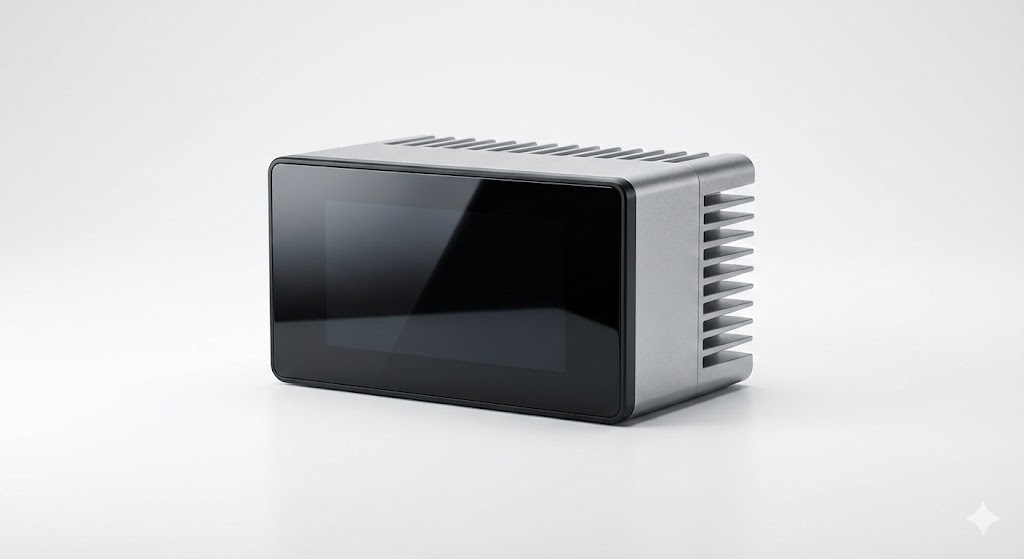
Recent advancements are pushing the boundaries of what profiling sensors can achieve. The integration of blue laser technology, as opposed to traditional red lasers, offers superior performance on organic materials and shiny surfaces by reducing penetration and speckle noise. High dynamic range (HDR) imaging capabilities allow a single profile to accurately capture data from surfaces with extreme contrast. Furthermore, the convergence of profiling data with traditional 2D vision and deep learning algorithms is enabling next-generation inspection systems capable of complex classification and anomaly detection beyond simple dimensional analysis.
In conclusion, profiling laser sensors represent a critical evolution in metrology and machine vision. Their ability to deliver dense, accurate 3D profile data at high speeds makes them a cornerstone technology for Industry 4.0 initiatives focused on zero-defect manufacturing, adaptive robotics, and comprehensive process digitization. As sensor technology, processing power, and software algorithms continue to advance, their role in ensuring precision, efficiency, and quality across the industrial landscape will only become more profound and widespread.