In the rapidly evolving field of electrical engineering, precision measurement and control systems have become paramount. Among the most innovative developments are laser auto-focus color temperature sensors, which integrate advanced optical technologies to enhance accuracy and efficiency in various industrial applications. These sensors utilize laser beams to achieve precise focusing, while simultaneously measuring the color temperature of light sources, providing critical data for quality control, automation, and environmental monitoring.
The core technology behind laser auto-focus color temperature sensors involves a combination of laser triangulation and spectral analysis. Laser triangulation enables the sensor to determine the exact distance to a target surface by projecting a laser dot and analyzing its reflection with a high-resolution detector. This allows for automatic focusing without physical contact, reducing wear and tear in manufacturing processes. Concurrently, the sensor employs a spectrometer or photodiode array to capture the spectral distribution of light emitted or reflected by the target. By analyzing this data, the sensor calculates the color temperature, expressed in Kelvin (K), which indicates whether the light is warm (lower K) or cool (higher K). This dual functionality is particularly valuable in industries such as semiconductor fabrication, automotive lighting, and display production, where both dimensional accuracy and color consistency are crucial.
One of the key advantages of these sensors is their ability to operate in challenging environments. Thanks to the coherent nature of laser light, they can maintain focus even in low-light or high-vibration settings, outperforming traditional optical sensors. Additionally, the integration of microprocessors and machine learning algorithms allows for real-time data processing and adaptive calibration. For instance, in LED manufacturing, sensors can automatically adjust production lines based on color temperature readings, ensuring uniform output and reducing waste. This not only improves product quality but also enhances energy efficiency by optimizing light output.
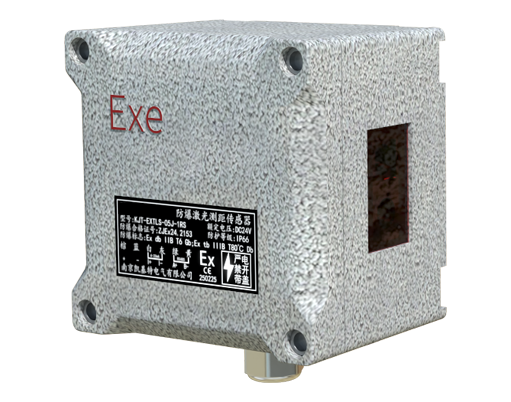
From an electrical engineering perspective, the design of these sensors involves sophisticated circuitry and signal processing techniques. The laser diode driver must provide stable current to ensure consistent beam intensity, while the photodetector circuit amplifies weak signals with minimal noise. Advanced analog-to-digital converters (ADCs) digitize the analog signals for precise analysis, and embedded software implements algorithms for focus control and color temperature calculation. Engineers often incorporate communication interfaces like I2C, SPI, or Ethernet to enable integration with broader industrial networks, facilitating Industry 4.0 applications such as predictive maintenance and smart factory systems.
In practice, laser auto-focus color temperature sensors are revolutionizing fields beyond manufacturing. In architectural lighting, they help maintain desired ambiance by monitoring and adjusting color temperatures in real-time. In agriculture, they assist in optimizing grow lights for plant health by ensuring appropriate spectral outputs. Moreover, their non-contact nature makes them ideal for inspecting delicate materials, such as in pharmaceutical packaging or food processing, where contamination risks must be minimized.

Despite their benefits, challenges remain, including cost considerations and the need for regular calibration to account for environmental factors like temperature fluctuations. Ongoing research focuses on miniaturization and cost reduction, with developments in MEMS (Micro-Electro-Mechanical Systems) technology promising more compact and affordable solutions. As electrical engineers continue to refine these sensors, we can expect broader adoption across sectors, driving innovation in automation and quality assurance.
In conclusion, laser auto-focus color temperature sensors represent a significant leap forward in measurement technology, blending laser precision with spectral analysis to meet the demands of modern industry. Their ability to deliver accurate, real-time data supports efficiency, sustainability, and quality in diverse applications, underscoring their importance in the toolkit of today's electrical engineer. As technology advances, these sensors will likely become even more integral to smart systems, shaping the future of electrical engineering and beyond.