Laser sensors have become indispensable components in modern industrial automation across Europe and North America, offering high precision, reliability, and versatility in diverse applications such as object detection, positioning, measurement, and quality control. Proper installation is critical to ensuring optimal performance, longevity, and safety compliance with regional standards like IEC (International Electrotechnical Commission) in Europe and OSHA (Occupational Safety and Health Administration) or ANSI (American National Standards Institute) in the United States. This guide outlines essential steps and considerations for installing laser sensors in industrial settings, adhering to best practices prevalent in Western markets.
Before installation, thorough planning is necessary. Begin by selecting a laser sensor suitable for the specific application—consider factors like sensing range, resolution, response time, environmental ratings (e.g., IP67 for dust and water resistance), and output type (e.g., analog, digital, or IO-Link). In Europe, ensure compliance with CE marking and relevant directives like the Machinery Directive 2006/42/EC, while in the U.S., verify adherence to UL (Underwriters Laboratories) or CSA (Canadian Standards Association) certifications for electrical safety. Always review the manufacturer’s datasheet and installation manual, as specifications may vary between brands like Keyence, SICK, or Banner Engineering.
The installation site must be carefully evaluated. Avoid areas with excessive vibration, temperature extremes, or direct exposure to sunlight, which can affect sensor accuracy. For outdoor or harsh environments, use enclosures or protective housings rated for industrial use. Mount the sensor securely using appropriate brackets or fixtures, ensuring it is aligned correctly with the target. Misalignment is a common cause of failure; use alignment tools or built-in indicators (e.g., LED signals) to verify the beam path. Maintain a stable power supply, typically 10-30 V DC for most industrial laser sensors, and implement surge protection to prevent damage from electrical noise or voltage spikes, which are critical in facilities with heavy machinery.
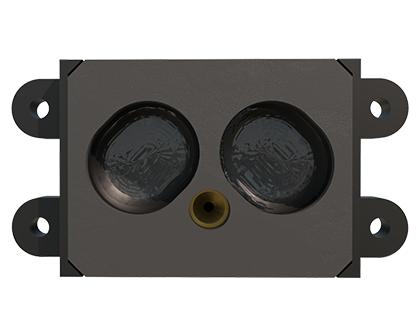
Wiring and connectivity require attention to detail. Follow color-coded standards: in Europe, brown wires often denote positive voltage (L+), blue for negative (L-), and black/white for output signals, while U.S. practices may align with NEC (National Electrical Code) guidelines. Use shielded cables to minimize electromagnetic interference (EMI), especially in plants with motors or frequency drives. Ground the sensor properly to reduce noise and enhance safety—this is emphasized in both European (via EN 60204-1) and American (via NFPA 79) electrical codes. For networked systems, such as those using Ethernet/IP or PROFINET in European factories, ensure correct addressing and configuration to integrate with PLCs (Programmable Logic Controllers) or SCADA (Supervisory Control and Data Acquisition) systems.

Calibration and testing are vital post-installation steps. Adjust the sensor settings—like sensitivity, threshold, or teach-in modes—according to the target material and distance. Many modern laser sensors feature auto-calibration or software-assisted setup via apps or HMI (Human-Machine Interface) tools. Perform functional tests under actual operating conditions to verify repeatability and accuracy. Document the installation, including calibration records and maintenance schedules, as required by quality management systems like ISO 9001, widely adopted in Western industries. Regular maintenance, such as cleaning lenses and checking connections, helps prevent downtime and extends sensor life.
Safety cannot be overstated. Laser sensors in industrial use typically fall under Class 1 or Class 2, considered safe under normal operation, but always follow laser safety standards like IEC 60825-1 in Europe and FDA/CDRH regulations in the U.S. Install warning labels and barriers if needed, and train personnel on safe handling procedures. In summary, successful laser sensor installation in European and American contexts hinges on meticulous planning, adherence to regional standards, and ongoing validation—key to maximizing efficiency in automated processes.