In the vast and intricate world of industrial automation, proximity sensors stand as silent, yet indispensable, sentinels. These devices, which detect the presence or absence of an object without physical contact, form the bedrock of countless processes, from assembly line sequencing and robotic guidance to safety interlocks and inventory management. To truly appreciate their function and select the optimal type for an application, one must journey to the very source: the underlying physical principles and core technologies that give rise to their sensing capabilities. This exploration moves beyond mere catalog specifications to the fundamental "how" and "why.
The term "proximity sensor" is an umbrella category, and its "source" is differentiated by the specific technology employed. The three primary technological families are inductive, capacitive, and photoelectric, each with a distinct operational principle.
1. Inductive Proximity Sensors: The Eddy Current Source
The source technology for inductive sensors is electromagnetic induction. The core component is a coil wound around a ferrite core, connected to an oscillator. When energized, this oscillator generates a high-frequency alternating electromagnetic field at the active face of the sensor. In the absence of a target, this field is stable. When a conductive metal object enters this field, it induces circulating currents on the object's surface, known as eddy currents. These eddy currents draw energy from the sensor's oscillator circuit, causing a measurable change in its amplitude or frequency. An internal detection circuit monitors this change and triggers a solid-state output switch. The key takeaway is that the source of detection is the interaction between an electromagnetic field and a conductive material. Consequently, inductive sensors are inherently metal-only detectors. Their performance varies with the target's material; ferrous metals like steel induce stronger eddy currents and thus have a longer sensing range than non-ferrous metals like aluminum or copper.
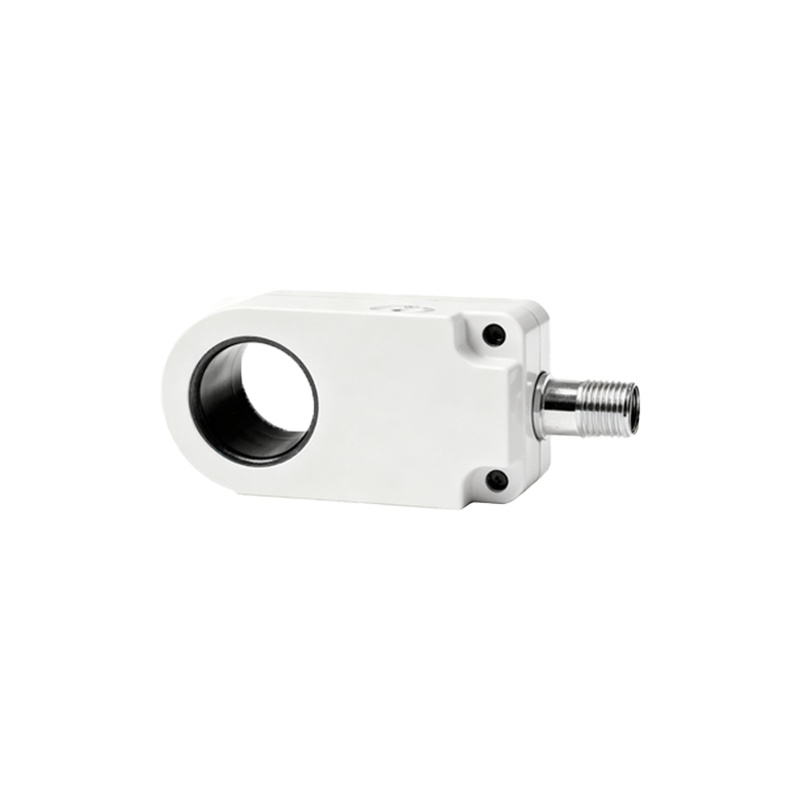
2. Capacitive Proximity Sensors: The Dielectric Constant Source
Capacitive sensors operate on the principle of capacitance change, sourcing their function from electrostatics. The sensor's active face forms one plate of a capacitor, with the target object (or the background) acting as the other plate, separated by air (the dielectric). The internal circuit measures the capacitance of this system. Capacitance is influenced by three factors: the surface area of the plates, the distance between them, and the dielectric constant of the material between them. When an object—any object—approaches the sensor, it alters this capacitance. If the object has a higher dielectric constant than air (which almost all materials do, including plastics, wood, liquids, and metals), the capacitance increases. The circuit detects this increase and switches the output. Therefore, the source of a capacitive sensor's capability is its sensitivity to the dielectric properties of materials. This makes it versatile for detecting non-metals, making it ideal for applications like level detection of liquids or granules, or detecting wood, glass, or plastic containers. They can also be adjusted via a potentiator to ignore certain background materials.
3. Photoelectric Sensors: The Light Modulation Source
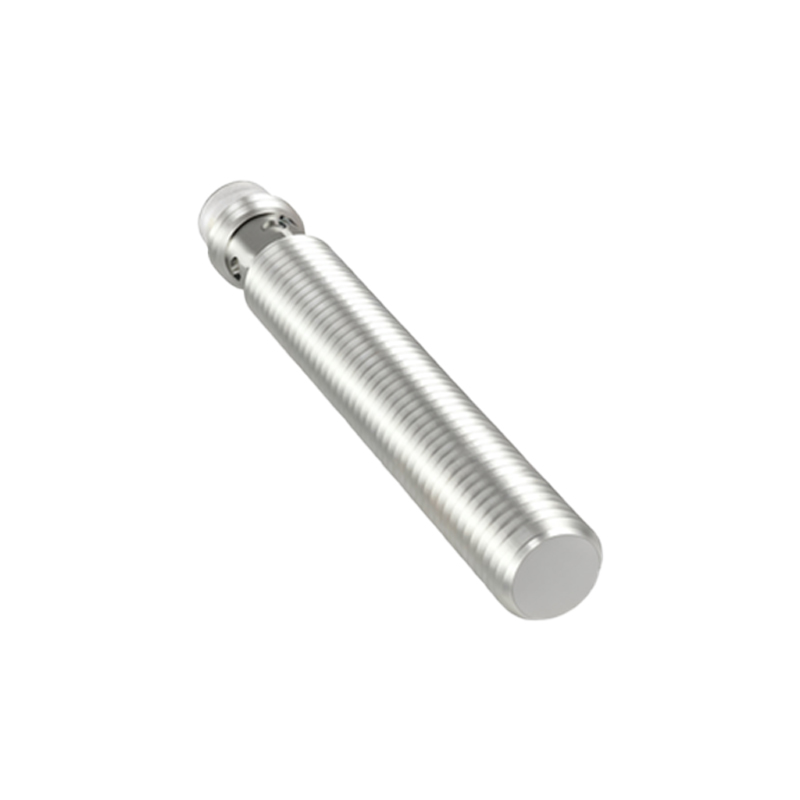
Photoelectric sensors have a different source entirely: light. They consist of a light emitter (usually an LED producing visible red, infrared, or laser light) and a receiver. Detection occurs when the emitted light beam is interrupted, reflected, or refracted. This family has several sub-types, each with a slight variation on the source principle:
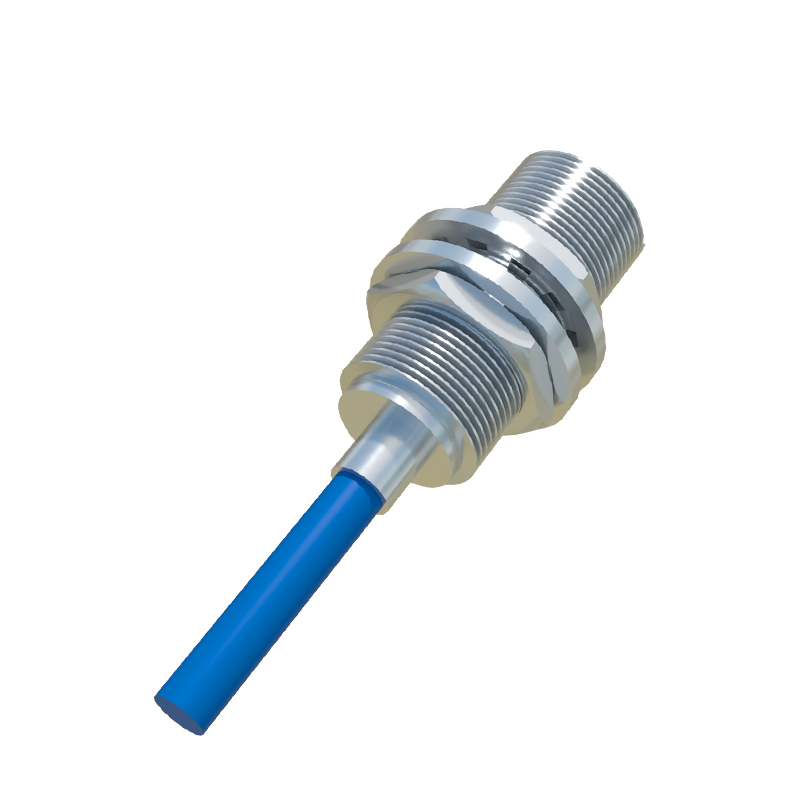
Through-beam (Beam Break): The emitter and receiver are separate units. The source of detection is the direct interruption of the light beam by an object. This offers the longest range and highest reliability.
Retro-reflective: The emitter and receiver are housed together, facing a reflector. The source is the interruption of the reflected beam. The object breaks the light path to and from the reflector.
Diffuse (Proximity Mode): The emitter and receiver are housed together. The source is the reflection of light off the target object itself. The sensor detects the scattered light (diffuse reflection) bouncing back from the object's surface. The sensing range depends heavily on the object's color, reflectivity, and surface texture.
Beyond these, specialized sensors like ultrasonic (sourcing from sound wave echo timing) or magnetic (sourcing from Hall-effect or reed switches detecting permanent magnets) address niche applications.
Understanding these source technologies is critical for practical engineering. An inductive sensor will fail to detect a plastic bottle, just as a diffuse photoelectric sensor may struggle with a shiny, mirror-like surface that reflects light away from the receiver. Environmental factors also interact with the source: inductive sensors are immune to dust and dirt, capacitive sensors can be fooled by ambient humidity changes, and photoelectric sensors can be blinded by ambient light or fog.
In conclusion, the "proximity switch" is not