In the realm of industrial automation and control systems, the precision and reliability of sensing technology are paramount. Among the various types of sensors employed, control frequency proximity sensors stand out for their critical role in non-contact detection and measurement. These sophisticated devices operate on the principle of electromagnetic induction, utilizing a high-frequency oscillating circuit to generate an electromagnetic field. When a metallic target object enters this field, eddy currents are induced on the target's surface. This interaction causes a change in the oscillation amplitude or frequency within the sensor's internal circuit. The sensor's control electronics are precisely tuned to detect this specific change, triggering a solid-state output signal. This output can then be used to control machinery, count objects, monitor position, or provide critical safety interlocks.
The term "control frequency" is central to their operation and performance. It refers to the specific operating frequency of the oscillator, typically ranging from several hundred kilohertz to over one megahertz. This frequency is meticulously controlled and stabilized to ensure consistent sensing characteristics. A higher operating frequency generally allows for a smaller sensor size and enables the detection of smaller metallic objects. However, it may also reduce the maximum sensing distance. Conversely, a lower frequency can offer a longer sensing range but might require a larger sensor housing. Engineers must carefully select the appropriate control frequency based on the application's requirements for target size, material, required sensing distance, and environmental conditions.
The advantages of using control frequency proximity sensors are numerous. Their non-contact nature eliminates mechanical wear and tear, leading to exceptionally long service life and reduced maintenance. They are capable of high-speed operation, making them ideal for fast production lines and counting applications. Furthermore, they are largely unaffected by surface conditions such as dust, oil, or moisture, provided the sensing face is kept clean, ensuring stable performance in harsh industrial environments. These sensors are available in various form factors, including cylindrical, rectangular, and ring-shaped designs, to suit different mounting and space constraints.
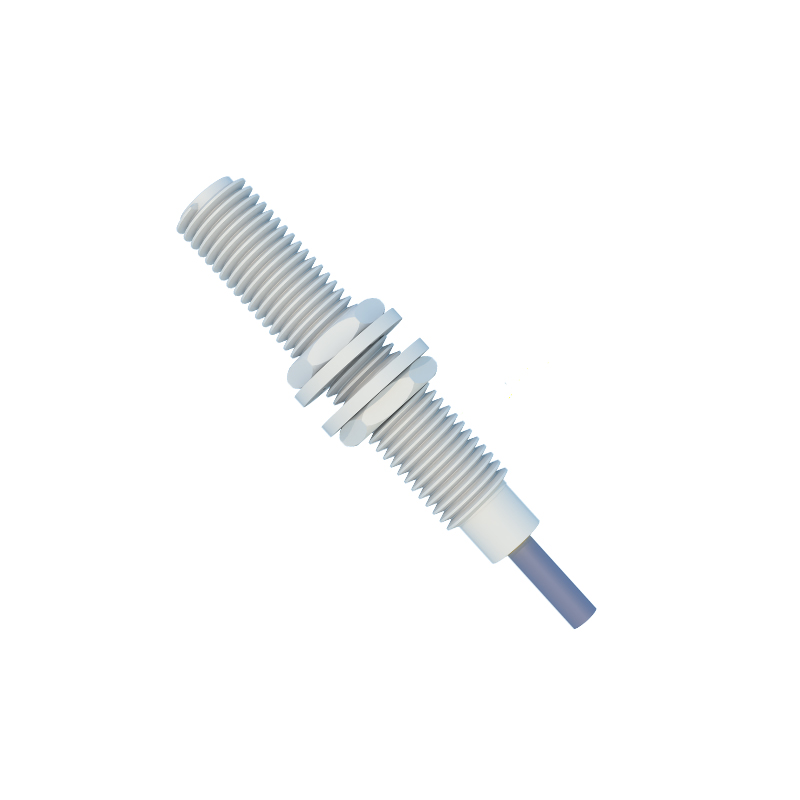
Typical applications are widespread across manufacturing sectors. In automotive assembly lines, they verify the presence of components like pistons or bolts. In packaging machinery, they count bottles or boxes on a conveyor belt. In metalworking, they monitor the position of robotic arms or the end-of-travel of a cutting tool. A specialized and crucial application is in rotational speed monitoring and control. By mounting a sensor near a gear or a rotor with protruding teeth, each passing tooth causes a pulse in the sensor output. The frequency of this pulse train is directly proportional to the rotational speed. This data is fed into a Programmable Logic Controller (PLC) or a dedicated speed controller, forming a closed-loop control system that can maintain, increase, or decrease motor speed with high accuracy, essential for processes like conveyor synchronization, spindle control in machining centers, or wind turbine regulation.
When integrating these sensors into a system, several key parameters must be considered. The sensing distance, or "switching distance," is specified by the manufacturer and should not be confused with the actual installation distance, which is typically set at 70-80% of the nominal value to account for tolerances and temperature drift. The target material also significantly influences performance; sensors are usually calibrated for mild steel. For other metals like aluminum, copper, or stainless steel, a correction factor must be applied, effectively reducing the usable sensing range. Environmental factors such as extreme temperatures, strong electromagnetic interference (EMI) from nearby motors or welders, and the presence of adjacent metallic objects can also affect performance and may necessitate the use of shielded sensor models or careful installation planning.
In conclusion, control frequency proximity sensors are indispensable components in modern industrial automation. Their ability to provide accurate, reliable, and wear-free detection of metallic objects forms the backbone of countless control and safety systems. A deep understanding of their operating principle, particularly the role of the controlled oscillator frequency, along with careful selection based on application-specific needs, allows engineers to design robust, efficient, and highly responsive automated systems. As Industry 4.0 and smart manufacturing continue to evolve, the demand for these intelligent, connected sensors with advanced diagnostics and communication capabilities, such as IO-Link, is set to grow even further.