In the world of modern electronics, proximity sensors are ubiquitous. From smartphones that dim screens during calls to industrial machinery that detects object presence for automation, these devices provide critical non-contact detection. However, their reliability is often compromised by a silent adversary: electromagnetic interference (EMI) and crosstalk. This is where the practice of proximity sensor shielding becomes not just beneficial, but essential for consistent performance.
At its core, shielding for a proximity sensor involves creating a protective barrier that mitigates unwanted external influences. Proximity sensors, particularly inductive and capacitive types, operate by generating and detecting electromagnetic fields. An unshielded sensor is susceptible to interference from various sources. Nearby motors, power lines, other sensors, or even conductive objects in the environment can distort the sensor's field. This distortion leads to false triggers, reduced sensing range, inaccurate detection, or complete operational failure. Shielding effectively channels and contains the sensor's own electromagnetic field, enhancing its directionality and isolating it from external noise.
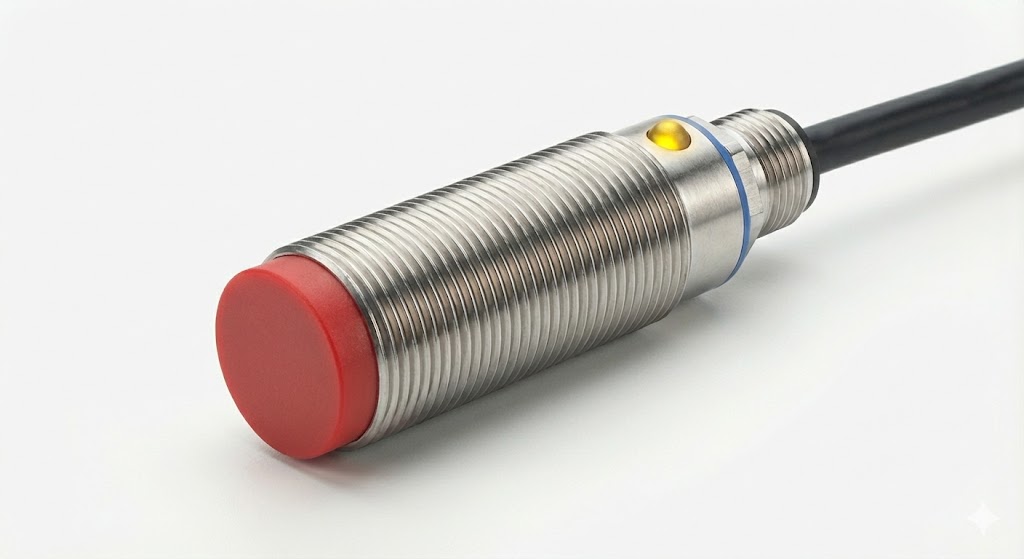
The principles of effective shielding revolve around two main concepts: absorption and reflection. A good shield material absorbs interfering electromagnetic energy, converting it into a tiny amount of heat. Simultaneously, it reflects energy away from the sensitive sensing element. For inductive sensors, which detect metallic objects, shielding is often designed to shape the magnetic field. A common design is a "ferrite pot core" or a cylindrical metal shield open only at the sensing face. This configuration focuses the field forward, dramatically reducing lateral and rear sensitivity. This prevents the sensor from detecting the mounting bracket or nearby machinery instead of the target object.
Material selection is a critical decision in shield design. The choice depends on the type of sensor and the frequency of the interference.
Ferrous Metals (Low Carbon Steel, Ferritic Stainless Steel): Excellent for shielding low-frequency magnetic fields, typical of inductive sensors. They provide a high-permeability path for magnetic flux, containing it effectively.
Copper and Aluminum: Superior for shielding against high-frequency electric fields and radio frequency interference (RFI). Their high conductivity allows them to reflect electromagnetic waves. They are often used in capacitive sensors or in environments with significant RF noise.
Nickel-Iron Alloys (e.g., Mu-Metal): These specialized, high-permeability alloys offer exceptional shielding for very sensitive sensors against low-frequency magnetic fields. They are more expensive and often used in precision instrumentation.
Conductive Coatings and Plastics: For applications requiring non-metallic enclosures, plastics can be loaded with conductive particles (carbon, nickel, silver) to provide a degree of shielding. While not as effective as solid metal, they offer a good balance for weight-sensitive or corrosive environments.
Implementing a shield requires careful integration into the sensor design and installation. A poorly implemented shield can be worse than no shield at all. First, the shield must have good electrical continuity. Any gaps or seams can act as slots that allow EMI to leak in or out; these are often mitigated with conductive gaskets. Second, the shield must be properly grounded. A floating shield can act as an antenna, amplifying interference. The grounding point should be a clean, low-impedance connection to the system ground. Third, the physical design must not impede the sensor's function. The sensing area must remain unobstructed, and the shield should not introduce any conductive material that the sensor could mistakenly detect as a target.
In practical applications, shielding solves common but frustrating problems. On an automotive assembly line, shielded inductive sensors reliably detect specific engine parts without being triggered by the massive moving robotic arms nearby. In a consumer device, a shielded capacitive proximity sensor ensures the phone screen turns off only when near a face, not a pocket lining. For multi-sensor arrays in packaging machinery, individual shielding prevents crosstalk, allowing dozens of sensors to operate in close quarters without mutual interference.
Testing and validation are the final, crucial steps. Shield effectiveness is often measured by comparing the sensor's sensing range and stability in a noisy environment with and without the shield. A 30% reduction in nominal range might be an acceptable trade-off for achieving 100% noise immunity in a challenging industrial setting. Engineers also perform "immunity testing" by subjecting the shielded sensor to standardized EMI levels to ensure compliance with industry regulations like IEC 61000-6-2.
Ultimately, proximity sensor shielding is a discipline that blends physics, materials science, and practical engineering. It moves sensor technology from a component that works in theory to one that delivers robust, dependable performance in the real, electrically noisy world. By thoughtfully applying the correct shielding principles and materials, designers and engineers unlock the full potential of proximity sensing, ensuring accuracy, safety, and efficiency across countless applications.