In the rapidly evolving landscape of industrial automation, precision measurement is paramount. Traditional high-end laser sensors, while offering exceptional accuracy, have often been cost-prohibitive for small to medium-sized enterprises or for applications requiring deployment at scale. However, recent technological advancements and innovative manufacturing approaches are driving a significant shift, making low-cost laser sensors a viable and powerful tool across numerous sectors. This article delves into the core technologies enabling this cost reduction, explores their expanding applications, and outlines key considerations for implementation.
The primary driver behind the affordability of modern laser sensors is the maturation of semiconductor laser diode technology. These components, the heart of most laser sensors, have seen dramatic price reductions due to mass production, improved yields, and economies of scale. Coupled with this is the advancement in complementary metal-oxide-semiconductor (CMOS) image sensors and photodetectors, which are now produced in vast quantities for consumer electronics. Their adaptation for industrial sensing has become highly cost-effective. Furthermore, integrated circuit design allows for more functionality to be packed into a single application-specific integrated circuit (ASIC), reducing component count, simplifying assembly, and enhancing reliability—all of which lower the total bill of materials.
Manufacturing innovations, such as automated surface-mount technology (SMT) assembly and streamlined optical alignment processes, have drastically cut production labor costs. The adoption of modular designs also plays a crucial role. Manufacturers now offer standardized sensor platforms where core laser and detection modules are reused across different product lines, minimizing R&D overhead per unit. This modularity extends to connectivity; the integration of low-cost, standardized digital interfaces like IO-Link, USB, or simple analog outputs simplifies integration and reduces the need for expensive proprietary controllers.
The application spectrum for these economical laser sensors is vast and growing. In logistics and warehousing, they are deployed for parcel dimensioning, conveyor belt object detection, and pallet height measurement, optimizing storage and handling. Within the automotive and electronics assembly lines, low-cost laser sensors perform precise gap and flush measurement, component presence verification, and wafer alignment. Agricultural technology utilizes them for crop height monitoring and guidance systems on autonomous machinery. Even in consumer products, from robot vacuums for obstacle detection to smartphone manufacturing for thickness gauging, these sensors are becoming ubiquitous. Their robustness, non-contact nature, and immunity to ambient light interference (a feature enhanced by modulated laser signals in many models) make them superior to many mechanical or basic photoelectric alternatives.
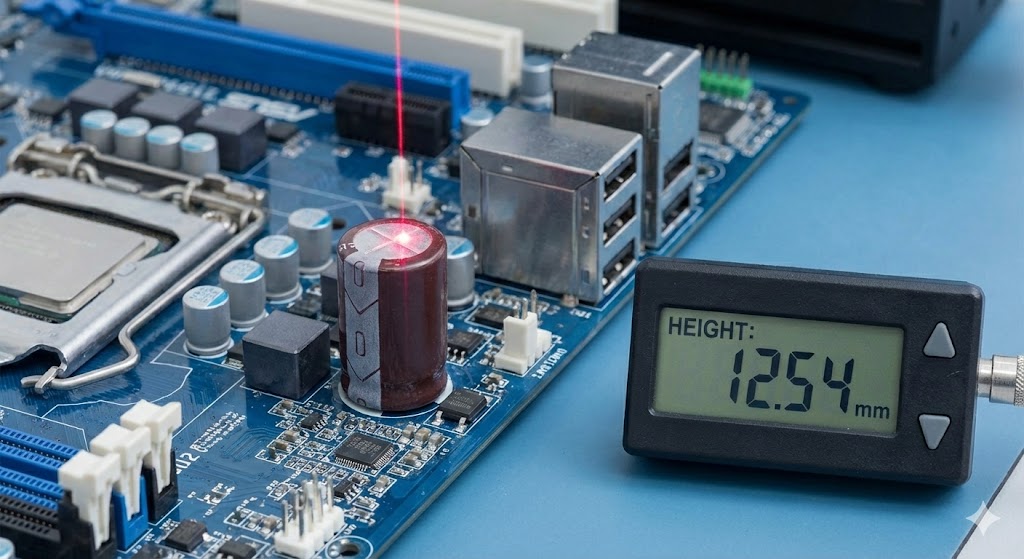
When selecting and implementing a low-cost laser sensor, several technical parameters must be carefully evaluated to ensure suitability for the task. Range and resolution are fundamental; understand the minimum and maximum working distance and the smallest displacement the sensor can reliably detect. Spot size affects measurement precision, especially on uneven surfaces. Response time or sampling rate is critical for high-speed production lines. Environmental factors like temperature stability, ingress protection (IP) rating against dust and moisture, and resistance to vibrations are non-negotiable for harsh industrial settings. While cost is a key advantage, it should not come at the expense of necessary performance or durability. Calibration and long-term stability are also essential, as drift over time can negate initial cost savings.
Looking ahead, the trend toward lower costs is accelerating with the integration of smarter features. Basic sensor fusion, where laser measurement data is processed by an on-board microcontroller, allows for simple decision-making at the edge, reducing the load on central PLCs. The future may see even tighter integration with low-power wireless protocols for IoT-enabled factory environments. As the price-performance ratio continues to improve, low-cost laser sensors will cease to be merely an economical alternative and will become the default choice for a multitude of positioning, inspection, and control tasks, further democratizing advanced automation and driving efficiency across global industries.