In the realm of electrical engineering, the integration of lasers with sensors represents a transformative advancement, enabling unprecedented precision, speed, and reliability in data acquisition and system control. Lasers, as coherent light sources, offer unique properties such as monochromaticity, directionality, and high intensity, which are leveraged to enhance sensor functionality across various applications, from industrial automation to biomedical devices.
The connection between lasers and sensors primarily operates through optical principles. Lasers emit focused beams that interact with target objects or environments, and sensors detect changes in these beams—such as intensity, phase, or wavelength—to gather information. For instance, in LiDAR (Light Detection and Ranging) systems, lasers scan surroundings with pulsed light, while sensors measure the time it takes for reflections to return, creating detailed 3D maps for autonomous vehicles or topographic surveys. This synergy allows for real-time, non-contact measurement, reducing wear and improving accuracy compared to mechanical methods.
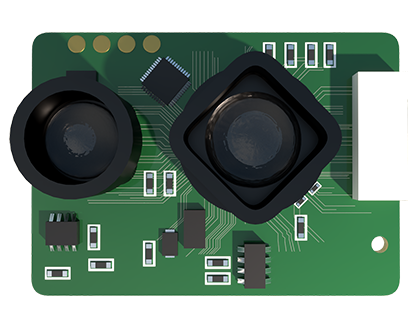
In manufacturing, laser-based sensors are pivotal for quality control. They can detect minute defects on production lines by analyzing light scattering or absorption patterns, with sensors converting these optical signals into electrical data for immediate analysis. Similarly, in environmental monitoring, lasers paired with spectroscopic sensors identify gas concentrations by measuring how specific wavelengths are absorbed, aiding in pollution tracking or safety checks in hazardous areas. The high sensitivity of lasers enables detection at low levels, often in parts per billion, making them indispensable for critical applications.
The technical process involves careful calibration to ensure alignment between laser output and sensor input. Engineers must consider factors like beam divergence, ambient light interference, and material properties to optimize performance. For example, fiber-optic cables are often used to guide laser light to remote or confined sensors, minimizing signal loss. Additionally, advancements in semiconductor technology have led to compact laser diodes and integrated photonic sensors, facilitating miniaturization and energy efficiency in devices like wearable health monitors or smart infrastructure.

Challenges in laser-sensor integration include managing heat dissipation, as lasers can generate significant thermal energy that may affect sensor stability. Solutions involve heat sinks or pulsed operation modes to maintain consistency. Moreover, safety protocols are crucial, as high-power lasers pose risks to human eyes and skin; thus, systems incorporate shielding and automatic shut-off mechanisms.
Looking ahead, emerging trends like quantum sensing and terahertz lasers promise even finer resolutions, potentially revolutionizing fields from medical imaging to quantum computing. As electrical engineers continue to innovate, the bond between lasers and sensors will deepen, driving smarter, more responsive technologies that underpin modern industry and daily life. By mastering this connection, professionals can unlock new capabilities, ensuring systems are not only efficient but also adaptive to future demands.