Proximity displacement sensors, fundamental components in modern industrial automation, operate on the principle of non-contact object detection and distance measurement. Unlike mechanical limit switches, these sensors detect the presence or measure the distance to a target without physical contact, thereby eliminating wear and tear and enabling high-speed, reliable operation in harsh environments. The core principle revolves around the interaction between the sensor's emitted field and the target material. The primary technologies employed are inductive, capacitive, and photoelectric, each with distinct operating principles and ideal applications.
Inductive proximity sensors are the most common for metallic target detection. The sensor contains a coil that is part of an oscillator circuit, generating a high-frequency electromagnetic field at its active face. When a conductive metal object enters this field, eddy currents are induced on the surface of the target. These eddy currents draw energy from the oscillator, causing a change in its amplitude or frequency. An evaluation circuit within the sensor detects this change and triggers a switching output or provides an analog signal proportional to the distance. The sensing distance depends on the coil size, the oscillator frequency, and the target material's conductivity and permeability. Ferrous metals like steel typically yield the longest sensing ranges.
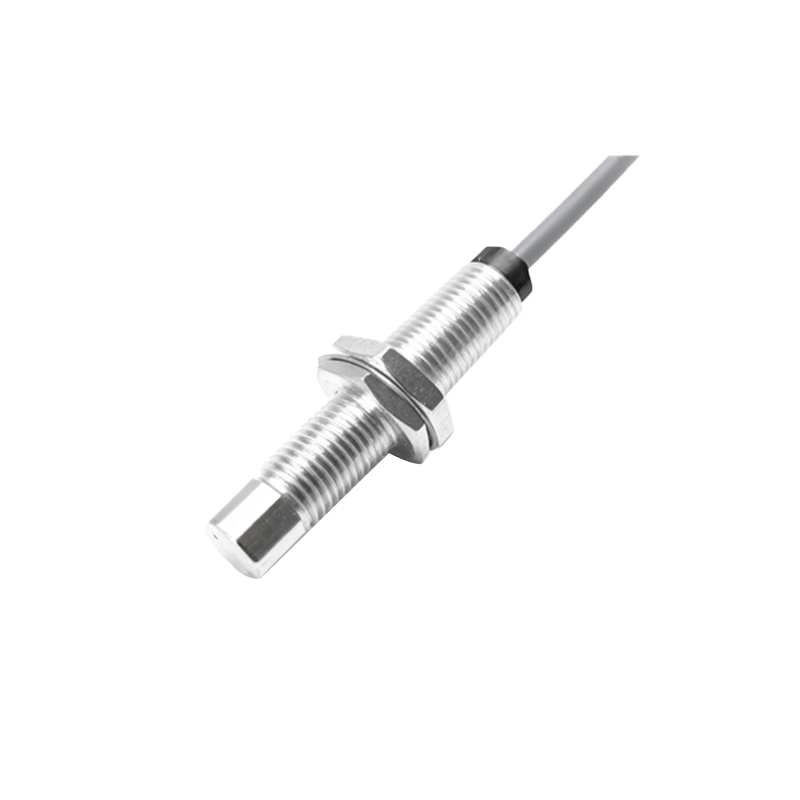
Capacitive proximity sensors can detect both metallic and non-metallic materials, such as plastics, glass, liquids, and granular substances. They function by generating an electrostatic field between two conductive electrodes (often the sensor face and an internal circuit). The target object, when approaching, alters the dielectric constant of the space between the electrodes, thereby changing the capacitance of the system. This capacitance change is measured by the internal circuitry, which then produces an output signal. These sensors are highly sensitive and can even detect materials through thin non-metallic barriers, making them suitable for level detection in tanks or presence detection of packaged goods.
Photoelectric sensors, used for displacement measurement, often employ triangulation or time-of-flight principles. In a common triangulation setup, a laser diode emits a focused light beam onto the target surface. The reflected light is projected onto a position-sensitive detector (PSD) or a CMOS/CCD array. As the target distance changes, the position of the reflected light spot on the detector shifts linearly. The sensor's electronics calculate the displacement based on this positional shift with high accuracy. Time-of-flight sensors measure the phase shift or the direct time delay between an emitted modulated light signal and its reflection to calculate distance.
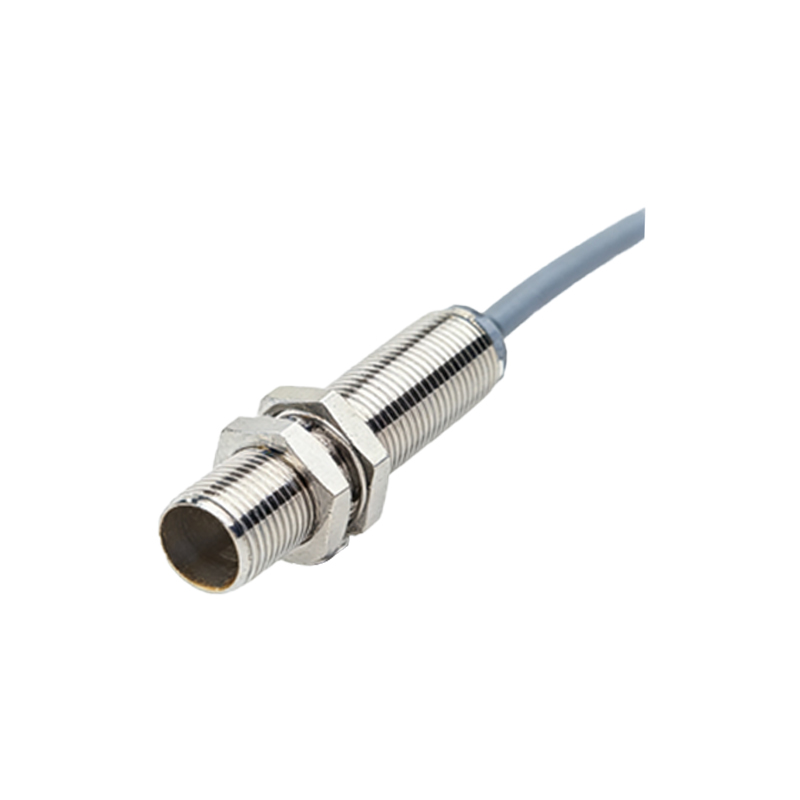
The output from these sensors can be binary (on/off) for simple presence detection or analog (e.g., 4-20 mA, 0-10V) for continuous distance measurement. Advanced versions provide digital interfaces like IO-Link, offering detailed parameterization and diagnostic data. Key performance parameters include nominal sensing distance, repeatability, hysteresis, temperature stability, and response frequency.
In industrial applications, proximity displacement sensors are indispensable. Inductive sensors are widely used in machine tools for end-position detection of metal parts, in robotics for arm positioning, and in conveyor systems for counting metallic objects. Capacitive sensors monitor fill levels in silos, control packaging processes by detecting plastic films, and ensure product presence on assembly lines. High-precision photoelectric displacement sensors are critical in semiconductor manufacturing for wafer alignment, in coordinate measuring machines, and for vibration monitoring and thickness measurement.
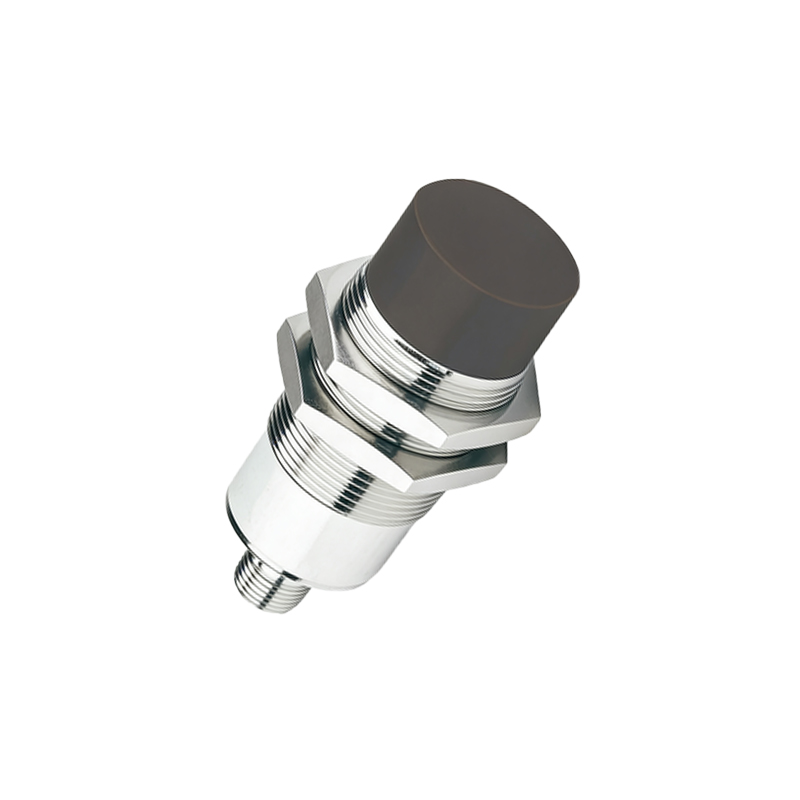
Selection criteria involve the target material, required sensing range, accuracy needs, environmental conditions (like temperature, humidity, and presence of contaminants), installation constraints, and output signal type. Proper installation is crucial; sensors must be mounted securely, with consideration for mutual interference when placed adjacent to each other, and the target should approach the active face perpendicularly for optimal performance.
The evolution of proximity sensors continues with miniaturization, enhanced intelligence, and improved robustness. The integration of advanced signal processing and self-diagnostic capabilities is pushing the boundaries of reliability and precision, solidifying their role as the silent sentinels of automated industrial systems, enabling precise control, safety, and efficiency across countless manufacturing and processing operations.