In the rapidly evolving landscape of automotive manufacturing, the integration of advanced sensor technologies has become a cornerstone for innovation, efficiency, and safety. Among the leaders in this technological frontier is Google, whose laser sensor systems, particularly those based on Light Detection and Ranging (LiDAR) principles, are making significant inroads into vehicle production facilities. This article delves into how Google's laser sensor technology is transforming automotive factories, enhancing precision, automation, and quality control processes.
Google's laser sensors, often associated with its autonomous vehicle projects, utilize high-resolution LiDAR to create detailed three-dimensional maps of environments. In automotive plants, these sensors are deployed for a variety of critical applications. For instance, in assembly lines, laser sensors enable robots to perform tasks with unprecedented accuracy, such as welding, painting, and component placement. By emitting laser pulses and measuring the time it takes for them to reflect off surfaces, these systems can detect minute variations in part dimensions, ensuring that each vehicle meets stringent specifications. This reduces human error and minimizes waste, leading to cost savings and higher production throughput.
Moreover, Google's technology enhances quality assurance protocols. Traditional inspection methods often rely on manual checks or two-dimensional imaging, which can miss subtle defects. Laser sensors, however, provide real-time, three-dimensional scans that identify imperfections like dents, scratches, or misalignments at micron-level precision. This allows for immediate corrections during manufacturing, preventing faulty products from progressing down the line. As a result, automotive manufacturers can uphold superior quality standards while reducing recall risks and warranty claims.
Another key area of impact is in logistics and inventory management within factories. Google's laser sensors are integrated into automated guided vehicles (AGVs) and robotic systems that transport materials across large facilities. These sensors facilitate navigation by detecting obstacles and optimizing routes in dynamic environments, ensuring smooth material flow and minimizing downtime. Additionally, they assist in tracking inventory levels by scanning storage areas, enabling just-in-time supply chain practices that reduce storage costs and improve operational efficiency.
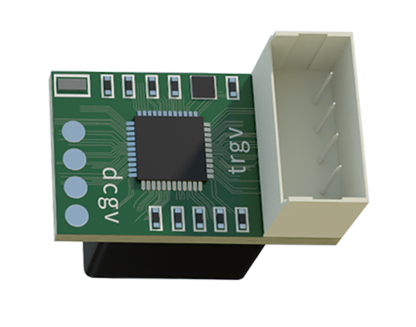
The adoption of Google's laser sensors also aligns with the industry's shift towards smart factories and Industry 4.0. By connecting sensor data to cloud-based platforms, manufacturers can analyze performance metrics, predict maintenance needs, and optimize production schedules. This data-driven approach fosters a more agile manufacturing ecosystem, where decisions are based on real-time insights rather than historical trends. For example, predictive analytics can forecast equipment failures before they occur, allowing for proactive repairs that prevent costly production halts.
Despite these advantages, challenges remain in implementing such advanced technology. High initial costs, integration complexities with existing machinery, and the need for skilled technicians to manage these systems can be barriers for some manufacturers. However, as Google continues to refine its laser sensor offerings—making them more compact, affordable, and user-friendly—adoption is expected to grow. Collaborations between tech firms and automotive giants are also accelerating innovation, paving the way for more widespread use in global factories.
In conclusion, Google's laser sensor technology represents a paradigm shift in automotive manufacturing, driving improvements in precision, automation, and data utilization. As the industry embraces digital transformation, these sensors will likely become indispensable tools for building safer, more reliable vehicles efficiently. By leveraging cutting-edge innovations from companies like Google, automotive factories are not only enhancing their competitiveness but also shaping the future of mobility. The journey towards fully automated, intelligent production lines is well underway, with laser sensors illuminating the path forward.