Proximity sensors are essential components in modern industrial automation, enabling non-contact detection of objects without physical interaction. These devices operate based on various physical principles, each suited to specific applications and environments. This article explores the fundamental working principles of proximity sensors through detailed diagrams and explanations, providing a clear understanding of their functionality and selection criteria.
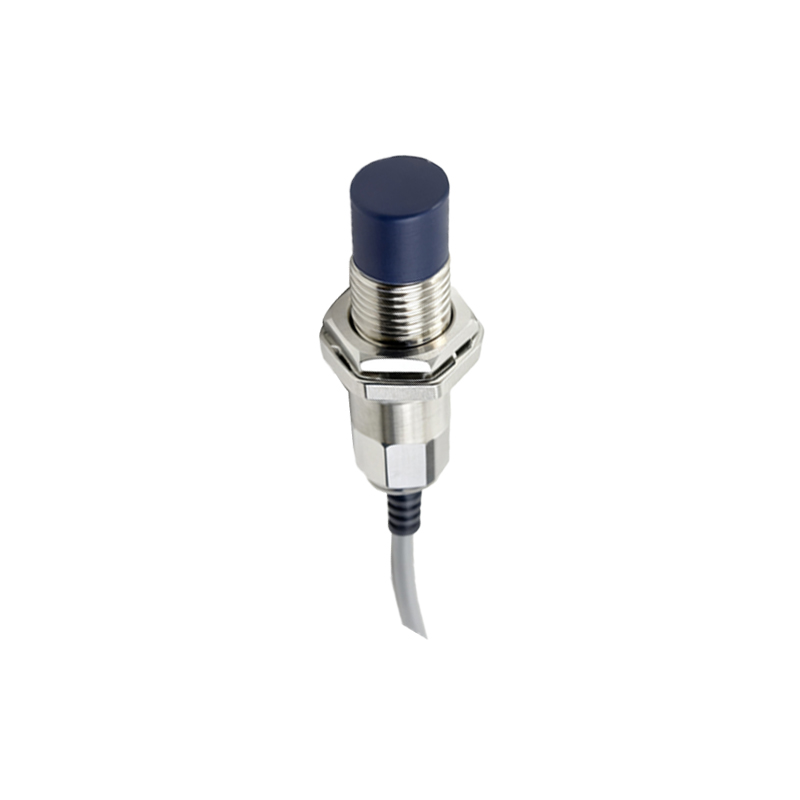
Inductive proximity sensors are widely used for detecting metallic objects. They consist of a coil wound around a ferrite core, an oscillator, a signal conditioner, and an output circuit. When an AC current passes through the coil, it generates an alternating magnetic field. When a metallic object enters this field, eddy currents are induced on the object's surface, causing a change in the oscillation amplitude. The sensor's circuit detects this change and triggers an output signal. The diagram illustrates the magnetic field lines and the eddy current formation, highlighting how the sensor responds to different metals based on conductivity and permeability.
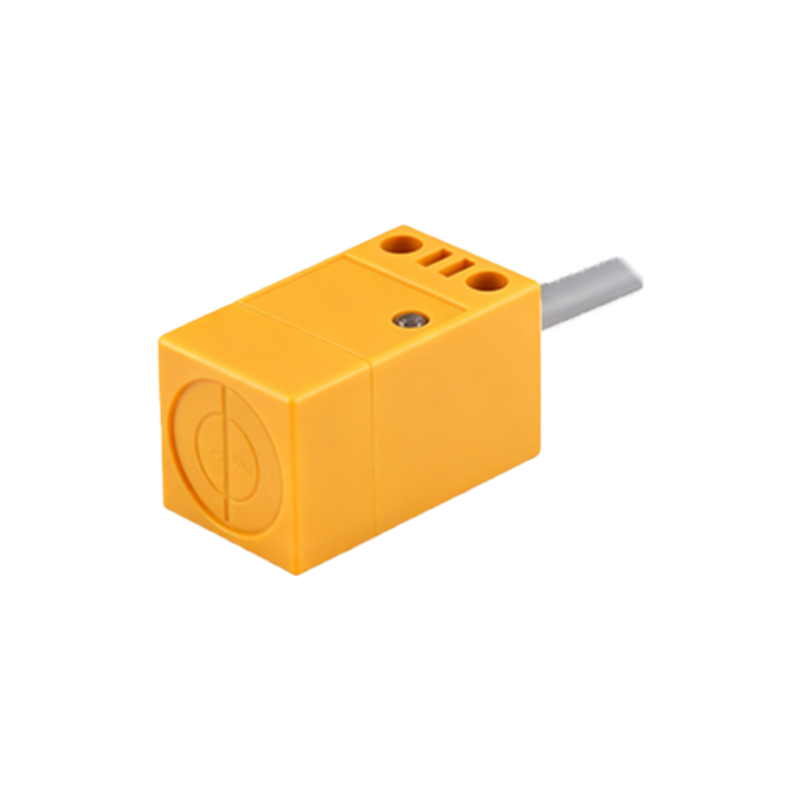
Capacitive proximity sensors can detect both metallic and non-metallic materials, including liquids, plastics, and wood. These sensors feature two conductive plates (electrodes) forming a capacitor. An oscillator circuit generates an electric field between the plates. When an object enters this field, it alters the capacitance by changing the dielectric constant, leading to a shift in oscillation frequency. The sensor processes this change to activate the output. The accompanying diagram shows the electric field distribution and how material properties affect detection range, emphasizing applications in level sensing and material handling.
Ultrasonic proximity sensors utilize sound waves for detection. They contain a transmitter that emits high-frequency ultrasonic pulses and a receiver that captures reflected waves. The time delay between emission and reception is measured to calculate the distance to an object. Diagrams here depict the sound wave propagation and echo reception, explaining factors like temperature and surface texture that influence accuracy. These sensors are ideal for harsh environments where dust, moisture, or varying light conditions exist.
Photoelectric proximity sensors rely on light beams, typically infrared, to detect objects. They include a light emitter and a receiver. In the reflective type, the receiver detects light bounced off an object, while in the through-beam type, an object interrupts the beam between separate emitter and receiver units. Diagrams illustrate light path scenarios and sensitivity adjustments, showcasing uses in packaging, assembly lines, and safety systems.
Magnetic proximity sensors operate with a reed switch or Hall effect element. When a permanent magnet approaches, the reed switch closes, or the Hall element generates a voltage change. Diagrams demonstrate magnetic field interactions and switching mechanisms, highlighting durability in high-vibration settings like automotive and machinery.
Each sensor type has distinct advantages: inductive sensors offer robustness for metal detection, capacitive sensors provide versatility for diverse materials, ultrasonic sensors ensure reliable long-range sensing, photoelectric sensors deliver precision in clean environments, and magnetic sensors excel in rugged applications. Selection depends on factors such as target material, sensing distance, environmental conditions, and response speed.
Understanding these principles through diagrams aids in optimizing sensor integration, enhancing system efficiency, and reducing downtime. As automation advances, proximity sensors continue to evolve with smart features like IO-Link connectivity and self-diagnostics, driving innovation in industries from manufacturing to robotics.