In the realm of industrial automation and control, the reliable detection of metallic objects is a fundamental requirement. Among the various sensing technologies available, inductive proximity sensors stand out as the workhorse for non-contact metal detection. Their robustness, speed, and immunity to environmental factors make them indispensable in countless applications, from manufacturing assembly lines to automotive production and material handling systems.
At its core, an inductive proximity sensor operates on the principle of electromagnetic induction. The sensor contains a coil wound around a ferrite core, which is part of an oscillator circuit. When an alternating current flows through this coil, it generates an oscillating electromagnetic field at the sensor's active face. This field is contained within a relatively short range. When a metallic object enters this electromagnetic field, eddy currents are induced on the surface of the target. These eddy currents draw energy from the sensor's oscillator circuit, causing a reduction in the amplitude of oscillation. The sensor's internal circuitry monitors this amplitude change. Once the amplitude drops below a predetermined threshold—indicating the presence of a metal target within the specified sensing distance—the sensor's output state switches. This output is typically a solid-state switch (PNP or NPN) that can interface directly with programmable logic controllers (PLCs), relays, or other control devices.
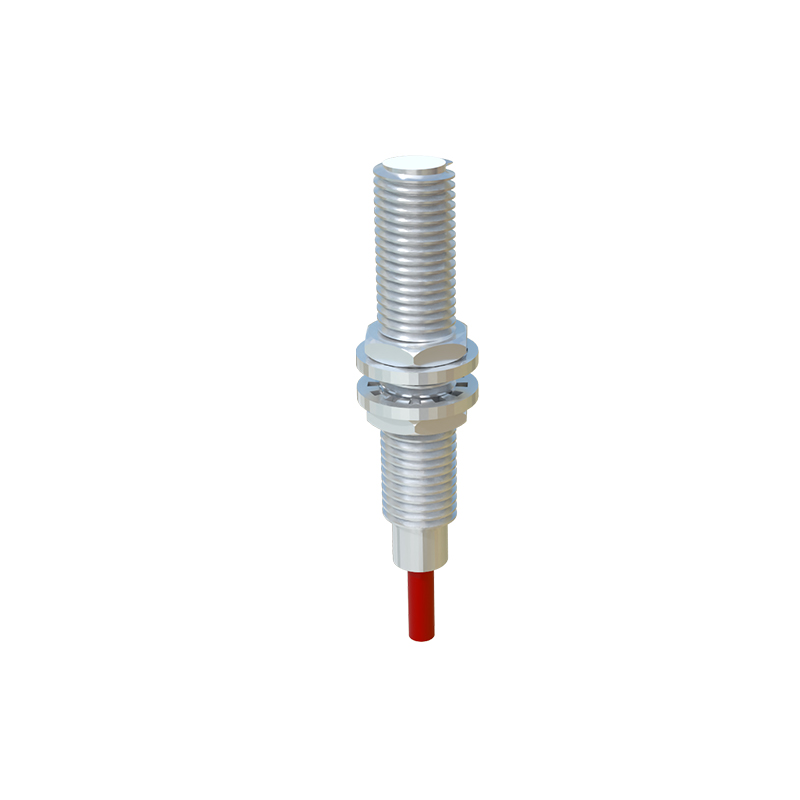
A key characteristic of inductive sensors is their sensing range, which is standardized and typically ranges from a few millimeters to about 60 millimeters for standard cylindrical models. It is crucial to note that this nominal sensing distance is defined for a standard target made of mild steel (Fe360). The actual sensing distance can vary significantly with different metals due to their material properties, specifically their electrical conductivity and magnetic permeability. Ferromagnetic metals like iron and steel, which have high permeability, are detected at the full nominal range or even slightly more. Non-ferrous metals like aluminum, copper, or brass, which are good conductors but have low permeability, cause a reduction in the effective sensing range, often to 30-60% of the nominal value. Manufacturers provide correction factors in their datasheets to account for this.
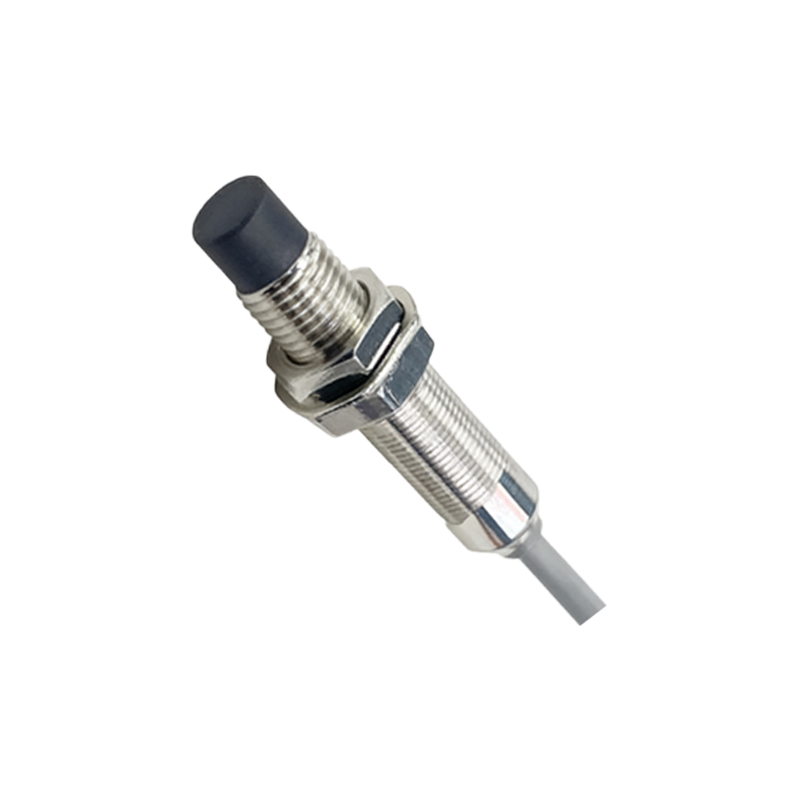
The design and housing of inductive sensors are tailored for harsh industrial environments. Common housing materials include nickel-plated brass, stainless steel (V2A or V4A), or PBT plastic. They are rated with high Ingress Protection (IP) codes, such as IP67 or IP69K, making them resistant to dust, water jets, and washdowns. This durability is essential for applications in machine tools, food processing, or outdoor equipment. Furthermore, they are inherently immune to ambient light, dirt, oil, and non-metallic objects, ensuring stable operation where optical or capacitive sensors might fail.
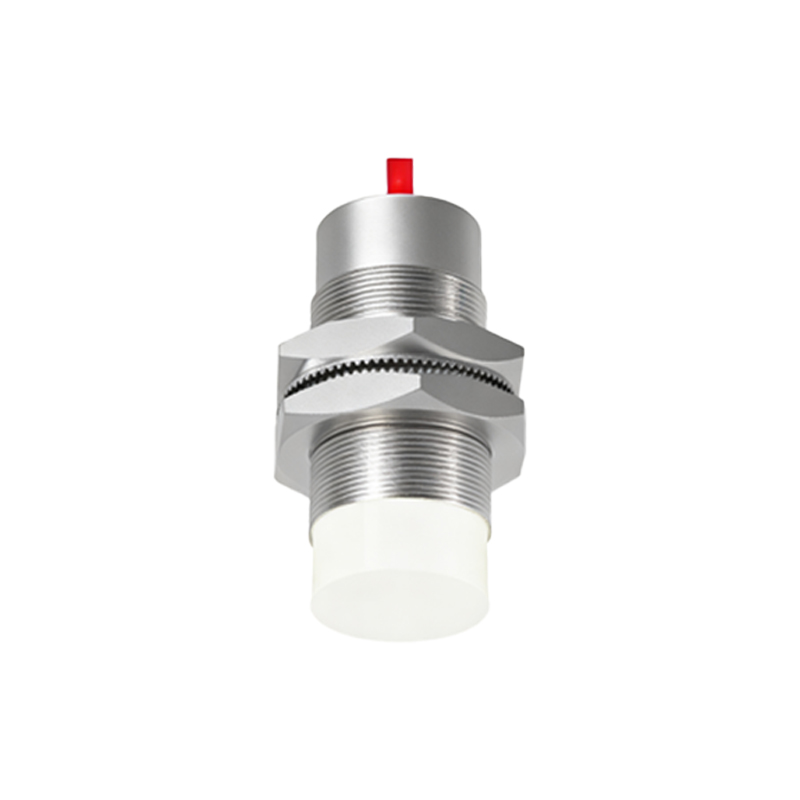
When selecting an inductive proximity sensor for a specific application, several critical parameters must be considered beyond just the sensing distance. The first is the target material and the resulting effective sensing distance. The second is the sensor's housing style and size—common forms include cylindrical barrels (e.g., M8, M12, M18, M30 threaded barrels), rectangular block styles, or ring-shaped sensors for part counting. The third is the output configuration: PNP (sourcing) or NPN (sinking), normally open (NO) or normally closed (NC), and the type of output device (2-wire, 3-wire, or 4-wire with analog or IO-Link capabilities). Operating voltage is another vital factor, with DC models (typically 10-30V DC) being most common, though AC versions are available. Finally, special variants must be chosen for unique needs. Shielded (flush-mountable) sensors can be installed flush in metal without affecting their field, while unshielded (non-flush) sensors offer a longer sensing range but require a non-metallic surround. High-temperature sensors, weld-field immune models, and analog output sensors for distance measurement are also specialized options.
The applications for inductive proximity sensors are vast. They are used for simple presence/absence detection of metal parts, such as verifying a workpiece is in a fixture or counting bottles via their metal caps. They act as limit switches for cylinder piston position feedback. In conveyor systems, they detect the position of metal trays or pallets. Ring sensors are used for high-speed counting of screws, nuts, or bolts. Their fast response time, often in the microsecond range, allows for detection at very high speeds, making them perfect for synchronizing processes or monitoring RPM on rotating shafts with a metal tab.
In conclusion, inductive proximity sensors offer a perfect blend of simplicity, reliability, and toughness for metal detection tasks. Understanding their operating principle, the influence of target material, and the detailed selection criteria is essential for engineers and technicians to deploy them effectively. By matching the correct sensor type to the application's mechanical, electrical, and environmental demands, one can ensure long-term,