Proximity switch sensors are fundamental components in modern industrial automation, serving as the critical interface between physical object detection and control system logic. Unlike mechanical limit switches, these non-contact sensors detect the presence or absence of a target object without physical contact, leading to higher reliability, longer operational life, and faster response times. The core logic of a proximity sensor revolves around its ability to alter its output state based on the detection of a metallic or, in some cases, non-metallic target within its specified sensing range.
The operational principle depends on the sensor type. Inductive proximity sensors, the most common variant for metal detection, generate an electromagnetic field. When a metallic object enters this field, it causes eddy currents within the object, which in turn dampens the oscillator's amplitude in the sensor. This change is detected by the sensor's circuitry, triggering a solid-state output switch—either Normally Open (NO) or Normally Closed (NC). The logic is binary: target present = output ON (or OFF, depending on configuration); target absent = output returns to its normal state. Capacitive sensors operate on a similar principle but detect changes in capacitance, allowing them to sense materials like plastics, liquids, and wood.
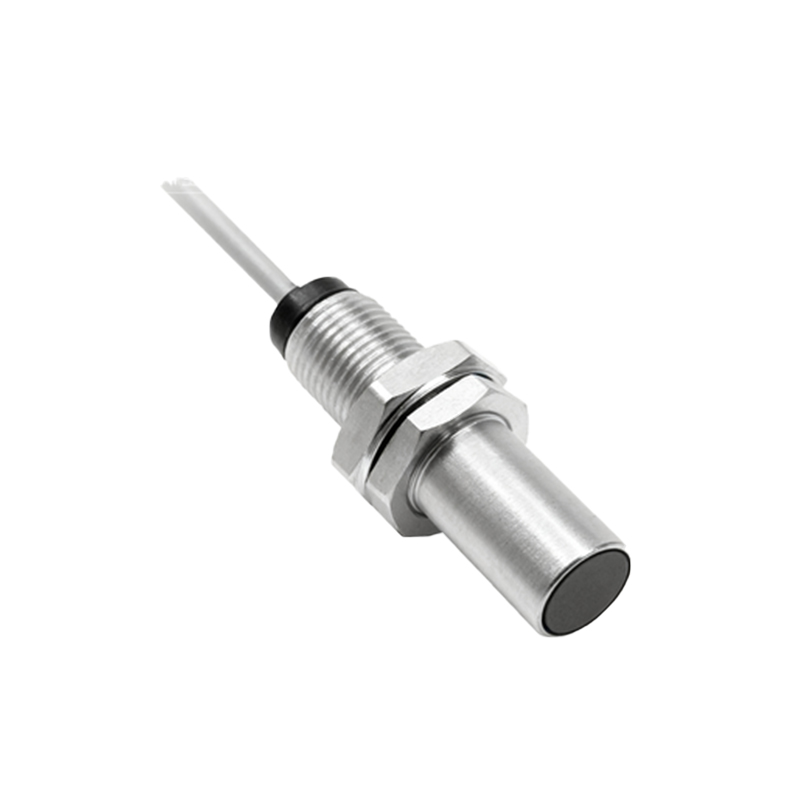
Integrating these sensors into a control logic system, such as a Programmable Logic Controller (PLC), is where their true power is realized. A typical application involves a sensor positioned on a conveyor line. When the sensor detects a part, its discrete signal (e.g., 24V DC) transitions. This signal is read as a logic '1' or TRUE by the PLC's input module. This single input can then trigger a complex cascade of logical operations within the PLC program. For instance, it might start a timer to allow for a machining operation, activate a robotic arm for pick-and-place, increment a counter for production tally, or initiate a quality check by a vision system. The sensor's output becomes a fundamental conditional statement in the ladder logic or structured text program: IF Sensor_X = TRUE THEN Activate_Solenoid_Y.
The choice of output configuration is crucial for system logic design. A PNP (sourcing) sensor switches the positive voltage to the load, while an NPN (sinking) sensor switches the negative path. This must match the PLC input type to ensure proper interface. Furthermore, sensors with complementary NO and NC outputs in one housing offer flexibility for fail-safe design. For example, an NC configuration might be used in a safety guard monitoring application where the sensor must signal a TRUE (guard closed) under normal conditions; a break in the beam or failure would cause the output to go FALSE, triggering an immediate machine halt.
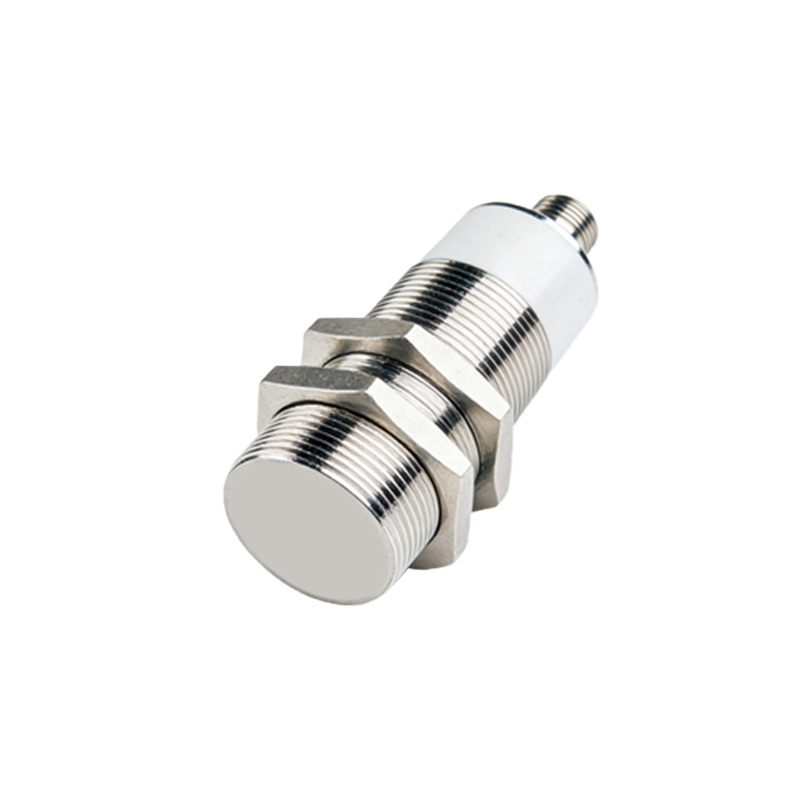
Advanced diagnostics and networking have added layers to sensor logic. IO-Link enabled proximity sensors can transmit not just a simple on/off signal but also parametric data like sensing distance, temperature, and operating hours to the controller. This enables predictive maintenance logic, where the control system can alert operators to a sensor's deteriorating performance before it causes downtime, transitioning from simple detection to condition monitoring.
In high-speed sorting or packaging machinery, the response time of the sensor—often less than a millisecond—is a critical logical parameter. The sensor must detect, and the PLC must process the input, within the precise time window allowed by the product's speed. Any lag can cause misalignment or missed counts. Similarly, factors like target material, size, and the sensor's inherent hysteresis (the difference between the switch-on and switch-off points) must be factored into the mechanical and control logic design to ensure repeatable and accurate triggering.
From simple presence detection to enabling complex, interconnected automated sequences, the proximity switch sensor acts as a reliable and precise digital eye. Its binary logic forms the bedrock upon which sophisticated automation narratives are built, making it an indispensable element in the pursuit of efficiency, safety, and quality in manufacturing and beyond. Understanding its operational logic, specifications, and integration methods is essential for any engineer designing robust and intelligent industrial control systems.