In the world of industrial automation and machine control, the ability to detect the presence or absence of an object without physical contact is fundamental. Among the most reliable and widely used solutions for this task are magnetic and inductive proximity sensors. While often grouped under the broader "proximity sensor" category, they operate on distinct physical principles and are suited to different applications. This guide delves into their working mechanisms, key differences, advantages, and typical use cases.
Magnetic proximity sensors, often called reed switches or magneto-resistive sensors, function by reacting to a magnetic field. The most common type is the reed switch, which consists of two ferromagnetic, flexible metal reeds sealed within a glass tube filled with an inert gas. When a permanent magnet approaches, the reeds magnetize, attract each other, and make contact, closing the electrical circuit. When the magnet moves away, the reeds spring back to their original position, breaking the circuit. More advanced versions use Hall-effect or magneto-resistive elements that change their electrical properties in the presence of a magnetic field, providing solid-state reliability and faster switching speeds. The critical characteristic of magnetic sensors is that they specifically detect magnets. The target object itself must be or must have a permanent magnet attached.
Inductive proximity sensors, on the other hand, detect metallic objects—primarily ferrous metals like steel and iron, though many can also sense non-ferrous metals like aluminum, copper, or brass at reduced ranges. They operate on the principle of electromagnetic induction. The sensor contains a coil wound around a ferrite core, an oscillator, a detection circuit, and an output circuit. The oscillator generates a high-frequency alternating electromagnetic field that radiates from the sensor's active face. When a conductive metal object enters this field, eddy currents are induced on the surface of the object. These eddy currents draw energy from the sensor's oscillator, causing a measurable change in its amplitude or frequency. The sensor's detection circuit monitors this change and triggers a solid-state switch (PNP or NPN) to change the output state.
The distinction in target material is the most crucial differentiator. A magnetic sensor will not detect a piece of plain steel unless a magnet is mounted on it. Conversely, an inductive sensor will readily detect that same piece of steel but will be completely blind to a plastic object with a magnet inside. This defines their primary domains of application.
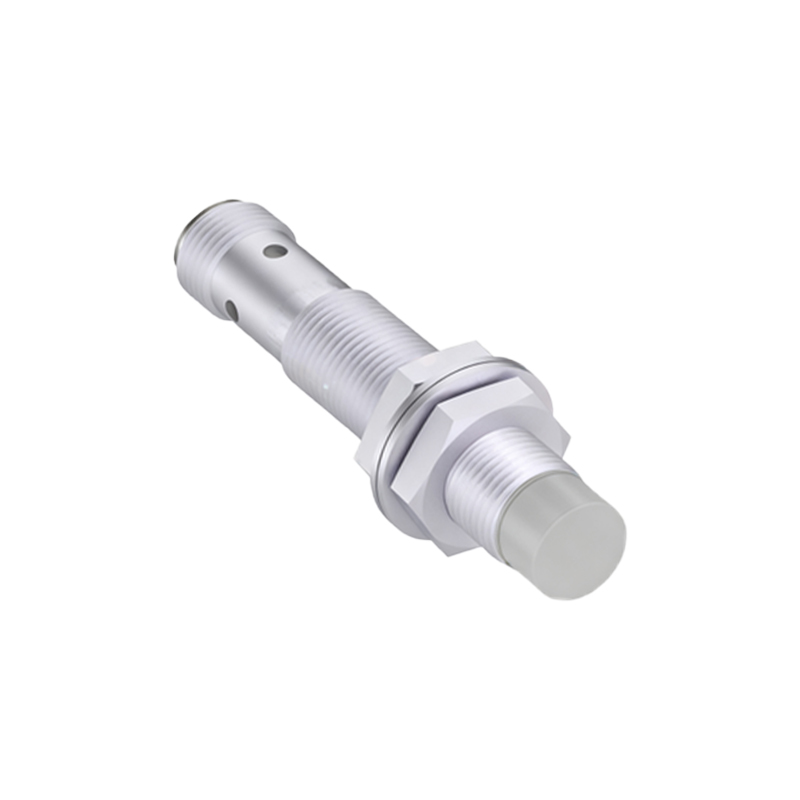
Magnetic proximity sensors excel in harsh environments. Their sealed construction makes them highly resistant to dirt, dust, moisture, and extreme temperatures. They are the go-to choice for position sensing in hydraulic cylinders (where a magnet is embedded in the piston), for detecting the open/closed state of doors or safety guards, and in fluid level indicators (using a float with a magnet). Their simple, passive nature often translates to lower cost and high reliability for basic presence detection of a magnetic field.
Inductive sensors are the workhorses of factory automation. Their key advantages include non-contact wear-free operation, high switching frequencies (allowing them to detect very fast-moving objects on production lines), and exceptional precision and repeatability. They are ideal for counting metal parts, detecting the end position of a metal actuator, monitoring rotational speed via a metal gear tooth, or ensuring a metal component is present before a machining operation begins. Modern inductive sensors come in various form factors, including cylindrical and rectangular housings, and offer features like embedded IO-Link communication for diagnostic data and parameter setting.
When selecting between the two, engineers must answer several questions: What is the target material? What is the required sensing distance? What are the environmental conditions (temperature, contaminants)? What is the required switching speed and electrical output? For detecting any metal object at short ranges (typically a few millimeters up to 60mm) in an industrial setting, an inductive sensor is usually the default choice. For detecting a specific positional state in dirty, wet, or high-pressure environments where a magnet can be installed on the target, a magnetic sensor is often more robust.
In summary, magnetic and inductive proximity sensors are complementary technologies. Magnetic sensors offer robust, simple detection of magnetic fields, while inductive sensors provide versatile, high-performance detection of metallic objects. Understanding their core operating principles—one reacting to a magnetic field, the other to the electromagnetic properties of metal—is essential for deploying the right sensor to enhance system reliability, efficiency, and safety in any automated application.