In the realm of industrial automation and electrical engineering, proximity sensors are indispensable components. They detect the presence or absence of an object without physical contact, enabling precise control, safety, and efficiency in countless applications. Understanding the various types of proximity sensors, their operating principles, and ideal use cases is crucial for selecting the right sensor for any given task. This guide provides a detailed overview of the primary categories of proximity sensors.
The most fundamental classification is based on the sensing technology employed. The major types include Inductive, Capacitive, Ultrasonic, Photoelectric, and Magnetic (Reed Switch or Hall Effect) sensors.
Inductive Proximity Sensors are workhorses in industrial settings, particularly in metal fabrication and machining. They generate an electromagnetic field. When a metallic target enters this field, it induces eddy currents within the target, causing a change in the sensor's oscillation amplitude. This change triggers the sensor's output switch. Key advantages include high switching frequency, robustness in dirty or harsh environments (as they are unaffected by non-metallic contaminants like dust or oil), and exceptional reliability. They are typically used for detecting metals, with sensing ranges varying based on the target metal's properties (e.g., shorter range for aluminum compared to steel).
Capacitive Proximity Sensors can detect both metallic and non-metallic materials, including liquids, powders, plastics, and wood. They function by generating an electrostatic field. Any object that enters this field alters the capacitance of the sensor's circuit, prompting a state change in the output. These sensors are ideal for applications like level detection in tanks (liquid or granular materials), detecting non-metallic objects on conveyor belts, or sensing through certain non-metallic container walls. They can be sensitive to environmental factors like humidity and require careful calibration.
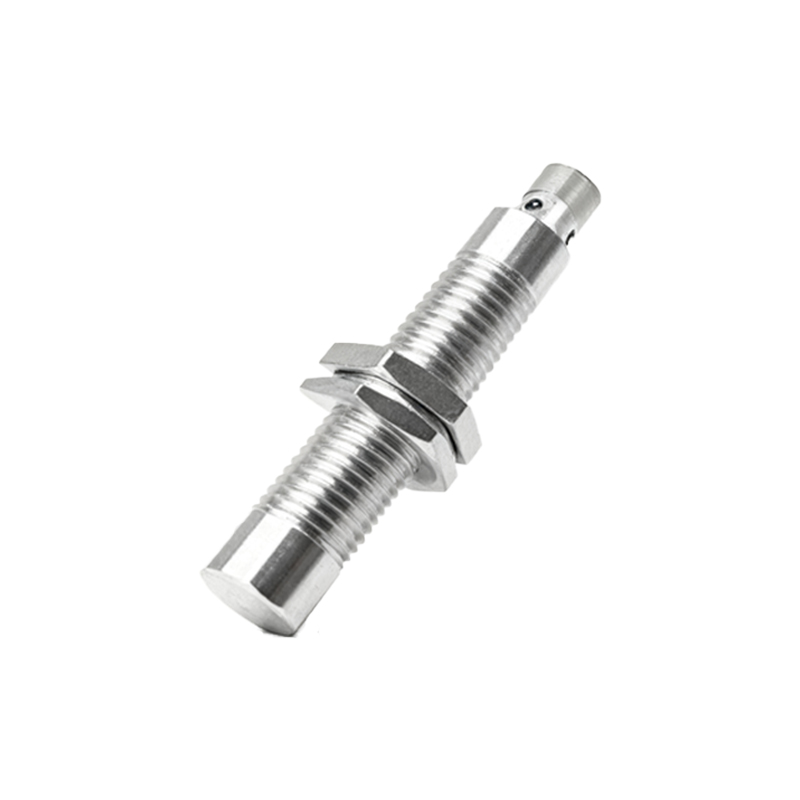
Ultrasonic Proximity Sensors operate on a sonar principle. They emit high-frequency sound waves and evaluate the echo reflected back from a target object. By measuring the time interval between sending the signal and receiving the echo, the sensor can determine the presence and distance (ranging) of an object. This technology is excellent for detecting objects of virtually any material, shape, or color, and is effective over longer distances compared to inductive or capacitive sensors. Common applications include distance measurement, pallet detection, and liquid level sensing in challenging environments with steam, dust, or varying light conditions. However, their response time is slower, and they can be affected by temperature variations and air turbulence.
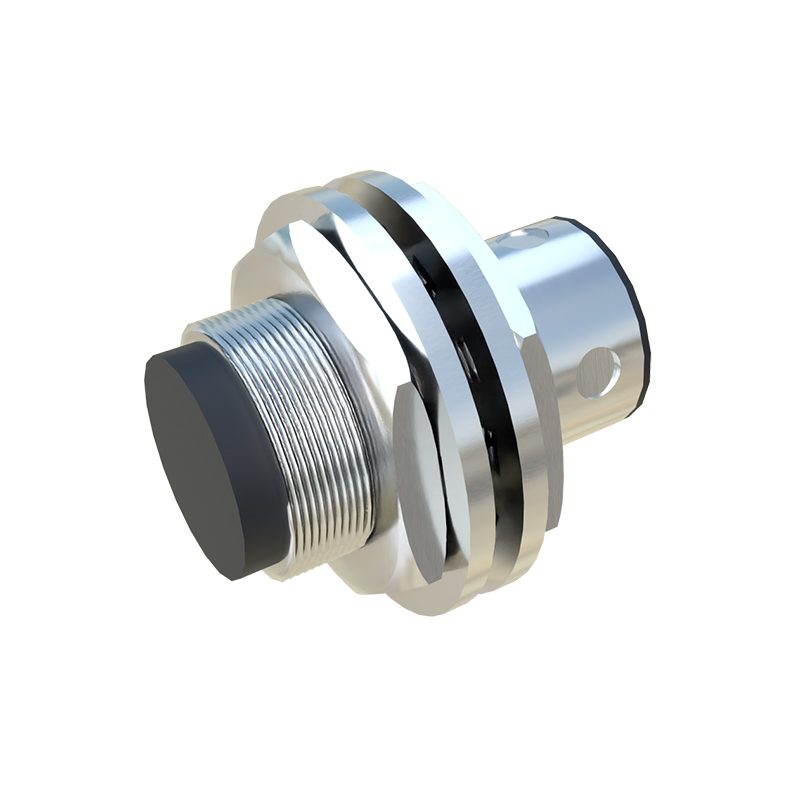
Photoelectric Sensors utilize light beams (usually infrared, visible red, or laser) to detect objects. They consist of an emitter (light source) and a receiver. There are three main configurations: Through-beam (opposed), Retro-reflective, and Diffuse (proximity) mode. Through-beam sensors offer the longest sensing range and highest reliability, as the object breaks a direct beam between separate emitter and receiver units. Retro-reflective types use a reflector to bounce the beam back to a combined emitter/receiver unit; the object breaks this reflected beam. Diffuse sensors detect the object when it reflects the emitted light back to the receiver within the same housing, suitable for shorter ranges. Photoelectric sensors are versatile for detecting a wide array of objects but can be challenged by transparent materials, highly reflective surfaces, or dirty optical components.
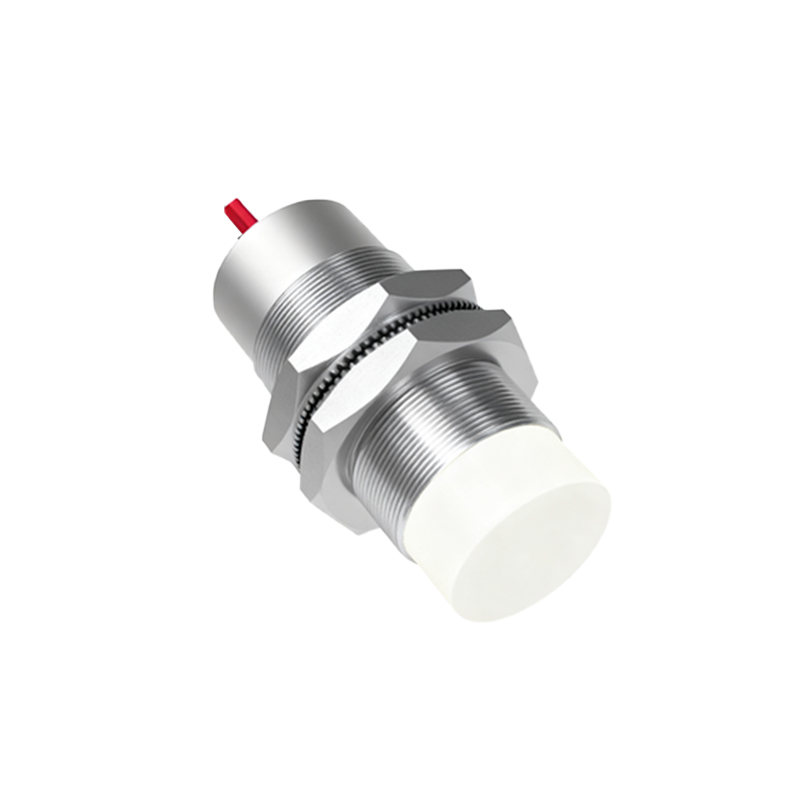
Magnetic Proximity Sensors include Reed Switches and Hall Effect sensors. Reed switches consist of two ferromagnetic reeds sealed in a glass tube. When a permanent magnet approaches, the reeds attract and close the contact. They are simple, low-cost, and used in applications like door/window security sensors or limit switches. Hall Effect sensors detect magnetic fields by producing a voltage difference (the Hall voltage) when a current-carrying conductor is placed in a magnetic field. They are solid-state, more robust than reed switches, offer faster switching, and are widely used in speed sensing (e.g., RPM measurement), position sensing in brushless DC motors, and current sensing applications.
Selection criteria extend beyond the detection principle. Engineers must consider factors such as the sensing range (nominal and practical), output type (PNP/NPN, NO/NC, analog), housing material and shape (cylindrical, rectangular), environmental protection rating (IP or NEMA), supply voltage, and response time. For instance, an inductive sensor with a long-range cylindrical housing and IP67 rating would be chosen for detecting steel pallets in a wet, dirty warehouse, while a small, diffuse photoelectric sensor might be selected for detecting small plastic parts on a clean assembly line.
In conclusion, the diverse family of proximity sensors offers tailored solutions for modern automation. Inductive sensors excel with metals in harsh conditions, capacitive sensors handle diverse materials including liquids, ultrasonic sensors provide reliable distance-based detection, photoelectric sensors offer versatile optical detection, and magnetic sensors