In the realm of industrial automation and control systems, proximity sensors play a pivotal role in detecting the presence or absence of objects without physical contact. Among the various types, PNP proximity sensors are widely utilized due to their specific output configuration and compatibility with many programmable logic controllers (PLCs). This article delves into the working principle of PNP proximity sensors, explaining their operation, circuitry, and typical applications in a professional context.
A proximity sensor is an electronic device designed to detect nearby objects through electromagnetic fields, infrared light, or ultrasonic waves. PNP sensors, in particular, are named after their output transistor type—a PNP bipolar junction transistor. The "PNP" designation refers to the arrangement of semiconductor materials: P-type, N-type, and P-type layers. In this configuration, the sensor acts as a switching device that provides a positive output voltage when an object is detected.
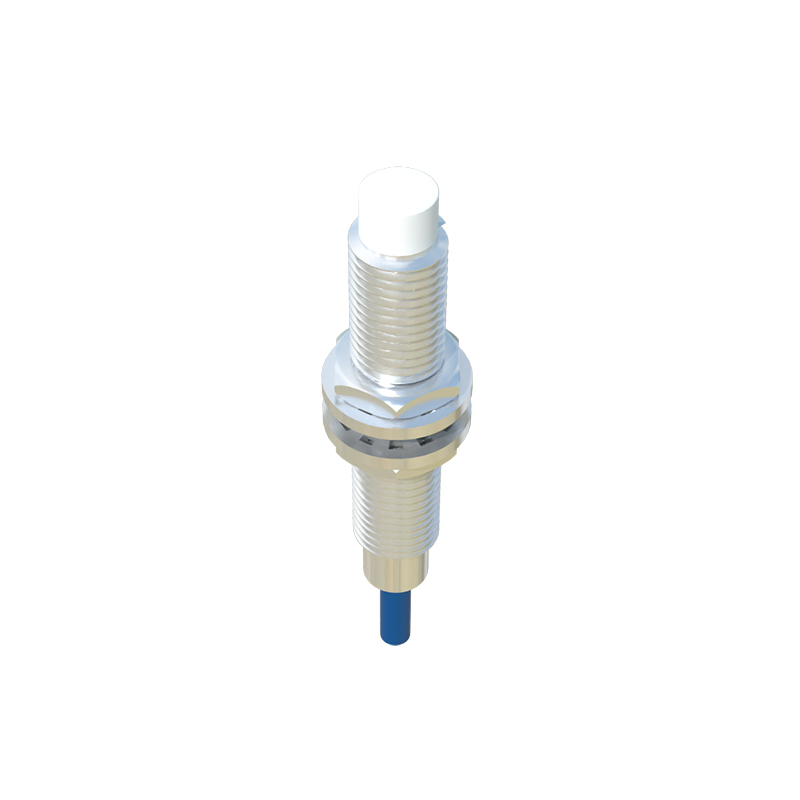
The core working principle of a PNP proximity sensor involves inductive or capacitive sensing, depending on the target material. For inductive sensors, which are common for metal detection, the sensor generates an oscillating electromagnetic field from a coil. When a metallic object enters this field, eddy currents are induced in the object, causing a change in the oscillation amplitude. This change is detected by the sensor's internal circuit, which then triggers the output transistor. In the case of PNP sensors, the output transistor switches on, connecting the output terminal to the positive supply voltage (typically +24V DC in industrial settings). This results in a "high" signal being sent to the connected control system, indicating object presence.
The electrical operation of a PNP proximity sensor can be broken down into its output stage. The sensor has three wires: brown for positive supply voltage (+V), blue for common ground (0V), and black for the output signal. When no target is detected, the PNP transistor remains off, and the output is in a high-impedance state, effectively disconnected from the positive supply. Upon detection, the transistor turns on, allowing current to flow from the positive supply through the transistor to the output wire. This sourcing configuration means the sensor supplies current to the load (e.g., a PLC input module), making it ideal for sinking input modules that require a positive voltage to activate.
Key advantages of PNP proximity sensors include their straightforward integration with many European and Asian PLC systems, which often use sinking inputs. They provide a robust and reliable signal in noisy industrial environments, with fast response times suitable for high-speed applications like conveyor systems or robotic arms. Additionally, PNP sensors are less susceptible to voltage drops over long wiring distances compared to some alternatives, ensuring consistent performance.
In practice, PNP proximity sensors are employed across various industries. For instance, in automotive manufacturing, they detect parts on assembly lines to trigger robotic welders. In packaging machinery, they sense product positions to control filling or sealing operations. Their non-contact nature minimizes wear and tear, enhancing system longevity and reducing maintenance costs. When selecting a PNP sensor, factors such as sensing range, material compatibility, environmental conditions (e.g., temperature, humidity), and output current capacity must be considered to ensure optimal operation.
To summarize, PNP proximity sensors function by using a PNP transistor to source positive voltage upon object detection, based on changes in electromagnetic fields. Their design offers compatibility with common control systems, making them a staple in industrial automation. Understanding this principle aids engineers in deploying these sensors effectively for precise, efficient, and reliable object detection tasks.