In the realm of industrial automation and control systems, proximity sensors stand as fundamental components for non-contact object detection. Among the various configurations available, the 2-wire proximity sensor offers a particularly streamlined and cost-effective solution. This article delves into the operational principles, key advantages, common applications, and critical selection criteria for these ubiquitous devices.
At its core, a 2-wire proximity sensor functions by detecting the presence or absence of a metallic target within its sensing range without any physical contact. Unlike their 3-wire or 4-wire counterparts, which have separate power and signal output lines, a 2-wire sensor integrates its switching function directly into the power supply line. It is connected in series with the load (such as a PLC input, relay, or indicator lamp). In its normal state (no target present), a small leakage or quiescent current flows to maintain the sensor's internal electronics. When a target enters the detection zone, the sensor's internal solid-state switch (typically a MOSFET) closes, allowing the full load current to flow, thus signaling the detection event.
The primary advantage of this design is simplicity. Installation is straightforward, requiring only two wires for connection, which reduces wiring complexity, minimizes potential points of failure, and lowers overall installation costs. They are often directly compatible with standard AC or DC control circuits, making them easy to retrofit into existing systems. Furthermore, the absence of a separate output wire can simplify cabinet layout and reduce terminal block requirements.
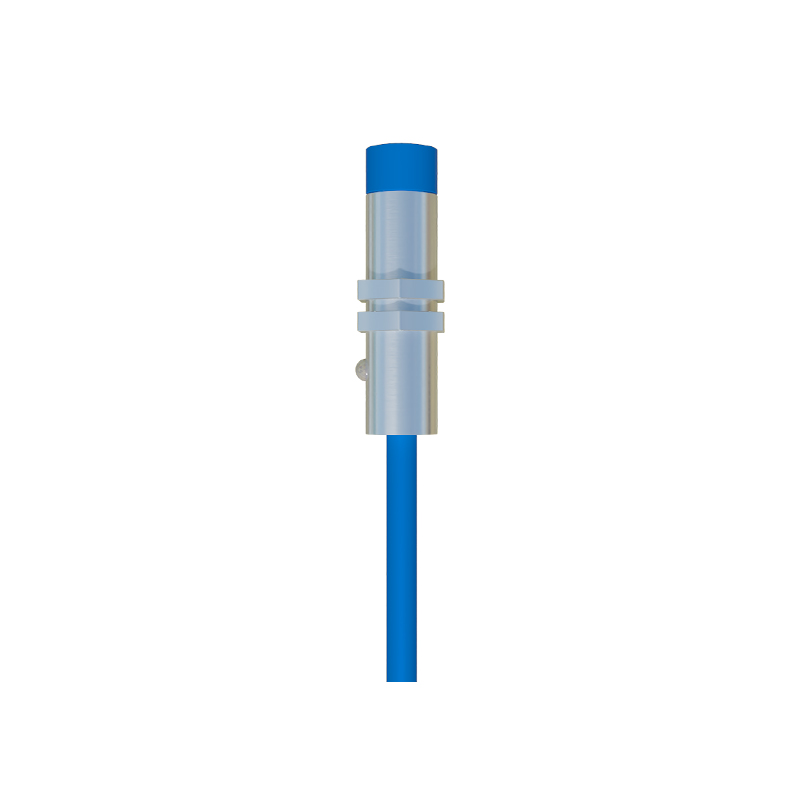
However, this simplicity comes with specific considerations. The leakage current, though small (typically 1-2 mA for DC models, higher for AC), must be accounted for. If the load's minimum operating current is not sufficiently higher than this leakage current, the load may remain partially energized even when the sensor is in the "off" state. This necessitates careful matching with the connected load impedance. Additionally, the voltage drop across the sensor in the "on" state, while minimal, must be subtracted from the supply voltage available to the load.
2-wire proximity sensors are predominantly available in two variants: AC and DC. AC sensors are commonly used in standard industrial line voltage applications (e.g., 120VAC or 240VAC). DC sensors, operating at lower voltages like 10-30VDC, are favored in environments requiring compatibility with programmable logic controllers (PLCs) and other low-voltage solid-state control systems. The sensing technology is almost exclusively inductive, meaning they detect ferrous and non-ferrous metals. The sensing distance varies by sensor size and target material but typically ranges from a few millimeters to several centimeters.
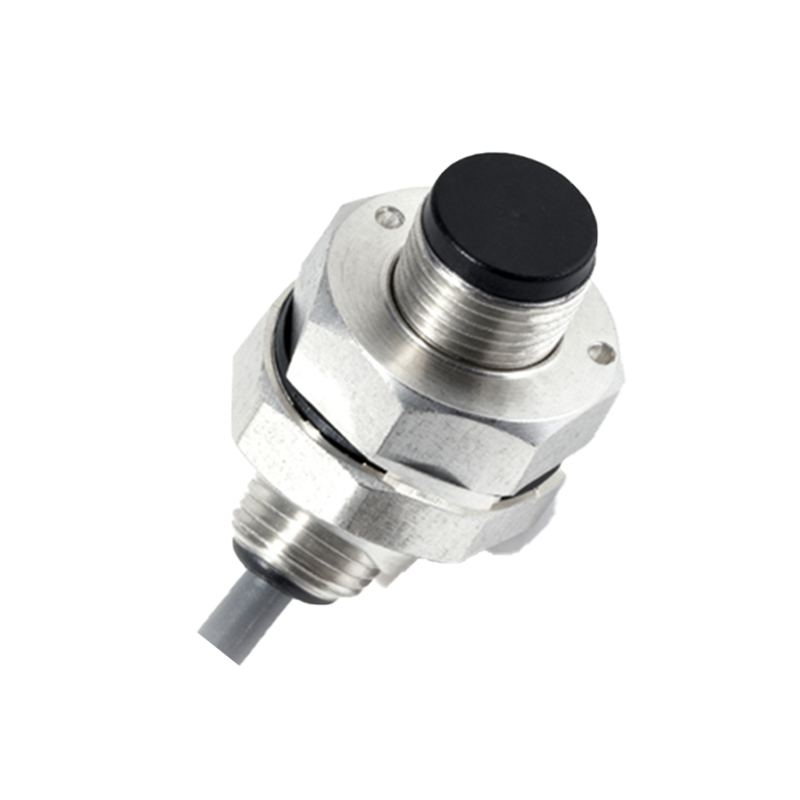
Applications for 2-wire sensors are vast across manufacturing and processing industries. They are extensively used for basic presence/absence detection tasks: counting objects on a conveyor, verifying the position of a machine part (like a cylinder end position), detecting the open/closed state of a door or guard, and monitoring bin levels. Their rugged construction, often with IP67 or higher ingress protection ratings, makes them suitable for harsh environments with dust, moisture, or vibration.
When selecting a 2-wire proximity sensor, engineers must evaluate several parameters beyond just the sensing distance. First, determine the required supply voltage (AC or DC) and ensure compatibility with the load. Calculate the load's current draw to verify it exceeds the sensor's leakage current but remains below the sensor's maximum switching current. The housing material (e.g., stainless steel, nickel-plated brass, or PBT plastic) should be chosen based on the environmental conditions, including potential chemical exposure. The electrical connection style (pre-wired cable, quick-disconnect, or terminal block) impacts maintenance and replacement ease. Finally, consider the output function: normally open (NO) or normally closed (NC), with NO being the most common configuration.
In summary, the 2-wire proximity sensor represents an elegant balance of functionality and economy. Its two-wire design simplifies installation and reduces costs, making it a go-to choice for countless standard detection applications in automation. A thorough understanding of its operating principle, particularly regarding leakage current and load matching, is essential for successful implementation. By carefully matching the sensor's specifications to the application requirements, engineers can reliably enhance system automation, safety, and efficiency with this robust and versatile component.