In the realm of industrial automation and smart device integration, proximity light sensors have emerged as indispensable components for non-contact detection and measurement. These sensors operate on the fundamental principle of emitting a beam of light—typically infrared (IR), visible red, or laser—and detecting changes in the reflected light to ascertain the presence, absence, or distance of an object. Unlike mechanical limit switches or capacitive sensors, proximity light sensors offer high precision, rapid response times, and the ability to detect a wide variety of materials without physical contact, making them ideal for harsh, demanding, or sterile environments.
The core technology behind these sensors can be categorized mainly into two types: through-beam (or opposed) sensors and diffuse-reflective (or proximity) sensors. Through-beam sensors consist of separate emitter and receiver units. The emitter projects a continuous or modulated light beam towards the receiver. An object is detected when it interrupts this beam. This configuration provides the longest sensing ranges and highest reliability, as it is largely immune to the object's color, reflectivity, or surface finish. They are commonly used in safety curtains, conveyor belt break detection, and high-speed counting applications.
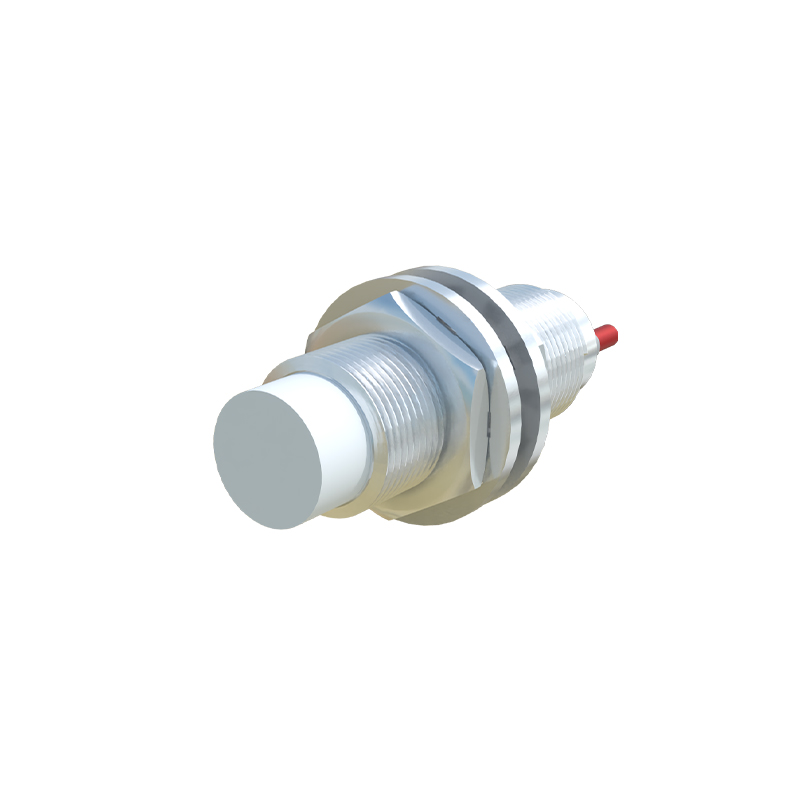
Diffuse-reflective sensors, often simply called proximity sensors, house both the emitter and receiver in a single housing. They detect an object when the emitted light reflects off the object's surface and returns to the receiver. The effective sensing range is shorter than through-beam types and is significantly influenced by the object's color, material, and surface texture. Light-colored, reflective objects are detected at greater distances than dark, absorptive ones. Advanced versions incorporate background suppression or fixed-field background suppression technology. These use triangulation principles to only accept reflections from a specific, predefined distance, effectively ignoring objects beyond the set point, even if they are highly reflective. This is crucial for applications like detecting objects on a conveyor belt while ignoring the shiny metal belt itself.
A third, less common but highly precise variant is the retro-reflective sensor. It uses a single housing with an emitter and receiver, but requires a reflector (like a corner-cube reflector) placed opposite the sensor. The sensor detects an object when it breaks the beam between the sensor and the reflector. This offers a good compromise between the long range of through-beam and the single-sided installation of diffuse sensors.
The selection of a proximity light sensor for an industrial application is a critical process that hinges on several key parameters. First, the sensing range must be carefully evaluated against the application's physical constraints. Engineers must consider not just the nominal range but also the safety factor or derating, especially in environments with dust, fog, or vibration. Second, the type of light source is paramount. Infrared LEDs are common, inexpensive, and immune to ambient visible light interference. Red LED sensors provide a visible beam for easier alignment but can be affected by ambient light. Laser sensors offer extremely small spot sizes and high precision for detecting minute objects or precise positioning but come at a higher cost and require strict safety protocols.
Output configuration is another vital consideration. Sensors typically provide digital outputs (PNP/NPN transistor) or analog outputs (4-20 mA, 0-10 V). Digital outputs are for simple presence detection, while analog outputs provide a continuous signal proportional to distance, useful for precision gauging. Response time, measured in milliseconds or microseconds, determines how fast the sensor can detect a passing object, which is critical for high-speed production lines. Environmental robustness is non-negotiable in industrial settings. Ingress Protection (IP) ratings (e.g., IP67, IP69K) define resistance to dust and water, while housing materials (often stainless steel or ruggedized plastics) must withstand chemical exposure, mechanical impact, and wide temperature fluctuations.
Application-specific features like built-in IO-Link communication are becoming increasingly standard. IO-Link allows for parameterization, real-time diagnostics, and process data exchange, enabling predictive maintenance and seamless integration into Industry 4.0 frameworks. For example, a sensor can report decreasing signal strength, indicating lens contamination before a failure occurs.
In practice, proximity light sensors are the silent workhorses of modern manufacturing. They perform tasks such as bottle cap presence detection on filling lines, precise wafer positioning in semiconductor fabrication, robot end-effector guidance, and height inspection of components. In automated warehouses, they ensure pallets are correctly positioned for robotic pickers. Their versatility extends beyond factory floors to consumer electronics, where they disable touchscreens during phone calls, and to automotive systems, where they assist in parking and blind-spot monitoring.
Troubleshooting common issues often involves checking for optical interference (ambient light from sun or machinery), ensuring the lens is clean, verifying the alignment for through-beam and retro-reflective types, and confirming that the target object's properties fall within the sensor's specified