Proximity sensors are indispensable components in modern industrial automation, robotics, and countless electronic devices. Their primary function is to detect the presence or absence of an object within a specified range without any physical contact. This non-contact detection offers significant advantages, including high reliability, long operational life, and the ability to function in harsh environments. The construction of a proximity sensor is a sophisticated interplay of electronics and physics, tailored to its specific sensing technology. While there are several types—inductive, capacitive, ultrasonic, and photoelectric—this article will delve into the fundamental construction principles common to the most widely used variants: inductive and capacitive sensors.
At its core, a typical proximity sensor consists of four main structural blocks: the sensing element/oscillator, the detection circuit, the output circuit, and the housing. The housing, usually made of robust materials like nickel-plated brass, stainless steel, or PBT plastic, provides mechanical protection, environmental sealing (often rated IP67 or higher), and defines the sensor's form factor (tubular, rectangular, etc.). It is engineered to withstand industrial stresses such as vibration, moisture, and chemical exposure.
The heart of an inductive proximity sensor is its oscillator coil. This coil is wound around a ferrite core located at the active face of the sensor. The oscillator circuit generates a high-frequency electromagnetic field that radiates from this face. When a metallic target (ferrous or non-ferrous) enters this field, eddy currents are induced on the target's surface. These eddy currents draw energy from the oscillator, causing a reduction in the amplitude of oscillation. The detection circuit, which continuously monitors the oscillator's amplitude, senses this dampening. Once the amplitude drop exceeds a predefined threshold, the detection circuit triggers a signal change.
Following the detection circuit is the output stage. Modern proximity sensors predominantly use solid-state switches for output. The most common types are NPN (sinking) and PNP (sourcing) transistor outputs, which act like a switch to control an external load (e.g., a PLC input, relay, or indicator). Some sensors also provide analog (4-20 mA or 0-10V) or IO-Link digital outputs for distance-proportional information. The output circuit is powered by a DC supply, typically ranging from 10-30V DC, though AC variants exist.
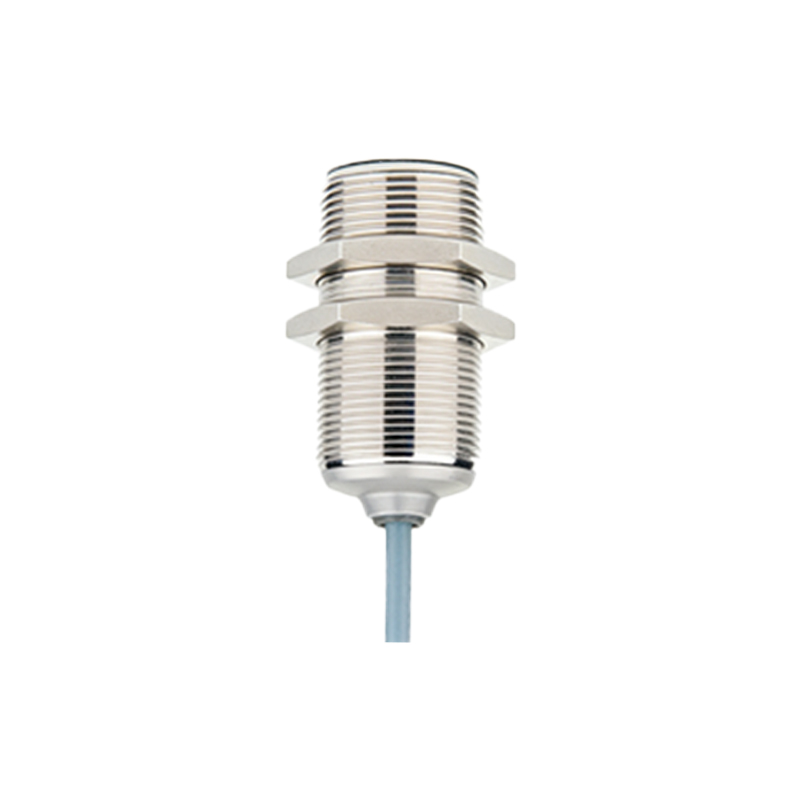
The construction of a capacitive proximity sensor shares similarities but is designed to detect both metallic and non-metallic materials (plastics, wood, liquids, etc.). Instead of a coil, its sensing element consists of two conductive electrodes (often arranged as concentric rings) that form an open capacitor. These electrodes are connected to an oscillator. The capacitance of this open system changes when any object with a different dielectric constant than air approaches the active face. This change in capacitance alters the oscillator's condition, which is then evaluated by the detection circuit. To adjust sensitivity for different materials, many capacitive sensors feature a potentiometer.
A critical internal component is the Schmitt trigger or a similar hysteresis circuit. This prevents output chattering when a target is at the exact switching point by providing a small difference between the "switch-on" and "switch-off" points. Furthermore, built-in protection circuits are standard, including reverse polarity protection, short-circuit protection, and surge suppression to enhance durability.
The selection of materials is paramount. The sensing face is often a specific material, like PTFE for capacitive sensors in adhesive applications, to prevent material buildup. Shielding (or screening) is another key design aspect. Shielded inductive sensors have the coil surrounded by a metal ring, which focuses the electromagnetic field forward, allowing flush mounting in metal. Unshielded sensors have a wider sensing range but require a non-metallic surround.
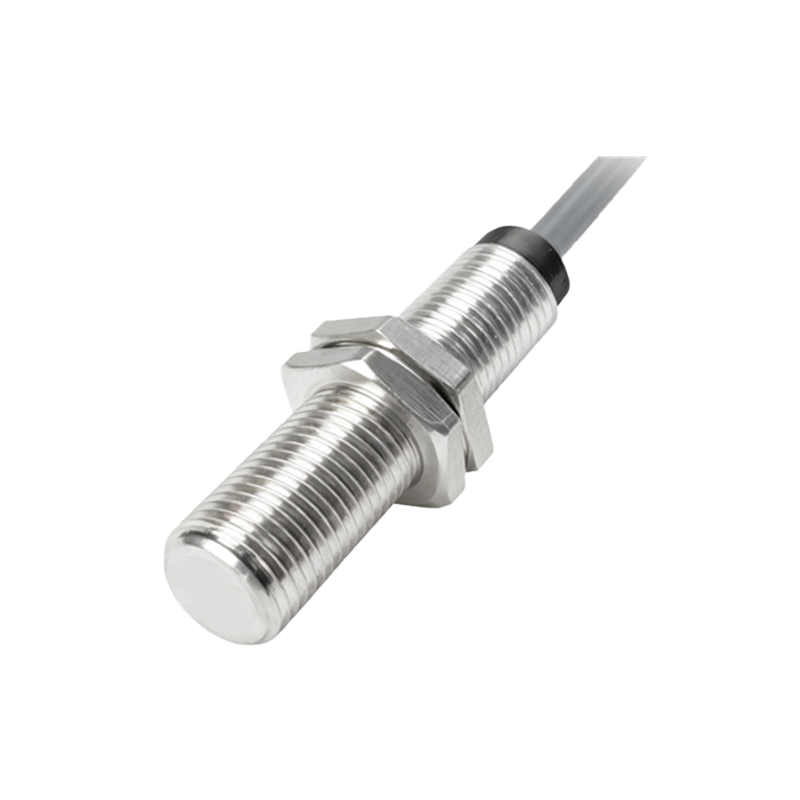
In summary, the construction of a proximity sensor is a precise engineering feat that integrates electromagnetic or electrostatic field generation, sensitive signal detection, robust signal conditioning, and industrial-grade packaging. Understanding this internal architecture is crucial for selecting the right sensor for an application, ensuring optimal performance, reliability, and longevity in automated systems. From the winding of the oscillator coil to the sealing of the housing, every detail contributes to its ability to perform millions of reliable detections in demanding conditions.