Full laser sensors represent a significant advancement in industrial measurement and detection technology. These devices operate based on the principle of laser triangulation or time-of-flight (ToF) measurement, providing high precision and reliability in various applications. In laser triangulation, a laser diode emits a focused beam onto a target surface. The reflected light is captured by a position-sensitive detector (PSD) or a CMOS/CCD sensor at a specific angle. By calculating the displacement of the reflected spot on the sensor, the distance to the target is determined with micron-level accuracy. This method is ideal for applications requiring fine resolution, such as surface profiling, thickness measurement, and alignment tasks in manufacturing.
Time-of-flight laser sensors, on the other hand, measure distance by calculating the time it takes for a laser pulse to travel to the target and back. Using the constant speed of light, the sensor computes the distance based on the elapsed time. ToF sensors are suitable for longer ranges, often up to several meters, and are commonly used in level monitoring, object detection, and robotics. They offer fast response times and robustness in challenging environments, including dust or variable lighting conditions.
The core components of a full laser sensor include a laser source, optics, a photodetector, and signal processing electronics. The laser source typically uses Class 2 or Class 1 lasers for safety, with wavelengths in the visible red or infrared spectrum. Optics focus the beam and collect reflected light, while the photodetector converts light signals into electrical ones. Advanced signal processing algorithms filter noise, compensate for environmental factors, and enhance measurement stability. Modern sensors often integrate microprocessors for real-time data analysis and communication via interfaces like IO-Link, Ethernet, or analog outputs.
In industrial settings, full laser sensors excel due to their non-contact nature, reducing wear and maintenance. They are immune to electromagnetic interference and can handle diverse materials, from metals to plastics. Applications span automotive assembly, semiconductor fabrication, packaging, and logistics. For instance, in quality control, laser sensors detect minute defects on surfaces, while in automated guided vehicles (AGVs), they ensure obstacle avoidance and navigation.
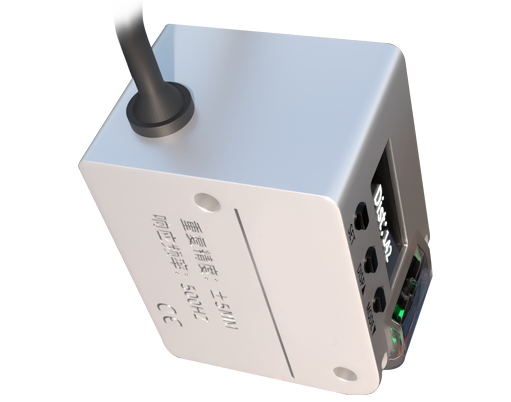
Key advantages include high accuracy (often within ±0.1% of measurement range), repeatability, and adaptability to harsh conditions. However, challenges exist, such as sensitivity to highly reflective or transparent surfaces, which may require calibration or specialized models. Innovations like multi-echo technology and integrated AI are addressing these limitations, enabling smarter sensors that learn from environmental data.
Overall, full laser sensors are pivotal in Industry 4.0, enabling precise, automated processes. Their principles combine physics, electronics, and software, driving efficiency and innovation across sectors. As technology evolves, these sensors will continue to enhance industrial automation with faster speeds, greater integration, and enhanced connectivity.
