Proximity sensors are a cornerstone of modern automation, silently performing critical tasks across countless industries. Unlike traditional sensors that require physical contact, proximity sensors detect the presence or absence of an object within a specified range without any touch. This non-contact operation makes them ideal for applications demanding high reliability, speed, and durability. The core principle involves emitting a field or beam and monitoring for changes caused by a target object. The choice of sensor type is paramount and depends heavily on the target material, required sensing distance, environmental conditions, and cost constraints. This article explores the primary types of proximity sensors, detailing their working principles, strengths, and typical use cases.
Inductive Proximity Sensors
Inductive sensors are the workhorses for detecting metallic objects. Their operation is based on electromagnetic induction. The sensor contains a coil wound around a ferrite core, which generates an oscillating electromagnetic field. When a conductive metal object enters this field, eddy currents are induced on the object's surface. This causes a change in the oscillation amplitude, which is detected by the sensor's circuitry, triggering an output signal. Inductive sensors excel in harsh industrial environments—they are resistant to dust, dirt, oil, and water. They are highly reliable, offer fast response times, and have no moving parts. However, they can typically only detect metals, with sensing ranges varying based on the metal type (ferrous metals like iron and steel are detected at longer ranges than non-ferrous metals like aluminum or copper). Common applications include position sensing of machine parts, limit switching, and counting metal objects on conveyor lines.
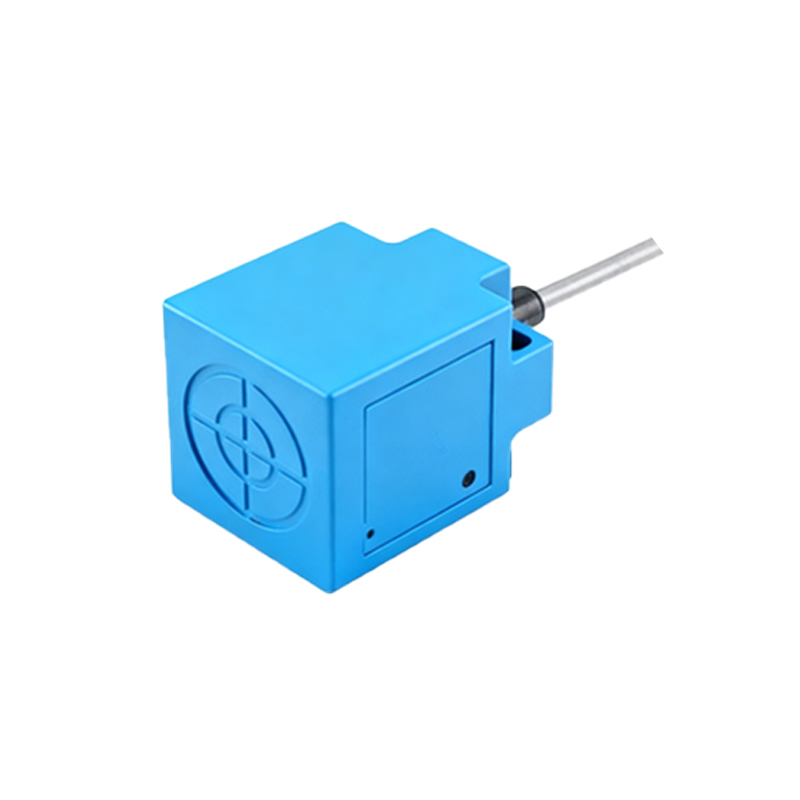
Capacitive Proximity Sensors
Capacitive sensors have a broader detection capability. They can detect both metallic and non-metallic materials, including liquids, plastics, glass, wood, and granular substances. These sensors function by generating an electrostatic field. The sensor and the target object act as two plates of a capacitor. As an object approaches the sensing face, it alters the capacitance of this system. The sensor's internal oscillator measures this change and switches the output when a threshold is reached. A key advantage is their ability to sense through certain non-metallic barriers, such as a thin plastic or glass wall, allowing for sealed applications. They are often used for level detection of liquids or powders in tanks, material handling, and presence detection of non-metallic objects. Sensitivity adjustment is a common feature, allowing tuning to ignore certain materials or container walls.
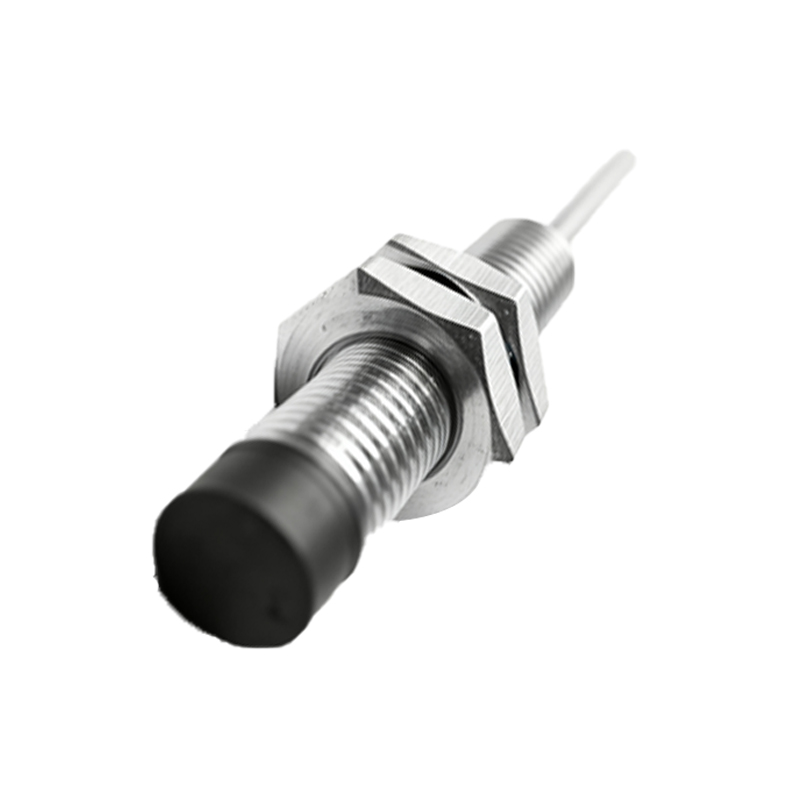
Photoelectric Sensors
Photoelectric sensors use light to detect objects. They consist of a light emitter (usually an LED) and a receiver. When the emitted light beam is interrupted or reflected by a target, the change in light intensity at the receiver is processed to produce an output signal. There are three main operating modes. Through-beam sensors have separate emitter and receiver units; an object is detected when it breaks the beam between them, offering the longest sensing ranges and highest reliability. Retro-reflective sensors use a single unit and a reflector; detection occurs when the object blocks the light beam reflected back to the receiver. Diffuse (reflective) sensors detect objects when the emitted light reflects off the object's surface back to the receiver, all within a single housing. Photoelectric sensors can detect virtually any material, regardless of color or reflectivity (though these factors affect range), and offer very long sensing distances. They are ubiquitous in packaging, material handling, and assembly automation.
Ultrasonic Proximity Sensors
Ultrasonic sensors operate on a principle similar to sonar. They emit high-frequency sound waves (ultrasound) and evaluate the echo received back. The sensor calculates the time interval between sending the signal and receiving the echo to determine the distance to an object. This makes them excellent for precise distance measurement and level sensing, not just presence detection. They are largely unaffected by the object's color, transparency, or material (though soft materials may absorb sound). They perform well in environments with dust, mist, or vapors where photoelectric sensors might fail. Common uses include liquid level control, loop control in web handling, and pallet detection in logistics. Their limitations include a slower response time compared to other types and potential interference from extreme air turbulence or similar sound frequencies.
Magnetic Proximity Sensors
Magnetic sensors, often called reed switches or Hall-effect sensors, detect the presence of a permanent magnet. Reed switches contain two ferromagnetic reeds sealed in a glass tube; when a magnet approaches, the reeds attract and close the electrical contact. Hall-effect sensors produce a voltage change when exposed to a magnetic field. These sensors are simple, cost-effective, and can be completely sealed, making them suitable for wet or explosive environments. Their primary application is in position sensing, such as detecting the open/closed state of doors or windows, or sensing the position of a cylinder piston with an