Laser sensors, often referred to by model series such as LRZ, represent a cornerstone technology in modern industrial automation and precision measurement. These devices operate on the fundamental principle of emitting a focused beam of coherent light—typically from a laser diode—towards a target object. The sensor then detects the interaction of this light, whether through reflection, interruption, or time-of-flight calculation, to determine critical parameters such as distance, presence, thickness, or position with exceptional accuracy and speed. Unlike conventional photoelectric sensors, laser sensors utilize a highly collimated light beam, enabling precise detection of small objects, resolution of minute details, and operation over longer ranges even in challenging environmental conditions.
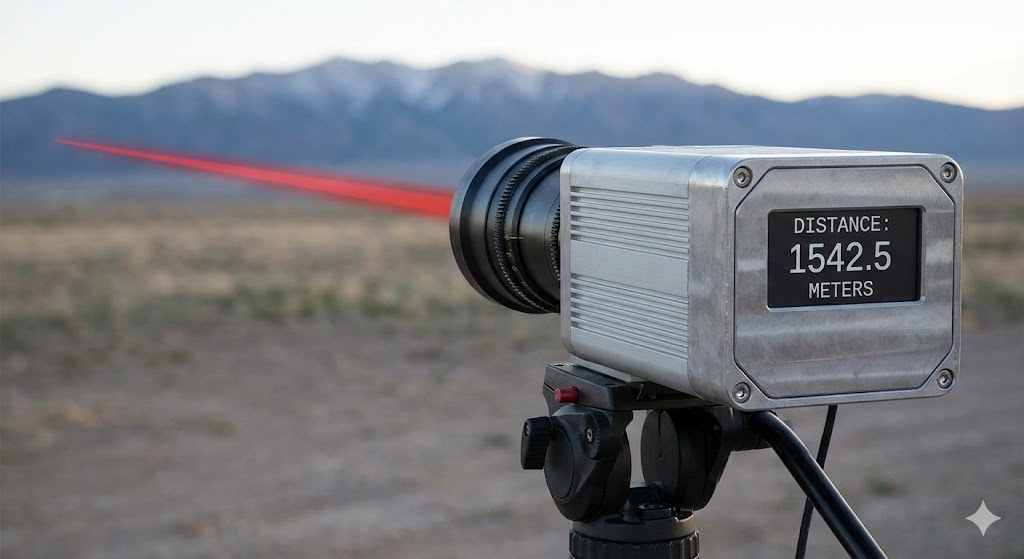
The core working principles of laser sensors can be categorized into several main types. Triangulation sensors are prevalent for precise distance and displacement measurement. Here, the emitted laser dot strikes the target, and its reflection is focused onto a position-sensitive detector (PSD) or CMOS array. The change in the reflected light's position on the detector is geometrically calculated to determine the target's distance. This method offers high resolution, often in the micrometer range, making it ideal for applications like wafer alignment, contour profiling, and thickness gauging. Another widespread principle is time-of-flight (ToF) measurement, where the sensor calculates the time delay between the emission of a laser pulse and the reception of its reflection. This technology is suited for longer-range distance measurement, such as in level monitoring of bulk materials, vehicle detection, or large-scale dimensioning systems. Furthermore, confocal chromatic sensors use white light or multi-wavelength lasers, measuring distance based on the wavelength of the reflected light focused through a chromatic lens, providing exceptional precision for transparent or reflective surfaces.
The application spectrum of laser sensors in industrial settings is vast and critical. In manufacturing, they are indispensable for precise positioning control in robotics, ensuring robotic arms place components with sub-millimeter accuracy. They perform non-contact quality inspection on production lines, detecting defects, verifying dimensions, and checking fill levels in packaging. In the electronics industry, laser sensors facilitate the assembly of printed circuit boards (PCBs) by measuring coplanarity of components and guiding pick-and-place machines. Logistics and material handling rely on them for parcel dimensioning, palletizing guidance, and automated guided vehicle (AGV) navigation. Additionally, they play a vital role in process industries for monitoring and controlling the profile of rolled metals, plastics, and paper, ensuring product consistency and reducing waste.
Selecting the appropriate laser sensor for a specific application requires careful consideration of multiple technical parameters. The key specification is the measuring range, which must accommodate the expected distance to the target. Resolution and repeatability define the sensor's precision and stability of measurements over time. The spot size of the laser beam is crucial; a smaller spot allows for detection of finer features but may require more precise alignment. The type of target material and surface characteristics—such as color, reflectivity, transparency, or texture—significantly influence sensor performance. For instance, a highly reflective or mirror-like surface may require a sensor with diffuse reflection or a specialized filter to handle specular reflections. Environmental factors cannot be overlooked. Industrial environments often contain dust, smoke, vibration, and ambient light interference (like from factory lighting or sunlight). Choosing a sensor with a sufficiently high IP rating for ingress protection, robust housing, and immunity to ambient light is essential for reliable operation. Finally, the output signal type (analog voltage/current, digital IO, or fieldbus protocols like IO-Link, PROFINET) must be compatible with the existing control system architecture.
The integration of advanced features is pushing the boundaries of laser sensor capabilities. Modern sensors often incorporate intelligent functions such as background suppression, which allows them to ignore objects beyond a set distance, and teach-in functionality for easy configuration via a button or software. The advent of IO-Link communication enables detailed parameter setting, remote diagnostics, and condition monitoring, facilitating predictive maintenance strategies. Furthermore, the miniaturization of components has led to more compact sensor designs that can be installed in space-constrained locations without sacrificing performance.

In conclusion, laser sensors like the LRZ series are sophisticated instruments that translate the properties of light into highly reliable and precise measurement data. Their selection and deployment demand a thorough understanding of both the operational principle suited to the task and the specific environmental and application constraints. As Industry 4.0 and smart manufacturing initiatives advance, the role of laser sensors as critical data acquisition points will only expand, driving further innovations in speed, accuracy, and connectivity to create more efficient, flexible, and intelligent automated systems.
