In the realm of industrial automation and electronic control, proximity sensors are indispensable for non-contact detection. Among the various technologies employed, those utilizing the Hall Effect stand out for their reliability, durability, and precision in sensing magnetic fields. This article delves into the fundamental principles of the Hall Effect, its implementation in proximity sensing, key application areas, and critical factors for sensor selection.
The Hall Effect, discovered by Edwin Hall in 1879, is the production of a voltage difference (the Hall voltage) across an electrical conductor, transverse to an electric current in the conductor and a magnetic field perpendicular to the current. In simpler terms, when a current-carrying conductor or semiconductor is placed in a magnetic field perpendicular to the current, a voltage is generated across the conductor at right angles to both the current and the field. This voltage is directly proportional to the strength of the applied magnetic field. Modern Hall Effect sensors are typically fabricated from semiconductor materials like gallium arsenide, indium antimonide, or silicon, which offer a more pronounced effect than metals.
A Hall Effect proximity sensor integrates this principle into a practical device. It consists of a Hall element (the sensing chip), a signal conditioning circuit, and a solid-state output stage. When a permanent magnet or an electromagnet approaches the sensor face, the magnetic flux density at the Hall element changes. This change alters the generated Hall voltage. The onboard circuitry amplifies this small voltage and processes it to trigger a clean, digital output signal (typically open-collector or push-pull) when a predefined magnetic threshold is reached. This allows the sensor to detect the presence or absence of a magnetic target without any physical contact.
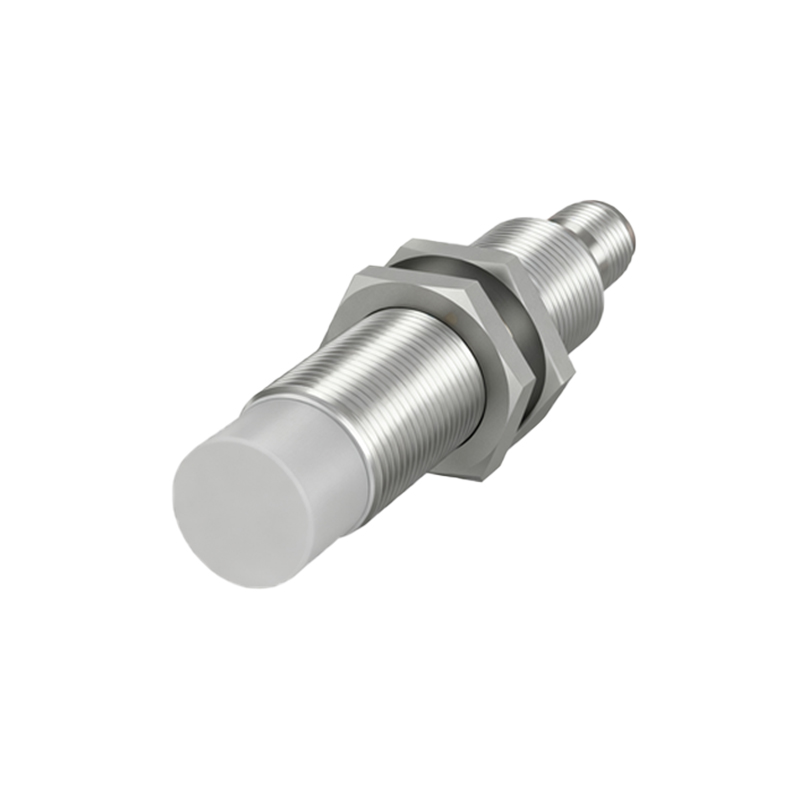
The operational modes are primarily two: unipolar and bipolar. Unipolar sensors respond to a single magnetic pole (usually the south pole) and deactivate when the field is removed. Bipolar sensors require a positive (south) field to activate and a negative (north) field to deactivate, offering inherent latching behavior. Key performance parameters include operating point (the magnetic field strength at which the sensor switches on), release point (the field strength at which it switches off), and the hysteresis—the difference between these two points, which prevents output chatter when the target is near the switching threshold.
The advantages of Hall Effect proximity sensors are numerous. They are solid-state devices with no moving parts, leading to exceptionally long life, high reliability, and immunity to mechanical wear. They can operate at very high switching frequencies, often in the range of several hundred kilohertz, making them suitable for high-speed counting or RPM measurement. They are virtually unaffected by environmental contaminants like dust, oil, or moisture, provided the housing is appropriately sealed (e.g., IP67). Furthermore, they can function over a wide temperature range.
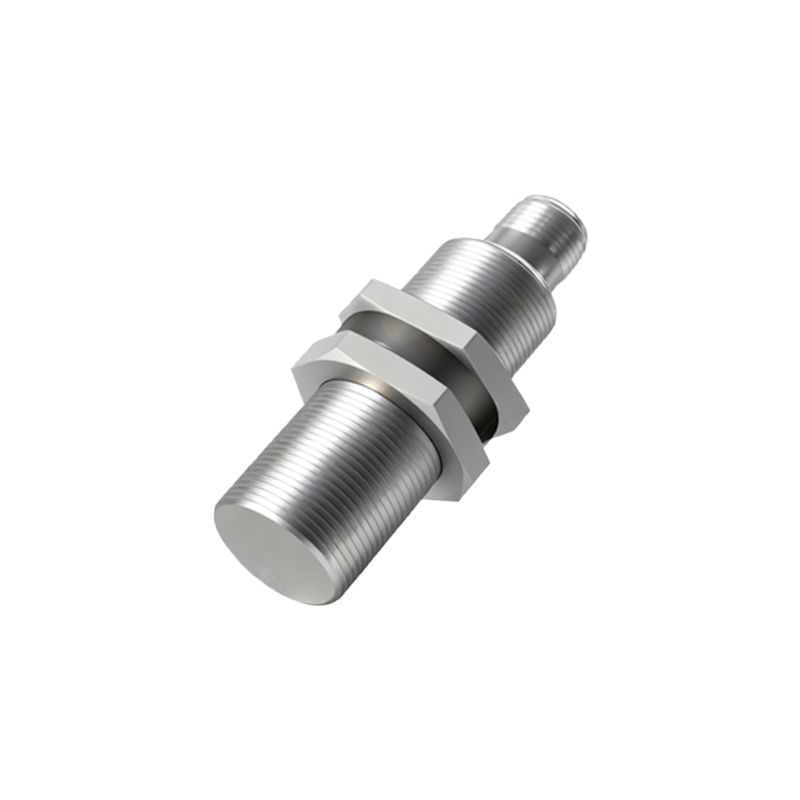
These characteristics make Hall Effect sensors ideal for a vast array of applications. In the automotive industry, they are ubiquitous for sensing crankshaft and camshaft position, wheel speed for anti-lock braking systems (ABS), and gearbox speed. In industrial automation, they are used for limit switching, detecting the position of cylinders (via magnet-equipped pistons), rotary encoder systems, and conveyor belt speed monitoring. Consumer electronics employ them in laptops and mobile phones as lid/door open-close detectors. Brushless DC (BLDC) motors rely heavily on Hall sensors for commutation control.
Selecting the right Hall Effect proximity sensor requires careful consideration of several factors. First, define the sensing distance required and the strength of the target magnet; stronger magnets allow for larger air gaps. The electrical requirements are crucial: supply voltage range (e.g., 3.3V, 5V, 12-24V DC), output type (NPN/PNP, sinking/sourcing), and output current capability. The physical package (threaded barrel, rectangular block) must suit the mounting constraints. Environmental conditions dictate the necessary ingress protection (IP) rating and operating temperature range. Finally, consider special features like reverse polarity protection, short-circuit protection, or analog output for proportional distance measurement.
In conclusion, the Hall Effect provides a robust, contactless sensing methodology that is fundamental to modern electromechanical systems. Hall Effect proximity sensors offer a unique blend of speed, durability, and precision for magnetic target detection. A thorough understanding of their operating principle, key specifications, and application requirements is essential for engineers to leverage their full potential in designing efficient, reliable, and innovative automated solutions across countless industries.