In the realm of modern industrial automation and precision measurement, laser pulse detection sensors have emerged as a cornerstone technology. These sophisticated devices operate on the fundamental principle of emitting controlled laser pulses and analyzing the reflected signals to determine critical parameters such as distance, presence, or surface characteristics. Unlike continuous-wave lasers, pulsed lasers emit light in short, high-energy bursts. This modality offers distinct advantages, including higher peak power for long-range detection, improved signal-to-noise ratio in challenging environments, and reduced average power consumption, which enhances safety and component longevity.
The core working mechanism involves a transmitter and a receiver. The transmitter generates a focused laser pulse directed towards a target. The receiver, often a photodiode or an avalanche photodiode (APD) for higher sensitivity, captures the reflected pulse. By precisely measuring the time-of-flight (ToF) of the pulse—the interval between emission and reception—the sensor can calculate the distance to the target with remarkable accuracy, often down to millimeter or even sub-millimeter levels. Alternative methods include phase-shift measurement for continuous distance monitoring and triangulation for high-precision, short-range applications.
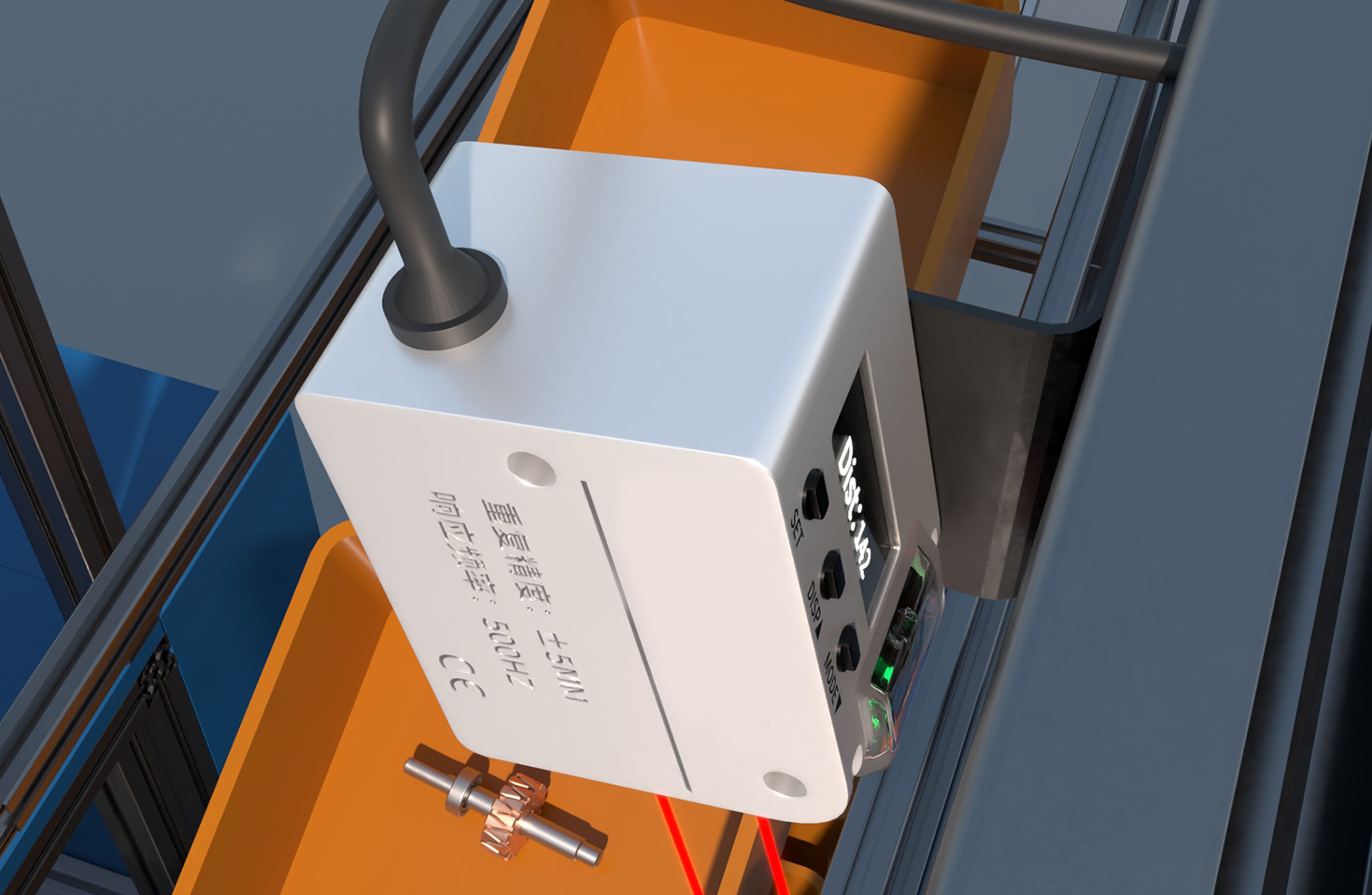
The applications of laser pulse detection sensors are vast and transformative across industries. In manufacturing and robotics, they are indispensable for non-contact positioning, object detection on assembly lines, and ensuring precise robotic arm guidance. The logistics and warehousing sector relies on them for pallet dimensioning, automated guided vehicle (AGV) navigation, and inventory management through volume scanning. In the construction and civil engineering fields, these sensors facilitate land surveying, structural deformation monitoring, and crane anti-collision systems. Furthermore, they are critical in safety systems, such as perimeter guarding and access control, where their ability to detect intrusion within a defined "light curtain" is paramount.
Selecting the appropriate laser pulse detection sensor requires a careful analysis of several technical specifications. Key parameters include:
1. Measurement Range: The minimum and maximum distances over which the sensor can operate reliably. Long-range sensors may use Class 1 or Class 2 laser safety classifications with appropriate power levels.
2. Accuracy and Resolution: Defined as the closeness to the true value and the smallest detectable change, respectively. High-precision machining demands sensors with superior resolution.
3. Response Time/Sampling Rate: The speed at which the sensor can take and process measurements. High-speed automation lines require sensors with very fast response times, often in the microsecond range.
4. Environmental Robustness: Industrial settings present challenges like ambient light interference, dust, fog, vibration, and temperature fluctuations. Sensors with robust housings (e.g., IP67 rating), specialized optical filters, and temperature compensation circuits are essential for reliable operation.
5. Output Interface: Compatibility with control systems is crucial. Common outputs include analog (4-20 mA, 0-10 V), digital (RS-232, RS-485), and industrial network protocols (Ethernet/IP, PROFINET, EtherCAT).
The integration of these sensors into Industry 4.0 frameworks is a significant trend. Modern laser pulse sensors are increasingly equipped with smart features like integrated IoT connectivity, onboard data processing, and diagnostic capabilities. This allows for predictive maintenance, where the sensor can alert operators to potential failures or calibration drifts before they cause downtime, and seamless data integration into centralized control systems for real-time analytics.
Despite their advantages, engineers must consider limitations. Highly reflective or absorbent surfaces can affect signal strength. The presence of transparent materials like glass or clear plastics may pose detection challenges. Therefore, thorough testing in the actual application environment during the selection phase is highly recommended.
In conclusion, laser pulse detection sensors represent a mature yet rapidly evolving technology that provides unmatched precision, speed, and reliability for non-contact measurement. Their role in enhancing automation efficiency, ensuring safety, and enabling new levels of process control continues to expand. A methodical approach to selection, focusing on the specific application requirements and environmental conditions, is the key to leveraging their full potential and achieving optimal performance in any industrial system. As laser technology and signal processing algorithms advance, we can expect even more compact, powerful, and intelligent sensors to drive the next wave of industrial innovation.