In the realm of industrial automation, environmental monitoring, and air quality management, the accurate detection and measurement of particulate matter (PM) is paramount. Among the various sensing technologies available, laser dust sensors have emerged as a superior solution, offering high precision, reliability, and real-time data acquisition. This article delves into the operational principles, key applications, and critical factors for selecting and implementing laser-based dust sensors in demanding industrial settings.
At its core, a laser dust sensor operates on the principle of light scattering, specifically Mie scattering. The sensor incorporates a laser diode that emits a focused beam of light into a detection chamber. As airborne particles are drawn through this chamber via a small fan or pump, they intersect the laser path. Upon striking a particle, the laser light scatters in various directions. A photodetector, positioned at a specific angle (typically 90 degrees), collects the scattered light. The intensity of this scattered light is directly proportional to the concentration and size of the particles. Sophisticated algorithms within the sensor's microprocessor then analyze this signal, converting it into mass concentration readings for specific particle size ranges, such as PM1.0, PM2.5, and PM10. This method provides a significant advantage over traditional infrared-based sensors, which are less sensitive to smaller particles and more susceptible to environmental interference.

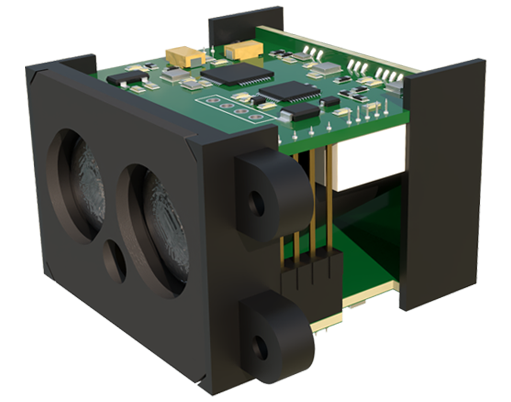
The architecture of a modern laser dust sensor is a marvel of miniaturized engineering. Key components include the laser emitter, the photodetector, a precisely designed airflow system, and a signal processing unit. The laser is typically a low-power, Class 1 device ensuring eye safety. The detection chamber is engineered to minimize background noise and internal reflections, ensuring that the photodetector receives only light scattered by the target particles. Advanced models feature self-diagnostic functions, automatic zero-point calibration, and temperature/humidity compensation circuits to maintain accuracy over long periods and in varying climatic conditions. This robust design is essential for the harsh environments often encountered in industrial applications.
The applications for laser dust sensors are vast and critical across multiple sectors. In manufacturing and industrial hygiene, they are indispensable for monitoring workplace air quality to ensure compliance with occupational safety standards like OSHA or ISO norms. They protect workers from harmful dust in industries such as metalworking, wood processing, pharmaceuticals, and chemical production. Within the HVAC (Heating, Ventilation, and Air Conditioning) industry, these sensors are integrated into air purifiers and building management systems to optimize filtration efficiency and maintain healthy indoor air quality. Furthermore, they play a vital role in environmental monitoring stations, providing data for pollution control and public health advisories. Emerging applications include integration into cleanroom monitoring for semiconductor fabrication and additive manufacturing (3D printing) processes where particulate control is crucial for product quality.

Selecting the appropriate laser dust sensor for a specific industrial application requires careful consideration of several technical parameters. First, the measurement range and resolution must align with the expected dust concentrations. A sensor designed for cleanrooms will differ vastly from one used in a quarry. Accuracy and repeatability are non-negotiable for regulatory compliance and process control. The particle size detection capability is another critical factor; ensure the sensor reports the PM sizes relevant to your concern. Environmental robustness is key: look for ingress protection (IP) ratings for dust and moisture resistance, and a wide operating temperature and humidity range. Output interfaces (e.g., UART, I2C, PWM, analog voltage) must be compatible with your data acquisition or control system. Finally, consider long-term maintenance needs, such as the recommended calibration interval and the lifespan of internal components like the fan and laser.
While highly reliable, laser dust sensors are not infallible and require proper installation and periodic maintenance for optimal performance. Installation away from direct airflow, vibrations, and extreme temperature gradients is advised. Regular cleaning of the inlet and outlet to prevent clogging is essential. Although many sensors have long operational lifespans (often exceeding 5-8 years for the laser), performance should be verified periodically against a reference standard. Understanding potential interferences, such as high concentrations of water vapor (fog) or oil mist, which can be misinterpreted as particulate matter, is also important. Consulting the manufacturer's guidelines for specific environmental limitations is always recommended.
In conclusion, laser dust sensors represent a sophisticated and essential technology for modern industrial monitoring and control. Their ability to provide accurate, real-time data on particulate matter concentration enables proactive measures for health protection, regulatory compliance, and process optimization. By understanding their working principle, recognizing their diverse applications, and meticulously evaluating selection criteria based on the specific operational environment, engineers and facility managers can effectively leverage this technology to create safer, cleaner, and more efficient industrial spaces. As sensor technology continues to advance, we can expect even smaller, more energy-efficient, and smarter laser dust sensors with enhanced connectivity for the Industrial Internet of Things (IIoT).