Proximity sensors are indispensable components in modern industrial automation, offering non-contact detection of metallic and non-metallic objects. Understanding their model numbers is crucial for proper selection, integration, and maintenance. This guide decodes the typical structure and key specifications embedded in common proximity sensor model codes from major manufacturers.
A standard model number often follows a logical sequence that reveals the sensor's fundamental characteristics. The prefix usually indicates the sensor family or series. For instance, "E2E" in Omron models typically denotes a cylindrical shielded inductive proximity sensor, while "XS" in Schneider Electric's range often represents a general-purpose inductive sensor. Following this, a combination of letters and numbers specifies the sensing distance, measured in millimeters. A code like "5" may indicate a 5mm range, whereas "F" could correspond to 15mm, depending on the manufacturer's coding system.
The next segment frequently defines the sensor's housing style and size. Codes such as "M18" or "M30" specify metric threaded barrel diameters, a common form factor. Alternatives include "C" for cubic housing or "F" for flat, rectangular designs. This is directly tied to mechanical installation requirements. Subsequently, the electrical output type is identified. Key abbreviations include "N" or "NPN" for sinking output, "P" or "PNP" for sourcing output, and "A" for analog (4-20mA or 0-10V) output. "NC" or "NO" may also appear to indicate normally closed or normally open contact configuration.
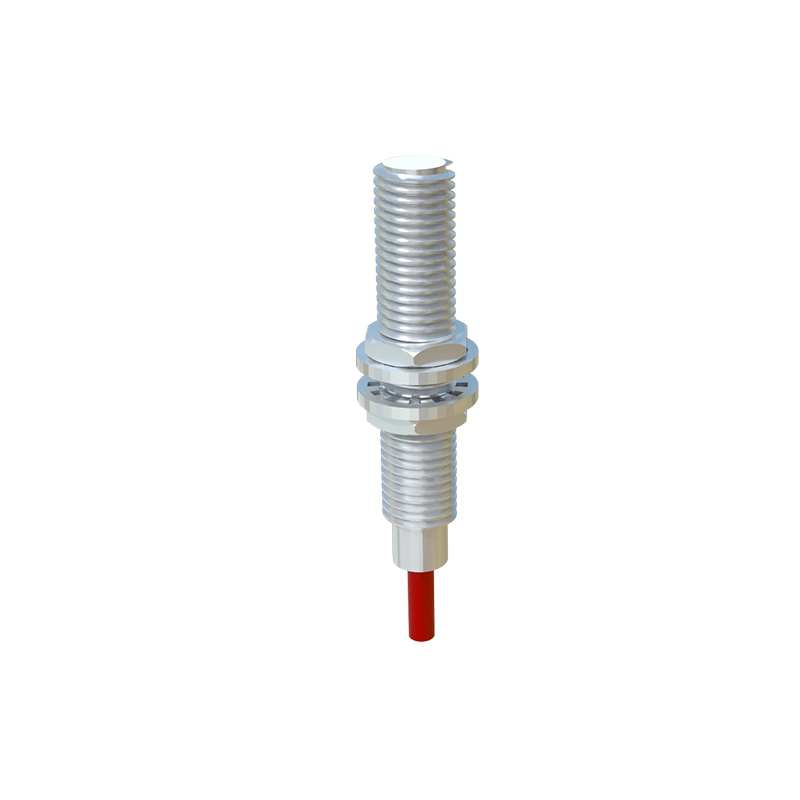
Wiring connection method is another critical parameter. Codes like "C" might denote a connector version, "L" for a pre-wired cable lead (with length specified, e.g., L2M for 2 meters), and "T" for a terminal block connection. The operating voltage range is typically implied by the series or explicitly stated. A suffix like "D" could mean DC power (commonly 10-30V DC), while "AC" might be used for AC-powered models (e.g., 90-250V AC). Some models are designed for universal AC/DC supply.
Additional suffixes often highlight special features or environmental ratings. "IP67" or "IP68" codes denote ingress protection levels against dust and water. "T" might indicate extended temperature tolerance, and "E" could signify an enhanced EMI/RFI immunity version. For inductive sensors, the target material is sometimes specified; standard models detect ferrous metals (steel), while "A" versions may be optimized for non-ferrous metals like aluminum or copper. Capacitive sensor models, used for non-metallic material detection, often have a distinct series prefix like "E2K" or "CP".
Selecting the correct model requires cross-referencing all these parameters with the application's needs: required sensing distance, target material, physical space constraints, electrical interface compatibility with the PLC or controller, environmental conditions (presence of coolant, temperature swings), and required durability. Always consult the manufacturer's official datasheet for the complete specifications, as coding conventions can vary. Proper model identification ensures reliable operation, reduces downtime, and optimizes the performance of automated systems, from packaging machinery and robotic cells to conveyor systems and automotive assembly lines.