Proximity sensors are fundamental components in modern industrial automation, and the E28 series stands as a prominent example of robust, reliable inductive sensing technology. Designed for harsh industrial environments, E28 sensors offer non-contact detection of metallic objects, playing a critical role in positioning, counting, and safety applications across manufacturing, packaging, and material handling sectors.
The core operating principle of the E28 proximity sensor is electromagnetic induction. The sensor generates a high-frequency oscillating electromagnetic field from its active face. When a metallic target enters this field, eddy currents are induced on the target's surface. This causes a change in the oscillation amplitude within the sensor's internal LC tank circuit. A dedicated evaluation circuit detects this damping effect and triggers a switching signal—either PNP (sourcing) or NPN (sinking)—to the connected controller, such as a PLC. This entire process occurs without any physical contact, eliminating mechanical wear and ensuring long-term operational reliability.
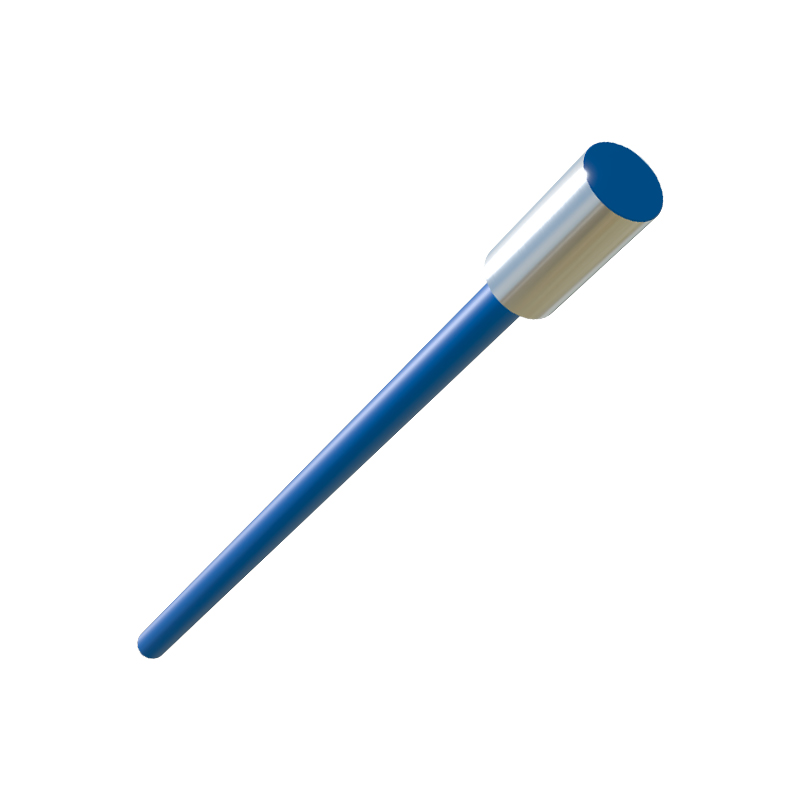
Key technical specifications define the E28's performance envelope. The sensing distance, typically rated at 8mm for a standard M30 housing, is a crucial parameter. It's important to distinguish between the nominal sensing distance (Sn) and the effective or operational distance. Factors like target material, size, and temperature can influence the actual sensing range. For instance, steel targets are detected at the full nominal distance, while metals like aluminum or brass may require a reduction factor, often around 0.4 to 0.5 of Sn. The E28 series commonly features a built-in LED status indicator, providing immediate visual feedback on power and output state, which is invaluable for troubleshooting. Most models offer a choice between DC 3-wire configurations (10-30V DC) with either normally open (NO) or normally closed (NC) logic. The housing is typically constructed from nickel-plated brass or stainless steel (e.g., V2A/AISI 304, V4A/AISI 316), providing excellent resistance to oils, coolants, and mechanical impacts. The protection rating usually meets IP67 or higher, making it suitable for washdown environments.
Selecting the correct E28 model requires careful consideration of application variables. First, identify the target material—ferrous (like iron or steel) or non-ferrous (like aluminum, copper, brass). Standard inductive E28 sensors are optimized for ferrous metals. For non-ferrous targets, specific "factor 1" or "all-metal" models are available, though often with a reduced sensing range. The required sensing distance must account for installation tolerances and potential target misalignment. Environmental conditions are paramount; models with higher IP ratings (IP69K) and specialized seals are necessary for food & beverage or chemical processing applications where high-pressure cleaning or corrosive vapors are present. Electrical compatibility with the control system is non-negotiable. Verify the required output type (PNP/NPN), voltage range, and current load. Finally, the physical form factor—flush-mountable or non-flush—affects installation. Flush-mountable models can be embedded in metal without affecting their sensing field, while non-flush models offer a longer range but require a clear mounting area.
Installation and wiring practices significantly impact sensor longevity and performance. Ensure the sensor is mounted securely to minimize vibration, which can cause premature failure. Maintain the recommended lateral and axial clearance from surrounding metal structures to prevent false triggering. For flush-mountable types, the standard rule is to allow a clearance of at least one times the sensor diameter from adjacent metal. When wiring, strictly adhere to the manufacturer's datasheet for wire color codes: typically, brown for DC+, blue for DC-, and black (or white) for the switched output. Always implement proper electrical protection, such as fuses or circuit breakers, and consider using surge suppressors in environments with inductive loads like solenoids or motors to protect the sensor's solid-state output from voltage spikes.
Common application scenarios for the E28 sensor are diverse. On automated assembly lines, they detect the presence of metal components for robotic pick-and-place operations. In conveyor systems, they serve as precise position markers for sorting or palletizing. Within hydraulic or pneumatic systems, they verify the end-position of metal pistons in cylinders. They are also integral to safety systems, acting as part of interlock circuits on machine guards. A critical best practice is regular preventive maintenance. Periodically clean the sensing face of debris, metal chips, or buildup that could attenuate the sensing field. Verify the switching function and sensing distance during routine machine checks. For troubleshooting, a systematic approach is key: check power supply voltage, inspect the LED status, verify the target material and distance, and examine the load and wiring for shorts or opens.
In summary, the E28 proximity sensor exemplifies a mature, versatile solution for industrial metal detection. Its