In the realm of industrial automation and control systems, proximity sensors stand as fundamental components, enabling machines to "sense" the presence or absence of objects without physical contact. These devices are pivotal for enhancing efficiency, safety, and precision in countless applications. But what exactly is a proximity sensor? At its core, a proximity sensor is a non-contact sensor that detects the presence or absence of an object, or measures the distance to it, within its defined sensing range. It achieves this by emitting an electromagnetic field, beam, or radiation and then looking for changes in the field or return signal. The key advantage is the absence of mechanical contact, leading to longer service life, higher reliability, and the ability to detect fragile or sensitive objects.
Proximity sensors are primarily categorized based on their underlying detection principle. The most common types include Inductive, Capacitive, Ultrasonic, and Photoelectric sensors. Each type has distinct characteristics making it suitable for specific environments and target materials.
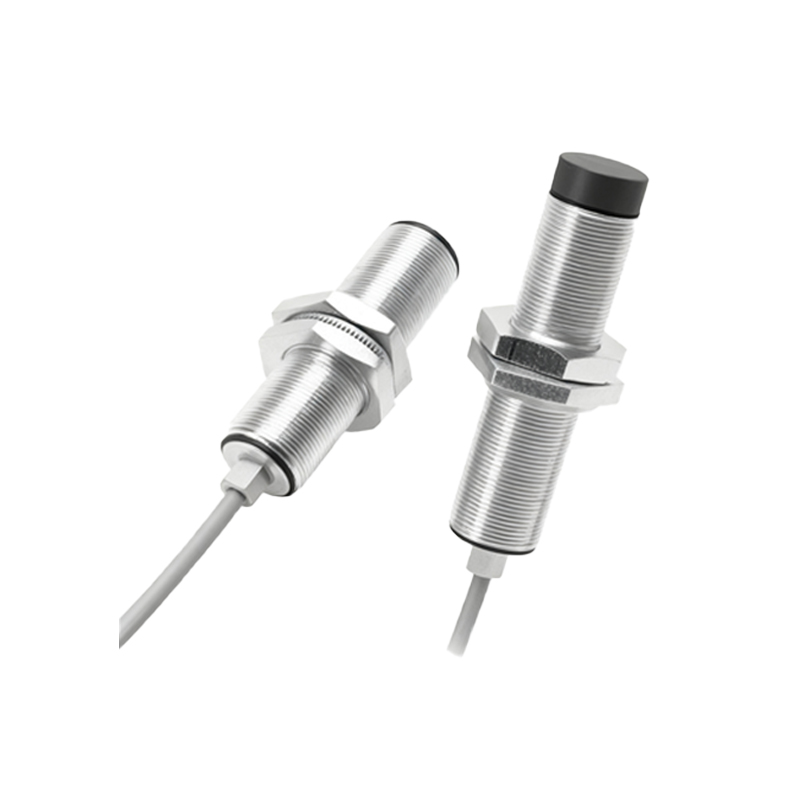
Inductive Proximity Sensors are the workhorses of metal detection. They generate an oscillating electromagnetic field from a coil at the sensing face. When a metallic object enters this field, eddy currents are induced in the object, which dampens the oscillation amplitude of the sensor. This change is detected by the sensor's circuitry, triggering an output switch. Inductive sensors are robust, resistant to environmental factors like dust and oil, and are ideal for detecting ferrous and non-ferrous metals in machinery, automotive assembly, and material handling.
Capacitive Proximity Sensors, on the other hand, can detect both metallic and non-metallic materials—liquids, plastics, wood, glass, etc. They function by generating an electrostatic field. Any object that enters this field alters the capacitance of the sensor's circuit. This change is measured, and when it exceeds a preset threshold, the sensor activates. This makes capacitive sensors perfect for level detection in tanks (liquid or granular materials), presence detection of non-metallic products, and applications involving transparent materials.
Ultrasonic Proximity Sensors operate on a sonar-like principle. They emit high-frequency sound waves (ultrasound) and evaluate the echo received after reflection from a target object. By calculating the time interval between sending the signal and receiving the echo, the sensor can determine the distance to the object. These sensors are excellent for precise distance measurement, level control of bulk solids or liquids, and detecting objects with complex surfaces or in challenging environments with dust or vapor.
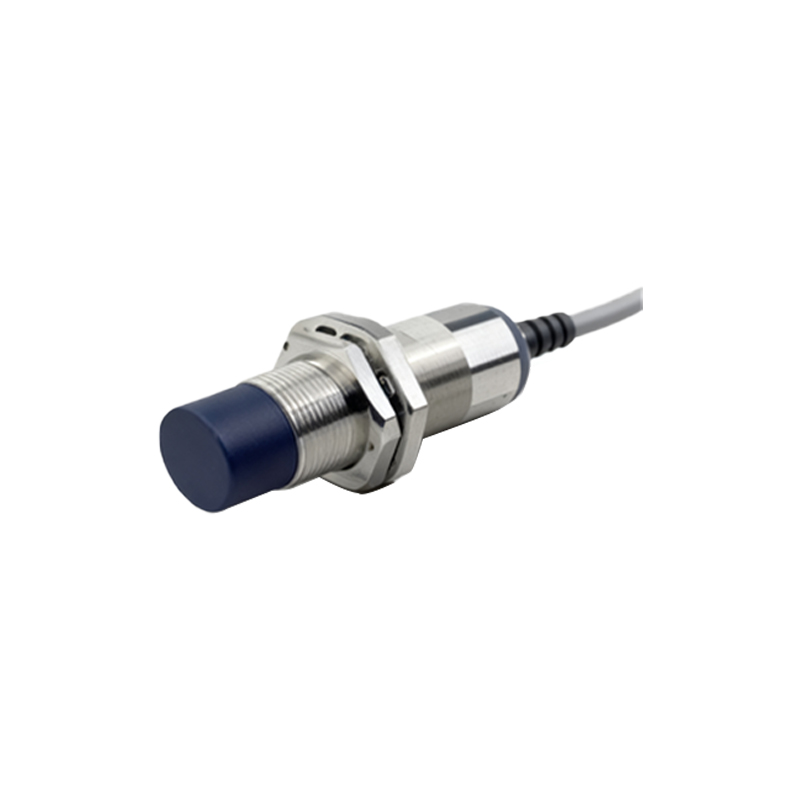
Photoelectric Sensors use light to detect objects. They consist of a light emitter (usually LED) and a receiver. When the emitted light beam is interrupted or reflected by an object, the change in light intensity at the receiver is processed to produce an output signal. They come in various configurations: through-beam (separate emitter and receiver), retro-reflective (uses a reflector), and diffuse reflective (sensor and target act as the reflector). Photoelectric sensors offer long sensing ranges and can detect virtually any material, making them versatile for packaging, conveyor systems, and object counting.
The selection of a proximity sensor depends on several critical factors: the material of the target object (metal, plastic, liquid), the required sensing distance, the operating environment (temperature, presence of contaminants), the required output type (digital ON/OFF, analog signal), and the response speed needed for the application.
In industrial settings, proximity sensors are indispensable. They are used for precise positioning of machine parts, end-of-travel detection in cylinders, jam detection in production lines, robotic guidance, speed monitoring of rotating shafts, and ensuring safety by monitoring guard door positions. Their non-contact nature minimizes wear and tear, reduces maintenance downtime, and allows for high-speed operation unattainable with mechanical limit switches.
In conclusion, proximity sensors are sophisticated yet reliable devices that form the sensory backbone of modern automation. Understanding their different types, working principles, and application-specific advantages is crucial for engineers and technicians to design efficient, safe, and intelligent control systems. From simple object detection to complex distance measurement, these sensors continue to evolve, driving innovation and productivity across all facets of industry.