In the demanding environments of modern industrial operations, the reliability and longevity of sensing technology are paramount. Laser sensors, renowned for their precision and non-contact measurement capabilities, face significant challenges when deployed in harsh conditions characterized by corrosive agents and extreme pressures. This article delves into the advanced engineering solutions that enable laser sensors to achieve exceptional corrosion resistance and withstand high-pressure environments, ensuring consistent performance and data integrity.
The fundamental threat to any electronic component in industrial settings is corrosion. For laser sensors, this typically manifests as the degradation of the optical window, the housing, and internal circuitry due to exposure to moisture, salt spray, acidic fumes, or other aggressive chemicals. Such corrosion can scatter or absorb the laser beam, leading to signal attenuation, measurement drift, and eventual sensor failure. To combat this, manufacturers employ a multi-faceted material science approach. The optical windows, often the first point of contact, are crafted from specialized materials like synthetic sapphire or chemically hardened glass. These materials offer exceptional hardness and are virtually inert to most chemical attacks, maintaining optical clarity over extended periods.
The sensor housing is equally critical. Standard aluminum or stainless-steel enclosures are often insufficient for prolonged exposure. The industry standard has shifted towards the use of high-grade stainless steels (e.g., 316L), Hastelloy, or even titanium for the most severe applications. These materials provide a robust passive layer that resists pitting and crevice corrosion. Furthermore, advanced coating technologies play a pivotal role. Parylene conformal coating is frequently applied to internal electronic assemblies. This polymer coating provides a uniform, pinhole-free barrier that is hydrophobic, chemically inert, and offers excellent dielectric properties, protecting sensitive circuits from moisture and corrosive gases.

Beyond the housing, every seal and gasket is engineered for resilience. Elastomers like FKM (Fluorocarbon) or FFKM (Perfluoroelastomer) are specified for their excellent resistance to a wide range of chemicals, oils, and high temperatures. The design of the housing itself incorporates IP69K ratings, ensuring not just protection against dust and low-pressure water jets, but also against high-pressure, high-temperature steam cleaning procedures common in food processing or pharmaceutical industries. This holistic sealing philosophy prevents the ingress of contaminants that could initiate internal corrosion.
Concurrently, high-pressure environments present a distinct set of challenges, primarily related to structural integrity and signal integrity. Pressure, whether from hydraulic systems, deep-sea applications, or pressurized vessels, exerts immense force on the sensor housing. To prevent collapse or deformation, housings are designed with increased wall thickness and are often constructed as monolithic metal bodies rather than assemblies. Finite Element Analysis (FEA) is extensively used during the design phase to simulate stress points and optimize the geometry to distribute pressure loads evenly.
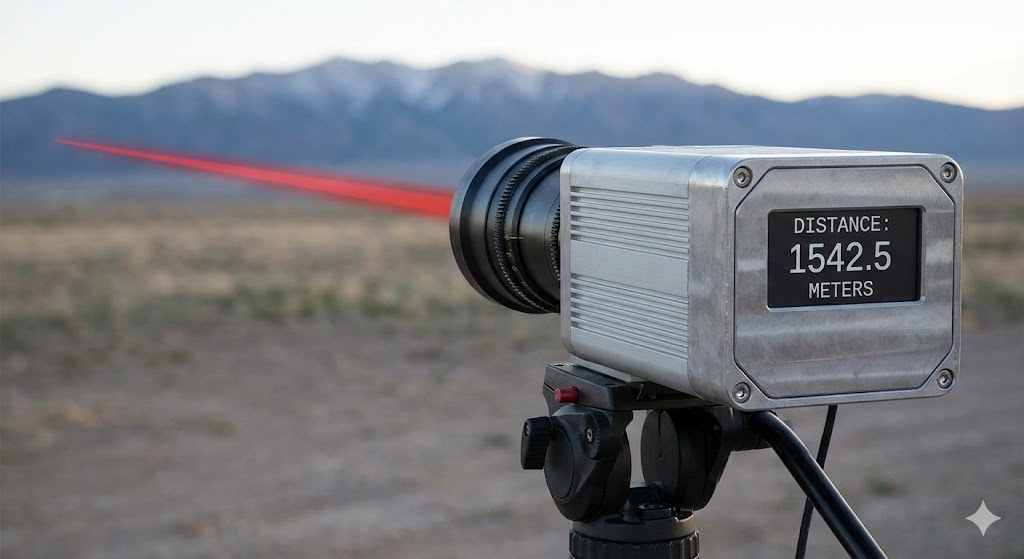
The optical design must also account for pressure-induced refractive index changes in the medium through which the laser beam travels. In applications involving underwater sensing or measurements inside pressurized gas chambers, the change in the medium's density can alter the beam's path and focal point. Advanced sensors incorporate compensation algorithms within their onboard processors. These algorithms use input from integrated pressure and temperature transducers to dynamically adjust the measurement calculation, ensuring accuracy is maintained regardless of ambient pressure fluctuations.
The intersection of high pressure and corrosion is particularly punishing, as in subsea oil and gas exploration. Here, sensors must resist the corrosive nature of seawater under pressures of hundreds of bars. Solutions involve combining the aforementioned material strategies with hermetic sealing. The optical assembly and electronics are often sealed within a vacuum or inert gas-filled chamber using laser welding or high-temperature brazing techniques. This creates a permanent barrier, isolating the core components from the external environment indefinitely.
Regular maintenance and validation are also key to longevity. Modern laser sensors feature built-in diagnostic functions that monitor internal humidity, temperature, and signal strength. Predictive maintenance alerts can notify operators of potential seal degradation or window fouling before a critical failure occurs. This proactive approach, coupled with the ruggedized design, maximizes uptime and reduces total cost of ownership.
In conclusion, the evolution of laser sensors for corrosive and high-pressure duties is a testament to interdisciplinary engineering. By leveraging advanced metallurgy, polymer science, precision optics, and intelligent software, today's laser sensors are no longer fragile instruments but robust, reliable assets. They deliver micron-level precision in environments that would swiftly incapacitate conventional sensors, enabling safer, more efficient, and more automated operations across sectors from chemical processing and marine technology to aerospace and energy production. The continuous push for more resilient materials and smarter compensation techniques promises to further expand the frontiers of where laser sensing technology can reliably operate.