In the realm of access control and traffic management, boom barrier systems are critical for regulating vehicle flow in parking facilities, toll plazas, industrial sites, and secure perimeters. The reliability and safety of these systems are paramount, and at the heart of their operational integrity lies a key component: the photoelectric sensor, commonly referred to as a laser sensor in this context. This article delves into the technical principles, application specifics, and best practices for photoelectric sensors in boom barrier installations.
Photoelectric sensors operate on a simple yet robust principle. They consist of a transmitter that emits a beam of light—often infrared, laser, or visible LED—and a receiver that detects this beam. When an object interrupts this light path, the receiver triggers a signal change, which is processed by the barrier's control unit. In boom barrier applications, this technology is primarily deployed for two critical functions: vehicle detection for automated operation and safety obstacle detection to prevent the barrier arm from descending on a vehicle or pedestrian.
For vehicle detection, sensors are typically installed on or near the barrier post. They create a detection zone on the approach lane. When a vehicle enters this zone and breaks the beam, the sensor signals the controller to initiate the opening cycle. This allows for seamless, automated entry upon credential verification (via card, ticket, or license plate recognition) or exit. The precision and speed of modern photoelectric sensors ensure minimal delay, enhancing traffic throughput and user experience.

The more critical application is safety obstacle detection. Sensors are mounted along the length of the barrier arm or at the exit point beneath the arm. They project a curtain of light beams across the path of the descending boom. If any beam is broken during the downward movement—indicating the presence of a vehicle, pedestrian, or other obstruction—the sensor immediately sends a stop and reverse command to the barrier motor. This function is non-negotiable for safety compliance, preventing property damage and, more importantly, personal injury.

Several types of photoelectric sensors are suitable for barrier systems. Through-beam sensors, with separate transmitter and receiver units, offer the longest range and highest reliability, ideal for the main vehicle detection point. Retro-reflective sensors, which use a reflector to bounce the beam back to a combined transmitter/receiver unit, are simpler to install and are often used for safety curtains. Diffuse reflective sensors, which detect light reflected directly from the target, have shorter ranges but can be used for specific proximity detection tasks.
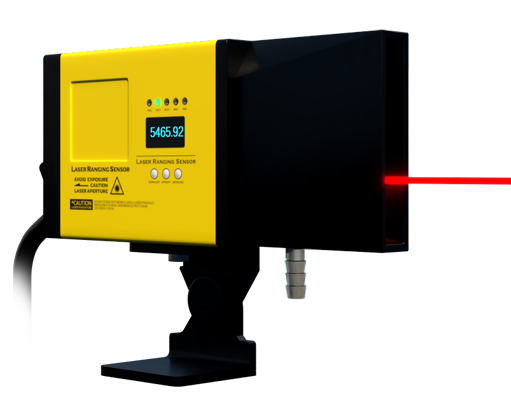
Selecting the right sensor requires careful consideration of environmental factors. Boom barriers operate outdoors, exposing sensors to harsh conditions: extreme temperatures, rain, snow, dust, and direct sunlight. Therefore, sensors must have a high Ingress Protection (IP) rating, typically IP67 or higher, ensuring they are dust-tight and protected against temporary immersion. The housing should be robust, often made of stainless steel or hardened plastics. Furthermore, the sensor's light source must be powerful enough to overcome ambient light interference, a challenge known as "sunlight immunity." Modern sensors use modulated infrared or laser light with specific frequencies and advanced filtering in the receiver to distinguish their own signal from background light.
Installation and alignment are critical for optimal performance. Even a slight misalignment can cause false triggers or failure to detect. Through-beam and retro-reflective types require precise optical alignment during installation. Many modern sensors feature built-in alignment aids, such as LED indicators that show signal strength, simplifying setup and maintenance. The mounting hardware must be vibration-resistant to maintain alignment despite the mechanical shocks from the barrier's operation and environmental wind loads.
Integration with the barrier's control system is another key aspect. The sensor's output (typically a digital PNP/NPN signal or relay contact) must be compatible with the controller's input module. Wiring should follow best practices for industrial environments: using shielded cables, proper grounding, and routing away from power lines to prevent electromagnetic interference (EMI) that could cause erratic behavior.
Routine maintenance, though minimal, is essential. Lenses should be kept clean from dirt, ice, or bird droppings that could attenuate the light beam. Periodic functional testing is mandatory, especially for safety loops, to verify that the obstacle detection system activates correctly every time. Most high-quality sensors have diagnostic LEDs for quick status checks.
In conclusion, photoelectric sensors are the unsung heroes of modern boom barrier systems, enabling both automation and vital safety functions. Their selection, installation, and maintenance require a thorough understanding of both the sensor technology and the demanding operational environment. By specifying robust, environmentally-rated sensors and adhering to rigorous installation protocols, engineers and system integrators can ensure boom barriers operate with the reliability, efficiency, and, most critically, the safety that modern access control demands. As technology advances, we see trends towards smarter sensors with IO-Link connectivity for predictive maintenance and integrated diagnostics, further enhancing system uptime and safety assurance.