In the realm of industrial automation and process control, proximity sensors are indispensable components for detecting the presence or absence of objects without physical contact. Among the diverse array of sensor types, the ring-shaped non-metallic proximity sensor represents a specialized and highly effective solution for specific material handling and inspection tasks. This article delves into the operational principles, key advantages, common applications, and critical selection criteria for these unique sensing devices.
At its core, a ring-shaped non-metallic proximity sensor is designed to detect objects that are inherently non-metallic, such as plastics, glass, wood, cardboard, and certain composite materials. Unlike inductive sensors, which rely on electromagnetic fields to detect metals, these sensors typically operate on capacitive or optical principles. The ring or donut shape is a defining physical characteristic, featuring a central aperture through which the target object passes. This configuration allows for non-invasive, through-beam detection, making it ideal for inline inspection and counting on conveyor lines, tubing, or chutes.
Capacitive ring sensors are the most prevalent type for non-metallic detection. They function by generating an electrostatic field between the sensor's active face (the inner surface of the ring) and a ground reference. When a non-metallic object with a different dielectric constant than air (e.g., plastic, liquid, or wood) enters this field, it causes a measurable change in capacitance. This change triggers the sensor's output switch. The sensitivity can often be adjusted to compensate for different material types or to ignore background interference, such as dust or minor variations in the conveyor belt.
Optical ring sensors, another variant, utilize a light transmitter and receiver arranged opposite each other across the ring's diameter, creating a light curtain across the aperture. An object passing through the ring interrupts this beam, triggering detection. These are excellent for clear or opaque objects but may require careful environmental control to avoid false triggers from ambient light or accumulated debris.
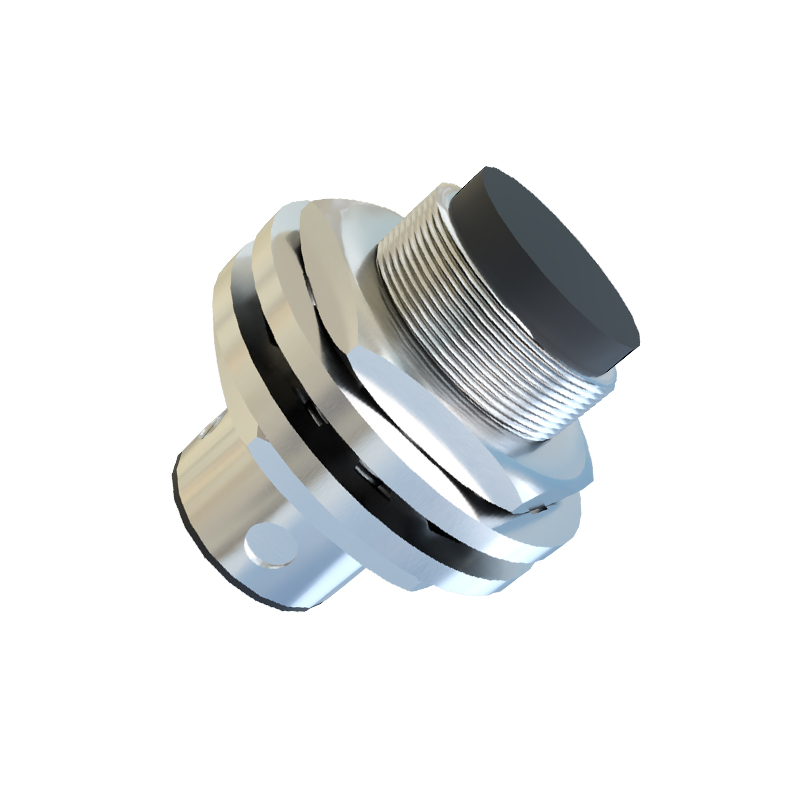
The primary advantages of ring-shaped non-metallic proximity sensors are numerous. Their non-contact nature ensures zero product damage and minimal wear on the sensor itself, leading to high longevity and reduced maintenance. The through-hole design facilitates easy integration into existing production lines for tasks like bottle counting on a filler line, verifying the presence of caps on containers, detecting broken tablets in pharmaceutical chutes, or monitoring the flow of cables and pipes. They offer high-speed detection capabilities, suitable for fast-moving production environments. Furthermore, their ability to ignore metallic backgrounds or machinery makes them precise tools for detecting specific non-metallic items in complex settings.
When selecting a ring-shaped non-metallic proximity sensor for an application, several parameters must be carefully evaluated. First, the inner diameter of the ring must be sufficiently larger than the maximum cross-section of the object to be detected to allow for smooth passage without false triggers from brushing against the sensor. The sensor's sensing distance or effective field depth within the aperture is also crucial. Material composition of the target is paramount; capacitive sensors are sensitive to the material's dielectric constant, while optical sensors are affected by color, transparency, and surface finish. Environmental conditions such as temperature extremes, humidity, presence of oils, coolants, or dust can significantly impact performance and dictate the required ingress protection (IP) rating. Finally, the electrical output type (e.g., PNP/NPN, analog, IO-Link) must be compatible with the existing control system.
Installation and commissioning require attention to detail. Proper mounting is essential to ensure the object path is centered through the aperture. For capacitive sensors, sensitivity tuning is often necessary on-site to achieve reliable detection while ignoring the conveyor material or nearby objects. Regular cleaning of the aperture, especially for optical types, prevents false readings from dirt buildup.
In conclusion, ring-shaped non-metallic proximity sensors are powerful, specialized tools that solve distinct detection challenges in packaging, food and beverage, pharmaceutical, woodworking, and electronics manufacturing. By understanding their working principles—primarily capacitive and optical—and meticulously matching their specifications to the application's material, environmental, and mechanical requirements, engineers can implement robust, reliable, and efficient sensing solutions that enhance quality control, automate counting, and safeguard processes without interrupting material flow.