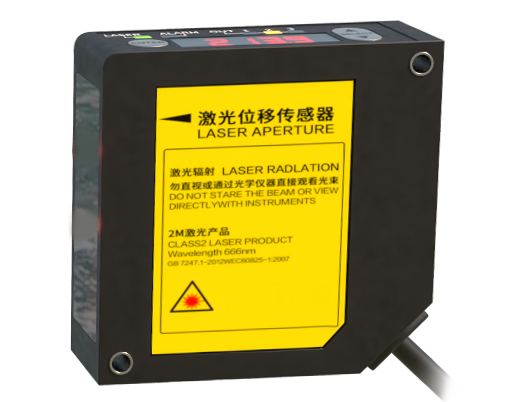
In the realm of industrial automation, safety, and precision measurement, laser light screen sensors stand out as a critical technology. Unlike a single-point laser sensor, a laser light screen sensor projects a planar "curtain" or "screen" of light. This invisible plane, typically generated by a line laser diode and optical components, creates a highly sensitive detection field. When an object interrupts this light screen, the sensor's receiver detects the change in light intensity, triggering an output signal. This fundamental principle enables a wide array of applications where the detection of presence, position, size, or profile of objects is required without physical contact.
The core components of a typical system include a transmitter and a receiver. The transmitter generates the fan-shaped laser plane. The receiver, positioned opposite the transmitter, contains a linear array of photodetectors. For simpler presence detection, a retro-reflective model is common, where the transmitter and receiver are housed in a single unit, and a reflector bounces the light plane back. The choice between through-beam and retro-reflective designs depends on factors like required resolution, range, and installation constraints. Key performance parameters include resolution (the smallest object that can be detected), response time, the thickness and uniformity of the light screen, and operating range. Modern sensors offer resolutions down to a few millimeters and response times in the microsecond range, suitable for high-speed applications.
The applications for laser light screen sensors are diverse and impactful. In industrial automation, they are indispensable for object counting on conveyor belts, precise height detection, and edge guiding. They can monitor the fill level of containers or detect missing components on a PCB. In robotics, these sensors provide crucial data for navigation, obstacle avoidance, and pick-and-place operations, ensuring accurate positioning of robotic arms. Perhaps one of the most critical applications is in machine safety. Laser safety light curtains are deployed around hazardous machinery, such as presses, robots, or welding cells. If an operator's hand or body breaks the protective light screen, the machine is immediately commanded to stop, preventing serious injury. This non-contact safety solution offers greater flexibility and less interference with workflow compared to physical guards.
Beyond the factory floor, laser light screens find use in traffic management for vehicle classification and height monitoring at toll booths or low bridges. In security systems, they can form an invisible perimeter fence. They are also used in sports technology for goal-line monitoring or finish line timing with extreme accuracy.

Selecting the right laser light screen sensor requires careful consideration of several factors. First, define the primary purpose: Is it for safety (requiring certified Safety Integrity Level or SIL/PL ratings) or for general measurement and detection? For safety curtains, standards like IEC 61496 are mandatory. Next, determine the required protective or detection height and resolution. The resolution dictates the smallest object that will be reliably detected; a finer resolution is needed for finger protection versus body protection. The effective range or distance between transmitter and receiver must suit the installation. Environmental conditions are crucial; sensors must be rated for the ambient light (resistance to sunlight or other light sources), temperature, humidity, dust, and vibration present. Finally, consider the output type needed (e.g., PNP/NPN, relay, Ethernet/IP, PROFINET) to interface seamlessly with your control system, such as a PLC.
Installation and alignment are critical for reliable operation. The transmitter and receiver must be precisely aligned to ensure the light screen is correctly received. Many models feature alignment indicators (LEDs or visual aids) to simplify this process. Regular maintenance involves keeping the lenses clean from dust, oil, or debris that could attenuate the laser signal and checking for any physical damage. It is also good practice to periodically test the sensor's functionality, especially for safety-critical applications.
Looking ahead, advancements in laser diode technology and signal processing are making these sensors more compact, energy-efficient, and intelligent. Integration with Industrial Internet of Things (IIoT) platforms allows for predictive maintenance, where sensor performance data is analyzed to forecast potential failures. The fusion of laser light screen data with machine vision and AI algorithms opens new possibilities for complex shape recognition and adaptive automation systems.

In conclusion, laser light screen sensors are a versatile and powerful enabling technology. By providing reliable, non-contact detection across a plane, they enhance productivity, ensure safety, and enable precision in countless automated processes. Understanding their operating principles, key specifications, and application requirements is essential for engineers and system integrators to harness their full potential and implement effective, reliable solutions.