Laser level sensors represent a pinnacle of non-contact measurement technology in industrial automation and process control. Operating on the principle of time-of-flight or triangulation, these devices emit a focused laser beam towards a target surface—be it a liquid, solid, or granular material. The sensor then precisely measures the time taken for the reflected light to return or analyzes the angle of the reflected beam. This data is processed to calculate the exact distance to the material surface, which is subsequently converted into a highly accurate level reading. The core advantage lies in their exceptional precision, often reaching sub-millimeter resolution, and their ability to measure from significant distances without physical contact with the medium.
The operational principles bifurcate mainly into two types: pulse time-of-flight (ToF) and triangulation. Pulse ToF sensors, often used for longer ranges (up to several hundred meters), calculate distance based on the speed of light and the time interval between emission and reception of the laser pulse. They are robust against varying surface colors and textures. Triangulation sensors, ideal for shorter ranges with extreme precision, use a positional sensitive detector (PSD) or a CMOS/CCD array. The position of the reflected laser spot on the detector shifts depending on the distance to the target, allowing for micron-level accuracy. However, they can be more sensitive to the target's surface properties.
In industrial applications, laser level sensors are indispensable due to their versatility and reliability. They are deployed in silos and tanks for monitoring bulk solids like plastic pellets, grains, or powders, where dust and aggressive environments are common. In the chemical and water treatment industries, they provide critical level data for corrosive or sterile liquids without risk of contamination. Furthermore, their fast response time and pinpoint accuracy make them perfect for controlling filling processes, detecting bin overfill or underfill, and managing inventory in real-time. Unlike ultrasonic sensors, lasers are unaffected by temperature gradients, vapor, or pressure changes in the vessel. Unlike radar sensors, they provide a very narrow beam, allowing for installation in vessels with internal obstructions like agitators or ladders.
Selecting the appropriate laser level sensor requires a meticulous analysis of the application parameters. Key criteria include: Measurement Range: The required distance from the sensor to the material surface. Beam Characteristics: A visible red laser beam aids in alignment, while an invisible infrared laser is suitable for sensitive materials. For very small targets or openings, a sensor with a exceptionally small beam spot is necessary. Target Surface: Dark, absorbent, or shiny surfaces can affect performance. Some sensors feature automatic echo processing or background suppression to handle difficult surfaces. Environmental Conditions: Factors such as ambient light, dust, fog, temperature extremes, and potential exposure to hazardous areas (requiring ATEX/IECEx certification) must be considered. Output Signal and Connectivity: Standard analog outputs (4-20mA, 0-10V), switching outputs, or digital interfaces (IO-Link, PROFIBUS) should match the control system. Housing Rating: An IP67 or IP69K rating is often mandatory for washdown or outdoor applications.
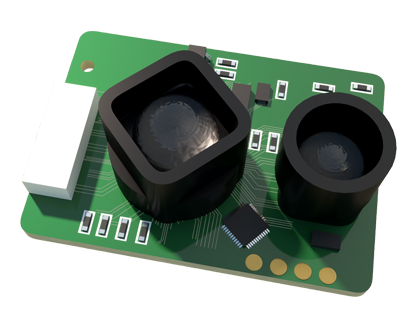
Installation and commissioning are critical for optimal performance. The sensor must be mounted securely to avoid vibration, with a clear, unobstructed line of sight to the target. Proper alignment is crucial, especially for triangulation sensors. Many modern devices come with integrated configuration tools, smartphone apps, or teach-in functions via a button to simplify setup, allowing users to define the measuring window corresponding to the empty and full states of the vessel. Regular maintenance is minimal but should include periodic lens cleaning to ensure the laser beam is not attenuated by dirt or buildup.
Looking ahead, integration with Industrial IoT (IIoT) platforms is a growing trend. Smart laser sensors with embedded diagnostics can predict maintenance needs, communicate directly with cloud systems, and contribute to overall plant efficiency and data analytics. Their role in enabling precise, reliable, and contactless measurement ensures laser level sensors will remain a cornerstone technology for industries striving for higher automation, safety, and material efficiency. Engineers must continue to evaluate both the fundamental physics of the measurement and the specific demands of their process to leverage the full potential of this advanced sensing solution.