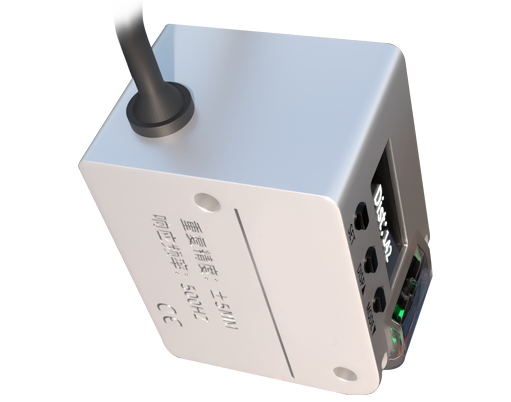
The automotive industry is undergoing a seismic shift, transitioning from human-driven vehicles to increasingly automated systems. At the heart of this autonomous revolution lies a critical enabling technology: Light Detection and Ranging, or LiDAR. These sophisticated sensors act as the eyes of a self-driving car, creating high-resolution, three-dimensional maps of the surrounding environment in real-time, regardless of lighting conditions. While numerous companies are vying for dominance in this high-stakes market, a select few have emerged as the undisputed leaders, shaping the future of mobility through relentless innovation, strategic partnerships, and scalable manufacturing.
The primary value proposition of a top-tier automotive LiDAR sensor is its ability to provide precise, long-range object detection and velocity measurement. Unlike cameras or radar alone, LiDAR systems emit laser pulses and measure the time it takes for the light to reflect back, generating a precise "point cloud" map. This allows vehicles to accurately identify pedestrians, cyclists, road signs, and other vehicles at distances exceeding 200 meters, with centimeter-level accuracy. For Level 3 (conditional automation) and above, this reliability is non-negotiable. Industry leaders differentiate themselves through key performance metrics: range, resolution, frame rate, field of view, and resilience to interference from sunlight or other LiDAR sensors. The evolution from bulky, rotating mechanical units to sleek, solid-state or hybrid solid-state designs marks a significant leap, improving reliability, reducing costs, and enabling seamless integration into vehicle rooflines or grilles.
Several companies currently define the vanguard of this sector. Innoviz Technologies, for instance, has gained tremendous traction by focusing on solid-state LiDAR with high performance at a cost-effective price point, securing major series production contracts with global automotive manufacturers. Luminar Technologies has taken a different path, emphasizing long-range, high-resolution LiDAR paired with proprietary perception software, positioning its technology as a comprehensive safety solution. Their partnerships with Volvo, Mercedes-Benz, and Nissan highlight this approach. Meanwhile, established industry giants like Valeo have leveraged their deep automotive integration expertise, with their Scala LiDAR being the first and only system deployed in series-production consumer vehicles for Level 3 automated driving features. Newer entrants like Aeva are innovating with Frequency Modulated Continuous Wave (FMCW) LiDAR, which integrates direct velocity measurement into each data point, a potential game-changer for distinguishing stationary objects from moving ones at high speed.
The roadmap for these leaders is fraught with both challenges and immense opportunities. The paramount challenge remains cost reduction for mass-market adoption. Leading players are investing heavily in semiconductor-based laser and detector technologies, aiming to leverage economies of scale similar to the consumer electronics industry. Simultaneously, they must navigate rigorous automotive-grade validation processes, ensuring their sensors operate flawlessly for over a decade in extreme temperatures, vibration, and weather conditions. Data processing is another frontier; the terabytes of data generated per hour require efficient, onboard computing solutions, pushing companies to develop specialized perception stacks or forge closer ties with chipmakers like NVIDIA and Qualcomm.

The competitive landscape extends beyond pure-play LiDAR firms. Technology conglomerates and automotive suppliers are making strategic moves, through in-house development, acquisitions, or investments. This consolidation and collaboration are signs of a maturing market where integration and software capabilities are becoming as crucial as the hardware itself. The end goal is clear: to deliver a sensor suite that is not just technologically superior but also affordable, reliable, and capable of earning the trust of regulators and the public alike.
In conclusion, the leaders in automotive LiDAR sensors are not merely component suppliers; they are foundational architects of autonomous driving. Their success hinges on a delicate balance of physics-breaking optical engineering, software intelligence, stringent quality assurance, and strategic vision. As the race towards full autonomy accelerates, the innovations and standards set by these frontrunners will determine the safety, efficiency, and ultimate viability of the self-driving cars of tomorrow. Their laser focus, quite literally, is paving the way for a new era of transportation.