In the vast and intricate world of industrial automation and electrical engineering, proximity sensors stand as fundamental components, enabling machines to "sense" the presence or absence of objects without physical contact. But what exactly are they called? The term "proximity sensor" is the universal, generic name for this category of devices. However, within technical specifications, datasheets, and industry parlance, they are often referred to more specifically based on their underlying sensing technology. The most common types include Inductive Proximity Sensors, Capacitive Proximity Sensors, Ultrasonic Proximity Sensors, and Photoelectric Sensors (which are often grouped under the proximity umbrella for detection tasks).
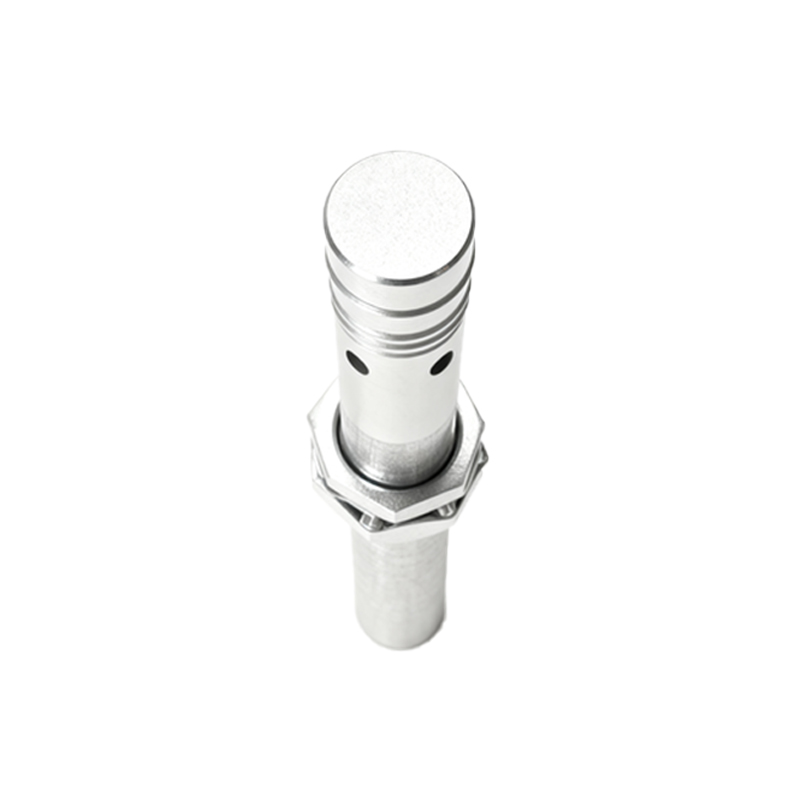
Inductive proximity sensors are arguably the most prevalent in industrial settings. They are primarily used to detect metallic objects. The core principle involves an oscillator circuit generating a high-frequency electromagnetic field from a coil at the sensor's face. When a ferrous or non-ferrous metal object enters this field, it induces eddy currents, causing a change in the oscillation amplitude. This change is detected by the sensor's circuitry, which then triggers a solid-state output switch. These sensors are renowned for their robustness, long service life, and high switching frequency, making them ideal for counting metal parts, position sensing in machinery, or as limit switches.
Capacitive proximity sensors, on the other hand, can detect a much wider range of materials, including metals, plastics, glass, wood, and liquids. They operate by generating an electrostatic field. The sensor itself acts as one plate of a capacitor, with the target object acting as the other. As an object approaches, it alters the capacitance of the system. Once this change reaches a predetermined threshold, the sensor activates its output. This makes capacitive sensors invaluable in applications like liquid level detection, material handling for non-metals, and presence sensing through thin non-metallic barriers.
Ultrasonic proximity sensors utilize sound waves beyond the human hearing range. They emit high-frequency ultrasonic pulses and measure the time it takes for the echo to return from a target object. By calculating this time-of-flight, the sensor can determine both the presence and the distance to the object. This technology is excellent for detecting objects of virtually any material, shape, or color, and is particularly effective in challenging environments with dust, smoke, or varying light conditions. Common uses include pallet detection, loop control, and distance measurement.
While photoelectric sensors are sometimes categorized separately, their non-contact detection function aligns closely with proximity sensing. They use a light emitter (usually LED or laser) and a receiver. When the light beam is interrupted or reflected by an object, the receiver detects the change and triggers the output. Variants like through-beam, retro-reflective, and diffuse (proximity mode) sensors offer solutions for long-range detection and specific surface properties.
The choice of what to call a proximity sensor—inductive, capacitive, ultrasonic, or photoelectric—depends entirely on the application's specific requirements: target material, sensing distance, environmental conditions, required output, and installation constraints. Engineers select the appropriate "name" and model based on these parameters to ensure reliable operation within a control system. Understanding these distinctions is crucial for designing efficient, safe, and automated electrical systems, from simple conveyor belts to complex robotic assembly lines. Their role in providing critical input to Programmable Logic Controllers (PLCs) and other control units is indispensable in modern manufacturing and process industries.