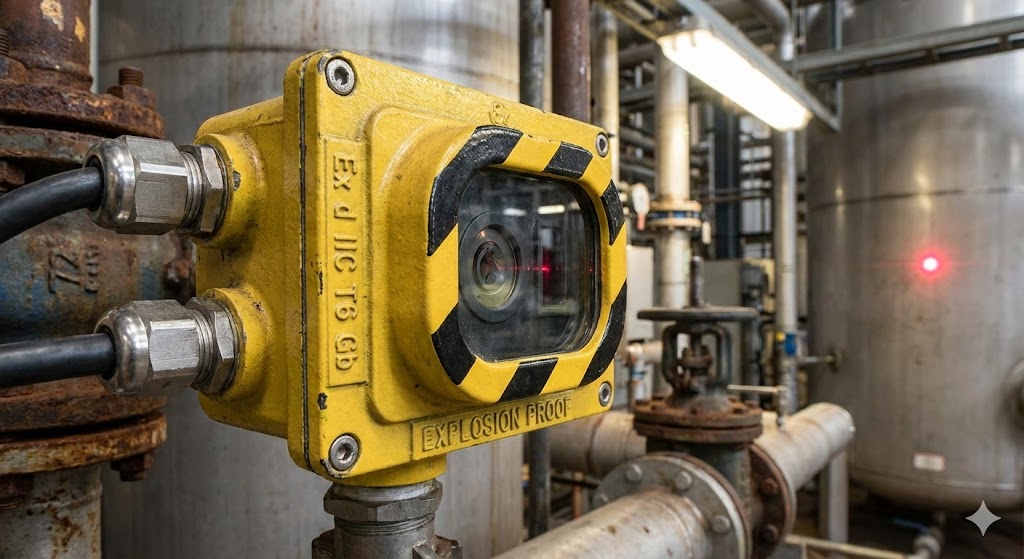
In the rapidly evolving field of electrical engineering, sensor technology plays a pivotal role in enabling automation, precision measurement, and intelligent system control. Among the diverse array of sensing solutions, multispectral sensors and laser sensors stand out as two powerful, yet fundamentally different, technologies. Each offers unique capabilities, making them suitable for distinct applications across industrial, environmental, and research domains. Understanding their operational principles, strengths, and limitations is crucial for engineers tasked with selecting the optimal sensor for a specific task.
Multispectral sensors operate by capturing light energy reflected or emitted from a target across multiple discrete wavelength bands within the electromagnetic spectrum. Unlike hyperspectral sensors that capture hundreds of narrow bands, multispectral sensors typically focus on a few key bands, often in the visible, near-infrared (NIR), and sometimes short-wave infrared (SWIR) ranges. This targeted approach allows them to extract specific material-based information. For instance, in precision agriculture, a multispectral sensor mounted on a drone can assess crop health by analyzing the reflectance in the red and NIR bands to calculate vegetation indices like NDVI (Normalized Difference Vegetation Index). In industrial sorting systems, these sensors can differentiate between materials—such as various types of plastics or contaminated food products—based on their spectral signatures. The core advantage lies in their ability to provide compositional and qualitative data about a surface or object. However, they generally do not provide highly accurate distance or depth information and can be influenced by ambient lighting conditions, though advanced models incorporate calibration techniques to mitigate this.
In contrast, laser sensors, primarily based on LiDAR (Light Detection and Ranging) or laser triangulation principles, excel at providing precise geometric and spatial data. A laser sensor emits a focused beam of coherent light (laser) toward a target. By measuring the time it takes for the reflected light to return (time-of-flight), the phase shift of the modulated beam, or the displacement of the laser spot (triangulation), it calculates exact distance, position, height, or profile with remarkable accuracy, often at sub-millimeter levels. This makes them indispensable in applications requiring rigorous dimensional control. In automated manufacturing, laser sensors are used for precise part alignment, gap and flush measurement in automotive assembly, and 3D contour scanning for quality inspection. In robotics, they form the basis of navigation and obstacle avoidance systems through 2D or 3D laser scanning. Their performance is largely independent of ambient light and surface color, though highly reflective or absorptive surfaces can pose challenges. They provide exceptional quantitative spatial data but typically offer no inherent information about the material composition of the target.
The choice between a multispectral sensor and a laser sensor is fundamentally dictated by the nature of the required data. Is the application about identifying *what* something is made of or its condition? Or is it about determining *where* it is, its shape, or its dimensions? For material classification, condition monitoring, and spectral analysis, multispectral sensors are the superior choice. For distance measurement, 3D mapping, vibration analysis, and precise profilometry, laser sensors are unparalleled.
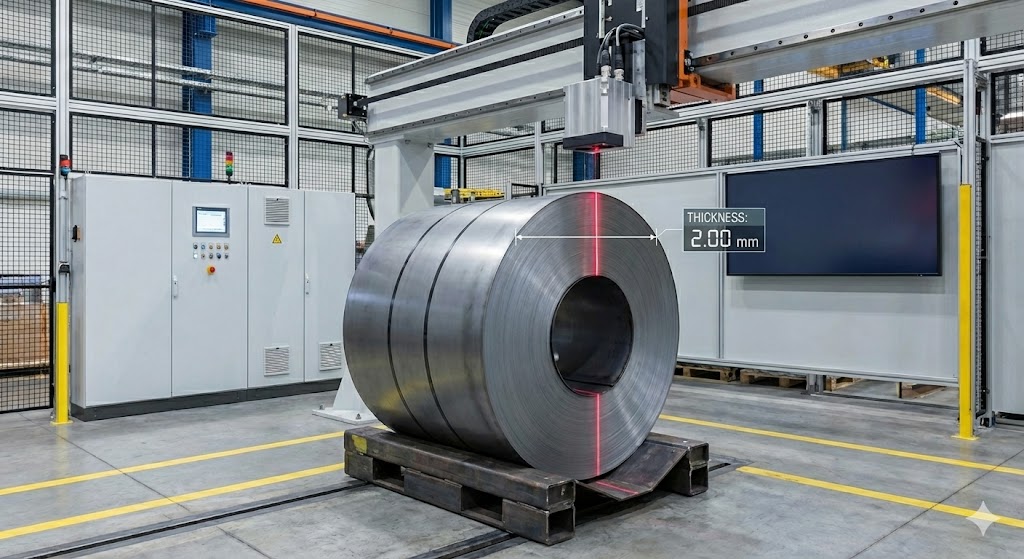
Increasingly, the most advanced systems leverage sensor fusion, integrating data from both technologies to create a more comprehensive understanding of an environment or object. For example, an autonomous agricultural vehicle might use a laser sensor to map the terrain and navigate rows, while a multispectral sensor simultaneously assesses the nitrogen content in the crops. Similarly, in industrial recycling, a laser scanner could determine the size and shape of an item on a conveyor belt, while a multispectral sensor identifies its polymer type for accurate sorting.
From an electrical engineering perspective, integrating these sensors involves distinct considerations. Multispectral sensor systems require careful design of illumination (often using specific LEDs or broad-spectrum sources), optical filters, and image sensor arrays (like CMOS or CCD). Signal processing involves complex algorithms for spectral analysis and classification. Laser sensor systems, on the other hand, demand precise laser driver circuits, highly sensitive photodetectors (e.g., APDs or SPADs), and sophisticated timing or phase-measurement electronics. Both require robust data interfaces, power management, and often embedded processing capabilities.
In conclusion, neither multispectral nor laser sensors are universally "better"; they are complementary tools in the engineer's toolkit. Multispectral sensors reveal the chemical and qualitative properties of the world, while laser sensors delineate its physical and geometric form. As both technologies continue to advance—with multispectral sensors becoming smaller and more affordable, and laser sensors achieving higher speeds and resolutions—their adoption will further revolutionize fields from smart manufacturing and infrastructure inspection to environmental science and beyond. The key to successful implementation lies in a clear definition of the measurement objective and a deep understanding of the inherent strengths of each sensing paradigm.