Laser sensors are indispensable components in modern industrial automation, providing precise, non-contact measurement for tasks ranging from object detection and positioning to thickness gauging and quality inspection. However, a common and often perplexing issue encountered by engineers and maintenance personnel is signal flicker or instability. This phenomenon, where the sensor's output signal fluctuates erratically despite a seemingly stable target, can lead to production errors, false triggers, and costly downtime. Understanding the root causes and implementing effective troubleshooting strategies is crucial for maintaining system reliability.
The primary culprit behind laser sensor signal flicker is often environmental interference. Industrial settings are rife with potential disruptors. Ambient light is a frequent offender. Strong, direct light from sources like welding arcs, halogen lamps, or even sunlight entering through windows can overwhelm the sensor's receiver. While many modern laser sensors operate with modulated light to mitigate this, extreme conditions can still cause interference. Similarly, other optical signals, such as those from nearby sensors or barcode scanners operating at similar wavelengths, can create crosstalk. Electrical noise from high-power equipment like variable frequency drives (VFDs), motors, solenoids, or welding machines can induce noise in the sensor's power supply or signal cables, manifesting as output instability. This is particularly prevalent when sensor wiring runs parallel to power cables without proper separation or shielding.
The target object's characteristics play an equally significant role. The sensor's performance is highly dependent on the surface it is measuring. Highly reflective or specular surfaces, such as polished metal or mirror-like finishes, can cause the laser beam to scatter or reflect at unpredictable angles, leading to inconsistent signal return to the receiver. Conversely, dark, matte, or absorbent surfaces may return a signal that is too weak, pushing the sensor to the edge of its operational range where noise becomes more influential. Transparent or translucent objects, like glass or plastic films, can allow the beam to pass through partially, creating multiple reflection points and confusing the receiver. Furthermore, if the target surface is vibrating, oscillating, or moving at high speed, the point of incidence of the laser beam changes rapidly, which can be interpreted by the sensor as signal flicker, especially if the sensor's response time is not adequately fast for the application.
Installation and configuration errors are another major category of causes. Improper alignment is a classic issue. Even a slight misalignment between the sensor, the target, and the expected reflection path can result in the laser spot being partially on or off the target, or hitting an irregular edge, causing intermittent signal loss. The operating distance is critical; operating too close to the minimum or maximum range specified in the datasheet reduces signal margin and increases susceptibility to noise. Incorrect setting of the sensor's internal parameters can also induce flicker. An excessively high gain or sensitivity setting might amplify background noise. An inappropriate response time (too fast) might cause the sensor to react to minor, irrelevant fluctuations. Failing to use the correct teach-in or calibration procedure for the specific target material can lead to suboptimal threshold settings.
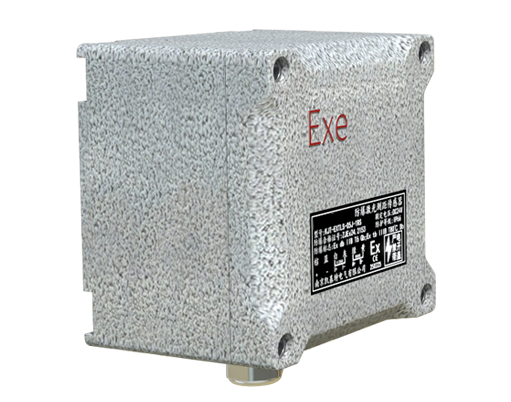
Mechanical and hardware issues should not be overlooked. A dirty or contaminated lens, on either the transmitter or receiver, will attenuate the laser beam or the returning light, causing a weak and unstable signal. Physical damage to the sensor housing or internal components from impact or excessive vibration can misalign optical elements. Loose electrical connections at the terminal blocks, damaged cable insulation, or compromised connectors can create intermittent contact, directly causing signal dropouts. Finally, a failing power supply unit providing unstable voltage can affect the entire sensor's operation.
A systematic troubleshooting approach is essential. Begin by observing the conditions: does the flicker correlate with the operation of specific machinery (indicating electrical noise) or changes in ambient lighting? Simplify the environment if possible by shielding the sensor from extraneous light and ensuring it is correctly aligned on a stable, representative target. Verify all mechanical mounting and electrical connections are secure. Consult the sensor's manual to adjust key parameters: reduce the gain to a stable level, increase the response time to filter out rapid fluctuations, and re-perform the teach-in process on the actual target material. Implement best practices for installation: use shielded, twisted-pair cables for the signal, ground the shield properly at the controller end, physically separate signal cables from power lines by at least several inches, and employ ferrite cores on cables near noise sources. For power supply issues, consider using a dedicated, regulated power supply or an isolation transformer. If the target material is problematic, sensor selection might need revisiting; a different type (e.g., a diffuse reflective sensor with background suppression, a polarized retro-reflective model, or a confocal type for transparent objects) may be required.

In conclusion, laser sensor signal flicker is a multifaceted problem rooted in environmental factors, target properties, setup errors, or hardware faults. A methodical process of isolation, observation, and parameter adjustment, grounded in a solid understanding of photoelectric sensing principles, is the most effective path to resolution. Proactive measures during system design—such as careful sensor selection, proper cable management, and environmental shielding—can prevent most instances of flicker, ensuring the high precision and reliability that laser sensors are chosen to provide.