Selecting the optimal laser edge detection sensor, often referred to as a laser web guide or edge guiding sensor, is a critical decision in industrial automation and process control. The correct sensor ensures precise material alignment, reduces waste, improves product quality, and maximizes production line efficiency. This guide outlines the key technical parameters and application considerations to inform your selection process.
The core principle of a laser edge detection sensor involves projecting a focused laser line onto the target material's edge. A high-speed CMOS or CCD array captures the reflected light, and onboard processing algorithms calculate the exact edge position relative to a predefined reference. The sensor outputs this data, typically as an analog signal (e.g., 0-10V, 4-20mA) or a digital signal via industrial networks like EtherCAT or PROFINET, for real-time correction by a guiding actuator.
Primary Technical Selection Criteria:
1. Measurement Range and Standoff Distance: The measurement range defines the maximum lateral movement of the edge the sensor can detect (e.g., ±50mm). Standoff distance is the optimal working distance between the sensor head and the target. Ensure your chosen model's specifications accommodate the full possible web wander and the physical constraints of your machinery.
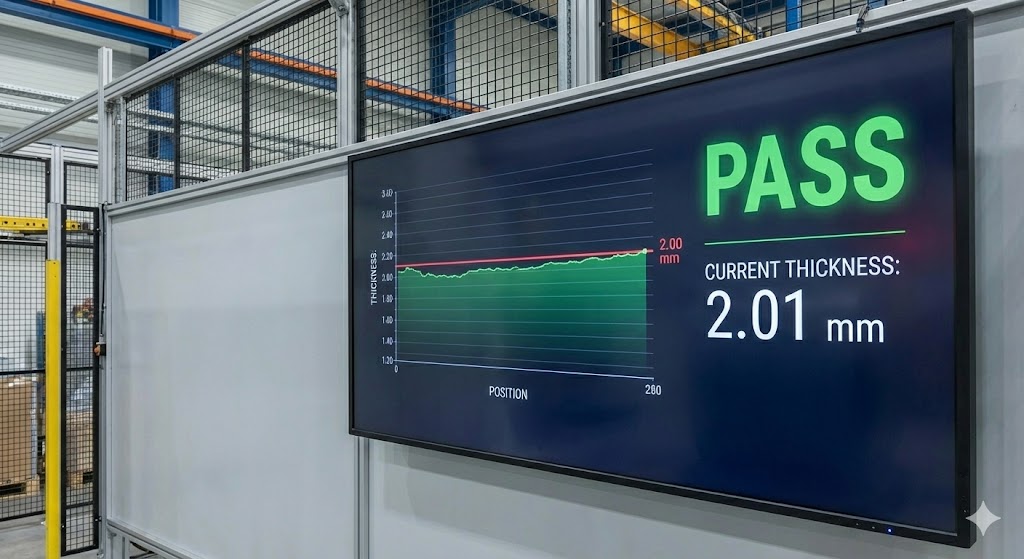
2. Resolution and Repeatability: Resolution is the smallest detectable change in edge position. For high-precision applications like thin film or foil processing, micron-level resolution is paramount. Repeatability, the sensor's ability to consistently return the same measurement for a static edge, is often more critical than absolute accuracy for stable closed-loop control.
3. Laser Type and Wavelength: Common choices are visible red lasers (e.g., 650nm) for ease of alignment and setup, and infrared lasers. IR lasers (e.g., 850nm, 950nm) are less susceptible to ambient light interference and are preferred for transparent or semi-transparent materials (like plastic films) as they often reflect differently than visible light. Some sensors offer blue lasers for enhanced performance on specific materials.
4. Material and Surface Properties: The target material's characteristics drastically affect sensor performance. Consider:
* Opacity: Transparent, translucent, or opaque.
* Surface: Glossy, matte, textured, or uneven.
* Color: Dark materials absorb more light; bright materials reflect more.
* Material Thickness: Critical for detecting a clean edge profile.
It is strongly advised to conduct a material test with a sensor sample or provide detailed material samples to the supplier for validation.
5. Environmental Robustness: Industrial environments are harsh. Key ratings include:
* Ingress Protection (IP Rating): IP67 is standard for resistance to dust and water jets.
* Temperature Rating: Ensure the sensor operates reliably within your plant's ambient temperature range, including potential heat from nearby processes.
* Vibration and Shock Resistance: The sensor should withstand mechanical vibrations common in rolling mills, printing presses, or converting machines.
6. Outputs and Connectivity: Match the sensor's output to your control system's input. Analog outputs are universal but can be susceptible to noise. Digital interfaces (EtherNET/IP, PROFINET, EtherCAT) offer noise immunity, faster data transmission, and easier integration with modern PLCs. Some sensors provide dual digital and analog outputs for flexibility.
7. Response Time and Update Rate: The sensor's update rate (e.g., 1 kHz) and response time determine how quickly it can detect edge movement. For high-speed lines (e.g., >1000 m/min), a fast update rate is essential to provide timely data to the controller without introducing lag in the correction loop.
Application-Specific Considerations:
* Printing & Converting: High resolution and speed are vital for register control. Consider sensors with specialized algorithms to ignore print patterns or perforations.
* Nonwovens & Textiles: Often deal with fluffy, porous edges. Sensors with high-intensity lasers and advanced filtering are needed to define a consistent edge.
* Metal Processing: High temperatures and reflective surfaces are challenges. Sensors with reduced sensitivity to extreme ambient light and high-temperature housings are required.
* Paper & Film Processing: A wide range of materials from opaque paper to clear PET film. Versatile sensors with selectable laser modes or dual-wavelength options are beneficial.
Finally, do not underestimate the importance of mounting flexibility, ease of calibration, and the quality of software tools for setup and diagnostics. Partnering with a supplier that offers strong technical support and application expertise is invaluable. By systematically evaluating your material properties, mechanical constraints, environmental conditions, and performance requirements against these criteria, you can specify a laser edge detection sensor that delivers reliable, long-term precision for your guiding system.