In the dynamic landscape of industrial automation, the demand for reliable, precise, and durable sensing solutions is paramount. Among the various technologies available, non-attenuating proximity sensors have emerged as a critical component, particularly in challenging environments where consistent performance is non-negotiable. Unlike standard inductive or capacitive sensors whose signals can degrade when encountering certain materials, non-attenuating sensors are engineered to maintain a stable sensing field and output signal, regardless of the target material's properties. This article delves into the defining characteristics that make these sensors indispensable in modern industrial applications.
The core principle behind a non-attenuating proximity sensor, often based on a magnetostrictive or specialized inductive design, is its immunity to the "attenuation effect." In conventional inductive sensors, the presence of conductive but non-ferrous metals (like aluminum, copper, or stainless steel) can cause a significant reduction in the effective sensing distance. This attenuation leads to unreliable detection, missed triggers, and potential process failures. Non-attenuating sensors solve this by generating an electromagnetic field that is not absorbed or dampened by these materials. Consequently, they offer a consistent switching distance whether the target is made of mild steel, aluminum, brass, or even certain types of coated metals. This material-independent detection is arguably their most significant feature, providing unparalleled flexibility in system design.
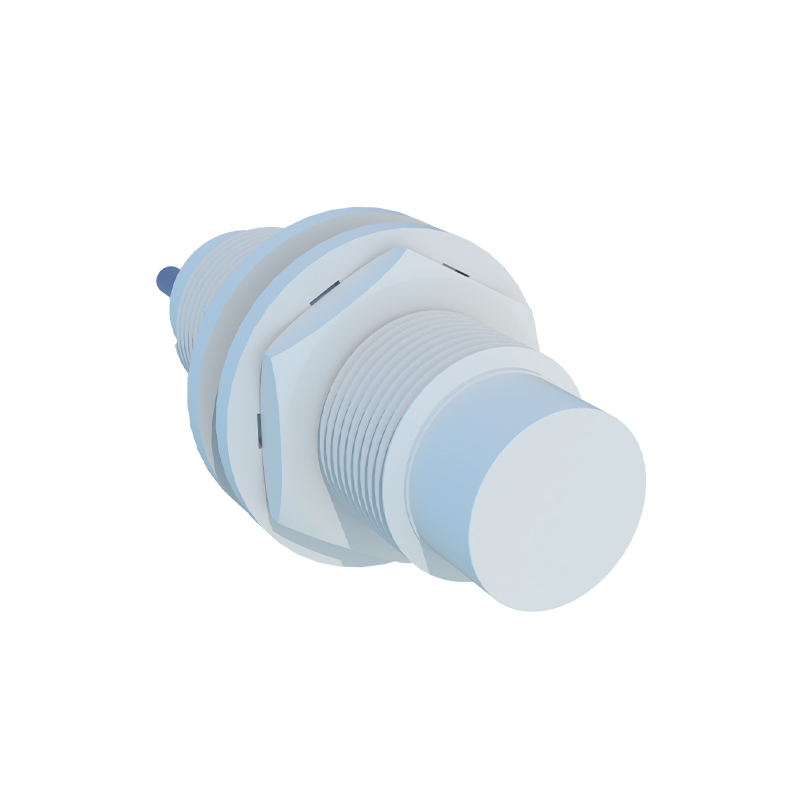
Durability and robustness constitute another hallmark. Designed for harsh industrial settings, these sensors typically feature housings made of stainless steel (e.g., V2A or V4A grades) or high-strength plastics like PBT or PPS, offering excellent resistance to chemicals, oils, and coolants. The sensing face is often a rugged ceramic material that withstands physical abrasion and impact far better than standard plastic faces. This construction ensures a long operational life even in environments with heavy particulate matter, frequent washdowns (IP67, IP69K ratings are common), or extreme temperature fluctuations. The mechanical resilience translates directly into reduced downtime and lower maintenance costs, a key consideration for total cost of ownership.
Precision and repeatability are engineered into their very operation. Non-attenuating sensors exhibit minimal hysteresis and high repeat accuracy. The switching point remains stable over millions of cycles and across varying environmental conditions such as temperature shifts or voltage supply fluctuations. This stability is crucial for applications requiring high positional accuracy, such as in robotic arm end-effector positioning, precise valve control, or assembly line verification where a tolerance of even a fraction of a millimeter matters. The analog versions provide continuous position feedback with high linearity, enabling sophisticated control schemes beyond simple on/off detection.
Furthermore, these sensors offer enhanced noise immunity. Industrial floors are electrically noisy environments with interference from variable frequency drives (VFDs), welding equipment, and large motors. Non-attenuating sensors are designed with advanced circuitry and shielding that effectively suppress electromagnetic interference (EMI) and radio frequency interference (RFI). This results in a stable output signal free from false triggering, ensuring the integrity of the control logic and preventing costly production errors or safety incidents.
The installation and integration flexibility is also noteworthy. Available in diverse form factors—including tubular, rectangular, and ring-shaped designs—they can be fitted into tight spaces or specific machine geometries. Many models feature built-in diagnostics like LED status indicators for operational health and alignment verification. Compatibility with standard industrial networking protocols (IO-Link, AS-Interface, PROFINET) is increasingly common, allowing for seamless integration into Industry 4.0 and IIoT frameworks for predictive maintenance and data analytics.
In summary, non-attenuating proximity sensors represent a sophisticated evolution in sensing technology. Their material-independent detection, exceptional durability, high precision, noise immunity, and integration readiness address the core pain points in complex automation systems. By guaranteeing reliable performance where traditional sensors falter, they form a foundational element for enhancing productivity, quality, and operational resilience in industries ranging from automotive and metalworking to food and beverage and packaging. As automation challenges grow more demanding, the role of these robust sensors will only become more central to efficient and intelligent manufacturing.