In the world of industrial automation, proximity switches are the silent sentinels, detecting the presence or absence of objects without physical contact. Their reliability is paramount, and at the heart of every proximity switch lies its core component: the internal sensor. This article delves into the sophisticated sensing technologies that empower these ubiquitous devices, exploring their principles, applications, and key selection criteria.
The fundamental principle behind a proximity switch is the disturbance of an electromagnetic field or energy beam. The internal sensor generates this field or beam and is meticulously designed to detect minute changes caused by a target's approach. The most common sensing technologies can be categorized into three primary types: inductive, capacitive, and photoelectric.
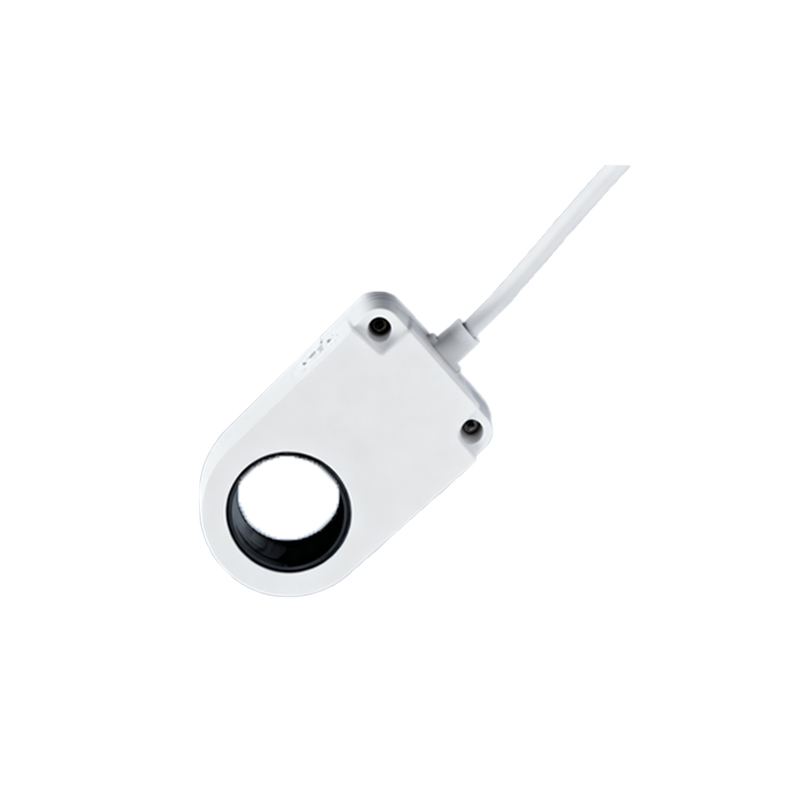
Inductive proximity sensors are the workhorses for detecting metallic objects. Their internal structure typically consists of a coil wound around a ferrite core, an oscillator, a signal evaluator, and an output switching circuit. When powered, the oscillator generates a high-frequency alternating magnetic field that radiates from the sensor's active face. When a conductive metal target enters this field, eddy currents are induced on the target's surface. These eddy currents draw energy from the oscillator, causing its amplitude to dampen. The sensor's evaluation circuit detects this damping and triggers a change in the output state (e.g., from OFF to ON). The sensing range is influenced by the target's material; ferrous metals like steel typically provide the longest range, while non-ferrous metals like aluminum or copper have a reduced effective range. Inductive sensors are prized for their robustness, high switching frequency, and immunity to environmental factors like dust, oil, or moisture, making them ideal for harsh industrial environments in metal machining, robotics, and conveyor systems.
Capacitive proximity sensors, in contrast, can detect both metallic and non-metallic materials, including liquids, plastics, glass, and wood. Their internal sensor functions by creating an electrostatic field. The sensor face acts as one plate of a capacitor, with the target acting as the other plate, and the intervening air as the dielectric. As a target approaches, the capacitance of this system increases. The internal circuitry, often a relaxation oscillator or an RC circuit, is tuned to a specific threshold. The change in capacitance alters the oscillation amplitude or frequency, which is then evaluated to switch the output. Some models feature a sensitivity adjustment potentiometer to compensate for different material types or to ignore certain background materials. This versatility makes capacitive sensors perfect for applications like liquid level detection in tanks, monitoring presence of plastic bottles or cardboard boxes, and detecting powdered or granular materials.
Photoelectric sensors operate on a completely different principle, using light beams. The internal components include a light emitter (typically an LED producing visible red, infrared, or laser light) and a receiver (a phototransistor or photodiode). They are configured in three main styles: through-beam, retro-reflective, and diffuse (proximity) mode. The diffuse mode functions most like a standard proximity switch. The emitter sends a continuous light beam. When a target enters the detection zone, it reflects a portion of this light back to the receiver. The receiver's circuitry evaluates the intensity of the returned light. Once it exceeds a preset threshold, the output switches. Advanced versions use background suppression or focused beam techniques to precisely define the sensing range, ignoring objects beyond a certain point. Photoelectric sensors offer the longest sensing ranges and can detect virtually any object, but their performance can be affected by ambient light, color, reflectivity, and surface texture of the target, as well as dust, fog, or dirt accumulation on the lens.
Beyond these core types, specialized sensors like ultrasonic and magnetic (reed or Hall effect) also serve in proximity roles. Ultrasonic sensors use sound waves, excellent for distance measurement and detecting sound-absorbing materials. Magnetic sensors are specifically designed for detecting permanent magnets, commonly used in cylinder position feedback.
Selecting the right internal sensor technology is critical. Engineers must consider the target material, required sensing distance, environmental conditions (temperature, contaminants), switching frequency, electrical output type (PNP/NPN, analog, IO-Link), and housing requirements. For instance, a wet, dirty environment detecting steel pistons calls for an inductive sensor. Detecting the fill level of a glass jar in a clean environment would necessitate a capacitive or diffuse photoelectric sensor.
In conclusion, the "magic" of a proximity switch is entirely engineered within its internal sensor. From electromagnetic fields to light beams and electrostatic charges, these sophisticated components translate physical presence into reliable electrical signals. Understanding the nuances of inductive, capacitive, and photoelectric sensing technologies empowers engineers to design more efficient, reliable, and intelligent automated systems, ensuring that these fundamental devices continue to be the reliable eyes of modern industry.
SEO描述