In the rapidly evolving landscape of industrial automation and robotics, precision measurement is a cornerstone of efficiency and quality. Among the myriad of sensing technologies available, scanning laser distance sensors have emerged as a powerful and versatile solution for non-contact, high-accuracy dimensional analysis and positioning. This article delves into the operational principles, key applications, and critical selection factors for these sophisticated devices.
At its core, a scanning laser distance sensor operates on the principle of time-of-flight (ToF) or phase-shift measurement. A laser diode emits a focused beam of light towards a target object. The sensor's internal receiver then detects the reflected light. In the ToF method, the sensor precisely calculates the time elapsed between the emission and reception of the laser pulse. Given the constant speed of light, this time interval is directly proportional to the distance to the target. Phase-shift sensors, often used for higher precision at shorter ranges, modulate the amplitude of the laser beam and measure the phase difference between the emitted and reflected signals. The scanning functionality is achieved through an integrated oscillating mirror or a rotating prism, which deflects the laser beam across a defined field of view, creating a line or profile of distance points. This allows the sensor to capture not just a single point measurement but a complete cross-sectional profile of an object or scene, generating rich 2D or even 3D data.
The applications for scanning laser distance sensors are vast and span numerous industries. In logistics and warehousing, they are indispensable for volume measurement of packages on conveyor belts, optimizing storage space and shipping costs. In automotive manufacturing, these sensors perform critical tasks such as robot guidance for windshield installation, gap and flush measurement on car bodies, and inspection of tire profiles. The semiconductor industry relies on them for wafer mapping and precise height detection. Furthermore, they play a vital role in collision avoidance for automated guided vehicles (AGVs) and mobile robots, creating a real-time map of the surrounding environment to ensure safe navigation. In construction and civil engineering, they are used for deformation monitoring, tunnel profiling, and as-built surveys.
Selecting the appropriate scanning laser sensor requires careful consideration of several technical parameters. The measurement range defines the minimum and maximum distances the sensor can reliably detect. Scanning frequency or profile rate, measured in Hertz, determines how many profiles are captured per second; a higher rate is essential for monitoring fast-moving objects. Angular resolution specifies the angular step between individual measurement points within a scan, influencing the detail level of the captured profile. Accuracy and repeatability are paramount; accuracy refers to how close a measurement is to the true value, while repeatability indicates the consistency of measurements under unchanged conditions. Environmental factors cannot be ignored. The sensor must have a suitable Ingress Protection (IP) rating to withstand dust, moisture, and coolant splashes common in industrial settings. The laser class (typically Class 1 or Class 2) is a safety classification, with Class 1 being inherently safe under all conditions of normal use. Finally, the interface for data output (e.g., Ethernet/IP, PROFINET, EtherCAT, analog outputs) must be compatible with the existing control system for seamless integration.
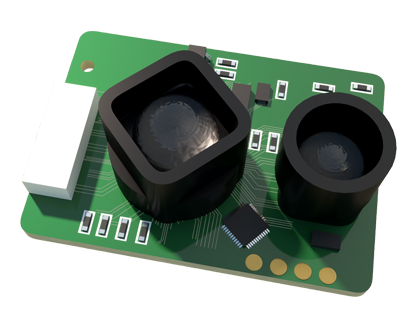
Integration and calibration are crucial final steps. Proper mechanical mounting to minimize vibration, correct alignment within the scanning plane, and setting an appropriate exposure time are essential for optimal performance. Many modern sensors come with intuitive software for configuration, visualization of scan profiles, and setting measurement windows or logic outputs for specific tasks like pass/fail inspection.
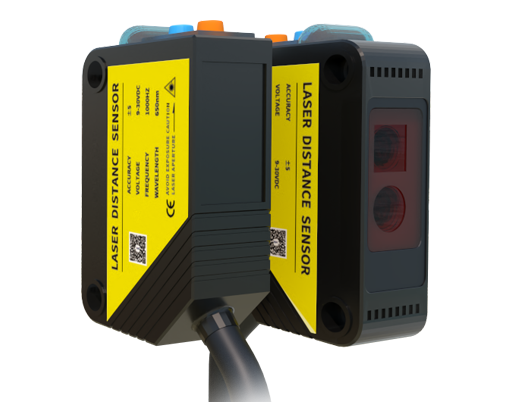
In conclusion, scanning laser distance sensors represent a significant leap forward in metrology and machine perception. Their ability to deliver high-speed, non-contact, and precise profile data makes them an invaluable tool for enhancing automation, improving quality control, and enabling smarter robotic systems. As technology advances, we can expect these sensors to become even more compact, faster, and intelligent, further solidifying their role as a key enabler in the smart factories of the future.